
How To
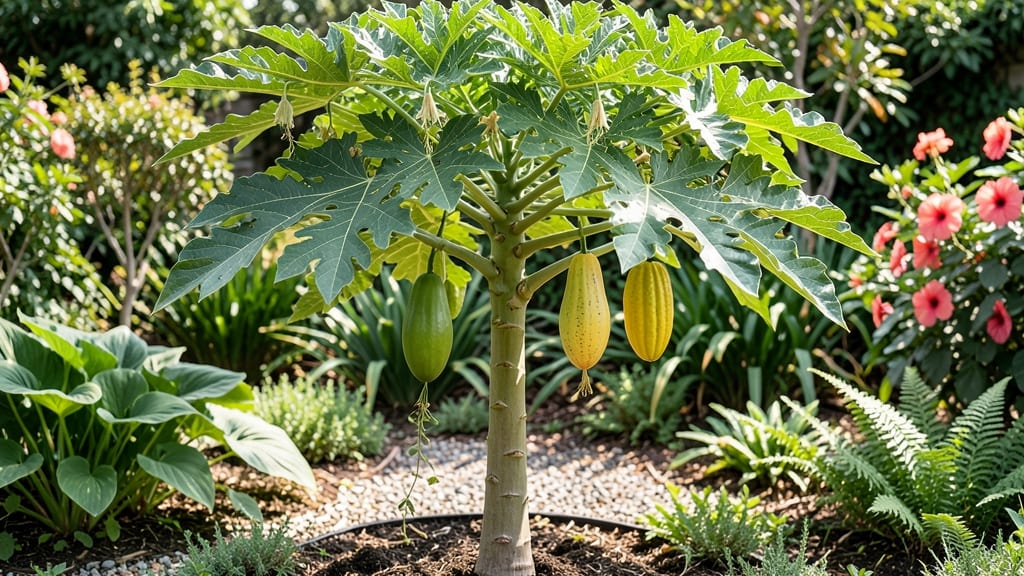
A papaya tree grows anywhere from 10 to 30 feet tall, depending on the variety and growing conditions—so if you're planning to plant one, space matters more than you might think.
Imagine a towering tropical giant 🌴 in your backyard, its broad leaves casting shade and its sweet fruit ripening just in time for harvest. But here's the catch: some varieties stretch toward the sky like a skyscraper, while others stay more manageable—though none are truly "dwarf."
The right location and care can make all the difference in controlling its height or letting it flourish naturally.
This guide breaks down exactly how tall your papaya tree will grow, from seedling to mature giant, along with the factors that speed up or slow down its growth.
You’ll learn how climate, pruning, and soil type play a role—and why timing your harvest right is just as important as picking the perfect spot.
Whether you're dreaming of a backyard papaya orchard or just want to know when to expect fruit, we’ve got the data-backed insights to help you grow a thriving tree—without it taking over your garden.

Papaya tree height by variety: dwarf vs. standard growth comparison
When I first planted my papaya tree, I was stunned by how quickly it shot up—some varieties grow 10 feet in just one year!
Understanding the height differences between varieties helps you choose the perfect fit for your garden space, whether you have a sprawling backyard or a cozy balcony. Most papayas fall into two categories: standard varieties that reach 20-30 feet and dwarf hybrids that stay under 10 feet.
Standard papaya trees like the 'Red Maradol' or 'Kapoho Solo' can become towering giants, while newer hybrids like 'SunUp' are bred for smaller spaces. The key difference lies in their genetic growth habits—some varieties naturally produce shorter stems, while others prioritize rapid vertical growth for fruit production.
Knowing these distinctions helps you avoid overcrowding or underutilized space in your garden.
For home gardeners, spacing requirements are just as critical as height. A 25-foot papaya needs 15-20 feet of clearance from structures and other plants, while a 6-foot dwarf can thrive in a 5-gallon container.
Below, I’ve broken down the most popular varieties by their mature heights and ideal spacing to help you plan your tropical oasis.
If you’re growing papayas in containers, focus on dwarf varieties like 'SunUp' or 'Tainong No. 1', which stay under 15 feet. These are perfect for patios or balconies in USDA zones 10–12.
For in-ground planting, standard varieties like 'Red Maradol' or 'Golden Honey' deliver bigger yields but require more space and support structures like stakes or trellises.
One common mistake I see is assuming all papayas grow the same height. For example, 'Kapoho Solo' might reach 20 feet in a tropical climate but stay under 15 feet in cooler microclimates.
Always check your local climate zone and adjust spacing accordingly. In container gardening, prune aggressively to keep heights under 8 feet—this encourages bushier growth and more fruit production.
For first-time growers, I recommend starting with 'SunUp' or 'Tainong No. 1'—they’re forgiving and adapt well to smaller spaces. These varieties also produce fruit faster (within 6–9 months) compared to standard types, which can take up to 12 months to bear fruit.
If you’re aiming for commercial yields, invest in larger varieties but plan for pruning to manage height and improve air circulation.
Another pro tip: Male vs. female plants also affects growth habits. Female plants tend to grow taller and faster to support heavier fruit loads, while male plants stay slightly shorter but produce pollen for cross-pollination.
If you’re growing hermaphrodite varieties (like 'Solo'), you won’t need separate plants, but you’ll still need to account for their full mature height.
Remember, pruning is your best friend for controlling height. Regularly trim suckers (shoots at the base) and overgrown branches to redirect energy toward fruit production rather than vertical growth. In my garden, I prune 'Red Maradol' trees to 15 feet to keep them manageable while still enjoying bountiful harvests.
Finally, if you’re in a cooler climate (like US
Factors that determine papaya tree height and how to optimize growth
Understanding how tall your papaya tree will grow depends on several key factors, all of which you can influence with the right care. From climate conditions to pruning techniques, each element plays a role in whether your tree becomes a towering tropical giant or a more manageable size.
In my experience, the soil quality and sunlight exposure are the foundation—without them, even the hardiest papaya won't reach its full potential.
If you're growing papayas in containers, height control becomes even more critical. Many gardeners assume these trees will always sprawl, but with strategic pruning and nutrient management, you can keep them at a manageable height while still enjoying a bountiful harvest.
I’ve seen papayas thrive in 5-gallon pots when given the right conditions—proof that size isn’t always destiny!
- 🌡️ Climate Zone: Papayas thrive in USDA Zones 10-12 where temperatures stay above 60°F year-round. In cooler zones (like 9b), growth slows dramatically, often capping height at 10-15 ft instead of 20-30 ft.
- ☀️ Sunlight Exposure: 6+ hours of direct sun daily is non-negotiable. Shade reduces growth by 30-50%, leading to leggy, weak stems that struggle to support fruit.
- 🪴 Soil Conditions: Well-draining, sandy loam soil with a pH of 6.0-7.0 promotes rapid vertical growth. Compacted or waterlogged soil stunts roots, limiting height to under 10 ft.
- ✂️ Pruning Techniques: Regular structural pruning (removing lower branches) encourages upward growth, while topping can reduce height by 20-30% if done annually.
- 💧 Watering Schedule: Consistent moisture (but never soggy soil) fuels rapid growth. Drought stress can halt height increases for months, while overwatering causes root rot and stunted growth.
- 🌱 Variety Selection: Some hybrids like 'SunUp' grow 15-20 ft, while others (like 'Red Maradol') may stay under 12 ft if pruned. Always check the variety’s growth habit before planting.
- 🌿 Container Size: In pots, roots compete for space, capping height at 6-10 ft. Use containers at least 15 gallons for mature trees to avoid root-bound stress.
One of the biggest misconceptions I hear is that papaya trees grow too fast to control. While they can shoot up 3-5 feet per year in ideal conditions, their height is far from inevitable.
I’ve used vertical trellises to guide growth upward in small spaces, which not only saves room but also makes harvesting easier. For example, training the main trunk along a sturdy post can redirect energy into fruit production rather than sprawling branches.
For container gardeners, root pruning is a game-changer. When roots circle the pot, they compete for nutrients, slowing vertical growth. I recommend repotting every 2-3 years into a slightly larger container (5-10 gallons more) to encourage deeper root systems and taller, healthier trunks.
Pair this with a balanced fertilizer (10-10-10 NPK) applied every 6 weeks during the growing season, and you’ll see a noticeable difference in height within months.
If your goal is to keep your papaya tree under 10 feet, focus on regular pruning and container limitations. I prune my container-grown papayas in early spring, removing 20-30% of the canopy to encourage bushier, more compact growth.
This method has kept my 'SunUp' variety at a manageable 8 feet while still producing 20+ fruits per season. The key is to prune just above a leaf node to stimulate new growth.
Remember, height isn’t everything—a shorter papaya tree can be just as productive if cared for properly. The secret lies in balancing pruning, nutrients, and container size to match your space and goals. With the right approach, you can enjoy tropical papayas without sacrificing your garden’s layout! 🌴