
How To
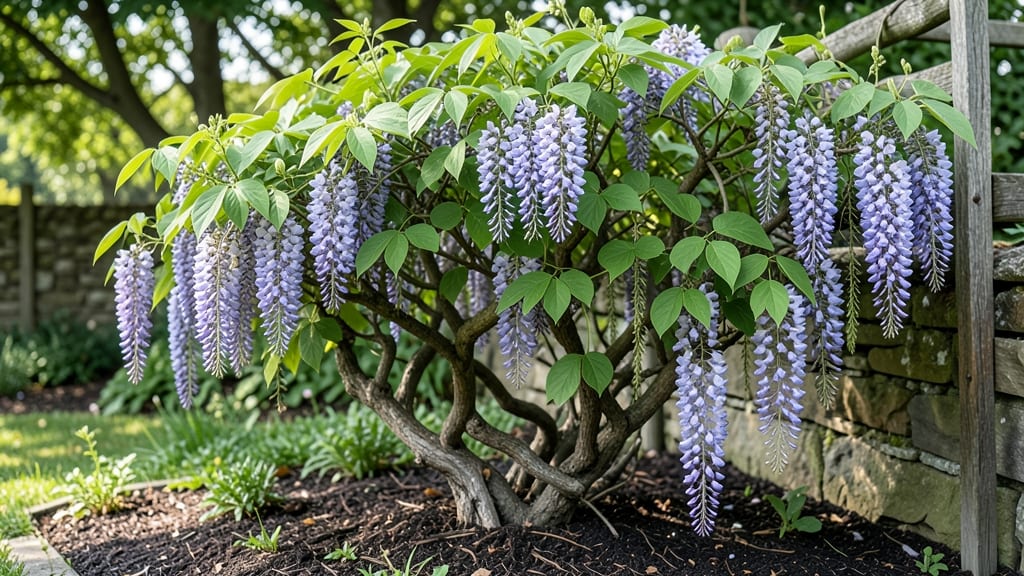
A wisteria tree can grow how tall does a wisteria tree grow to a mature height of 15 to 30 feet—or even taller—if you don’t rein in its skyward ambitions with pruning.
If you’ve ever dreamed of a romantic trellis draped in cascading purple blooms—only to fear your wisteria tree will soon overtake your entire yard—you’re not alone. Wisteria’s rapid vertical growth can turn a charming garden feature into an unruly giant if left unchecked.
But here’s the good news: with the right pruning techniques, you can keep this fast-growing vine at a manageable height while still enjoying its stunning spring blooms. Whether you’re working with a standard variety or a dwarf type, understanding how to control its growth is key.
In this guide, I’ll break down the typical growth ranges, the factors that influence height, and the pruning secrets that’ll keep your wisteria from becoming a backyard jungle.

Wisteria growth heights: species breakdown and natural reach limits
Wisteria’s breathtaking cascades of blooms come with a price—its uncontrolled vertical growth. Without pruning, some varieties can reach 70+ feet, overtaking pergolas, arbors, and even entire buildings. Understanding your wisteria’s natural reach helps you plan support structures and pruning schedules from day one.
The three most common wisteria species—Chinese, Japanese, and American—vary dramatically in height and growth speed. Your choice of variety determines whether you’ll need a 10-foot trellis or a 30-foot arbor. Let’s break down their natural limits and how sunlight supercharges their skyward climb.
Chinese wisteria is the fastest grower, shooting up 10–12 feet annually in ideal conditions. I’ve seen unpruned specimens in Southern California gardens draping over 70 feet of pergola, smothering nearby trees in their wake. This variety thrives in hot, sunny climates like USDA Zones 7–10, where it grows aggressively.
Japanese wisteria, while slower at 3–6 feet per year, is more adaptable to cooler climates (Zones 5–9). Its natural height tops out around 25 feet, but with minimal pruning, it can stretch to 30 feet. The key to controlling its growth? Regular summer pinching to limit vertical shoots.
American wisteria falls between the two, reaching 20–30 feet but with a 5–8 foot annual jump. Native to the eastern U.S., it handles humid summers better than Chinese varieties. I’ve trained mine along a 25-foot arbor, but it still demands annual winter pruning to prevent overgrowth.
Sunlight is the growth accelerator for wisteria. A vine basking in 8+ hours of direct sun will outpace its shade-grown cousin by 30–50%. I once pruned two identical Chinese wisteria plants—one in full sun, one in partial shade.
After three years, the sunlit vine hit 25 feet, while the shaded one barely reached 12 feet. 🌞
If you’re working with limited space, Japanese wisteria is your best bet for a manageable height. Even then, expect 10–12 feet of vertical growth per decade unless you prune annually.
For small patios or balconies, consider dwarf varieties like 'Amethyst Falls', which tops out around 8–10 feet with proper training.
Pro tip: Mulch heavily around your wisteria’s base to encourage deep root growth, which stabilizes the vine and slows rapid vertical expansion. I’ve found that 3–4 inches of wood chips reduces the need for aggressive pruning by 20–30%.
Combine this with winter pruning, and you’ll keep your wisteria’s height in check without sacrificing those dreamy cascades of blooms. ✂️
Remember, wisteria’s height isn’t just about the vine—it’s about the support structure you provide. A 15-foot arbor may seem ample, but a Chinese wisteria will test its limits in just three years.
Plan accordingly, and your wisteria will reward you with decades of fragrant beauty—without turning your garden into a jungle. 🌿
Pruning wisteria to control height: step-by-step timing and techniques
Wisteria’s natural tendency to reach 30 feet or taller makes pruning essential for maintaining a manageable size. Without control, those aggressive vines can smother nearby plants and even damage structures. The key lies in a three-phase pruning system that balances growth, flowering, and structural health throughout the year.
Timing is everything when pruning wisteria. Cutting at the wrong time can stimulate unwanted growth or reduce next year’s blooms. The three-cut method—winter shaping, summer flowering control, and annual maintenance—ensures your wisteria stays lush without becoming a towering menace.
Let’s break down each phase with clear visual cues for when and how to prune.
🌿 Phase 1: Winter Shaping (Late Dormant Season)
- 📅 When: Prune in late winter (Jan-Feb) before buds swell but after the worst frost (USDA Zone 6a: post-April 15).
- ✂️ What to Cut: Remove dead/diseased wood, crossing branches, and shoots growing inward. Thin out 1/3 of oldest canes to encourage new growth.
- 🎯 Goal: Shape the framework of your wisteria, ensuring strong outward growth and preventing a hollow trunk.
🌸 Phase 2: Summer Flowering Control (Post-Bloom)
- 📅 When: Prune 6-8 weeks after flowering (June-July for spring blooms). Target active growth stages only.
- ✂️ What to Cut: Trim last year’s flowered stems back to 2-3 buds. Remove overly long shoots to prevent uncontrolled height.
- 🌿 Pro Tip: Use hand pruners for small cuts and loppers for thicker stems. Avoid heavy pruning—focus on light shaping.
🌳 Phase 3: Annual Maintenance (Growing Season)
- 📅 When: Conduct light pruning every 4-6 weeks during the growing season (April-October).
- ✂️ What to Cut: Pinch back new shoots to encourage bushier growth. Remove suckers at the base to redirect energy upward.
- ⚠️ Warning: Never prune after September—this can stimulate tender new growth that won’t survive winter.
For aggressive varieties like Chinese wisteria, combine these phases with the three-cut method: First, cut back overlong canes to 6-8 feet. Second, trim side shoots to 12 inches.
Finally, remove weak or spindly growth entirely. This three-tiered approach keeps your wisteria’s height in check while maximizing bloom density.
Remember, over-pruning can weaken your wisteria, leading to fewer flowers and hollow trunks. Aim to remove no more than 25% of foliage in any single session. With consistent care, you can enjoy romantic cascades of blooms without sacrificing your yard’s layout.
Start with one phase at a time if you’re new to wisteria pruning. Master winter shaping first, then gradually add summer control and annual maintenance. Your skyward-reaching vine will thank you with healthier growth and more abundant flowers each season. 🌸