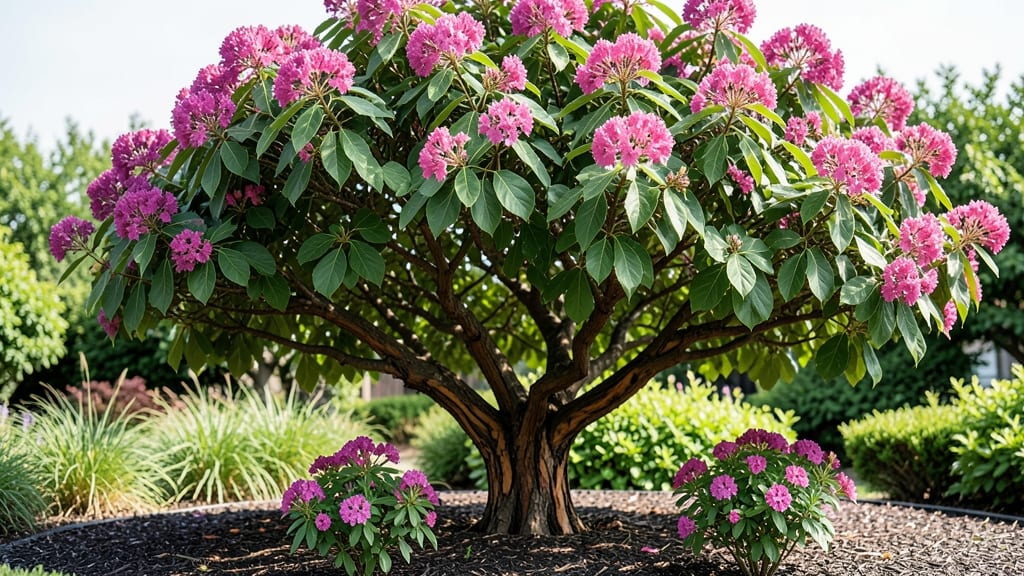
A crape myrtle tree grows anywhere from 6 feet to towering 30 feet tall, depending on the variety you choose — and picking the wrong one could mean a backyard that feels more like a jungle than a garden.
Picture this: you’ve spent hours designing your landscape, only to realize your new 🌸 crape myrtle is now blocking your patio or overshadowing your favorite flower beds.
The good news? There’s a crape myrtle for every space, from the compact 'Avalanche' (just 6-10 feet) to the majestic 'Chattahoochee' (up to 30 feet).
But height isn’t just about the variety—climate, pruning habits, and even your USDA Zone 6a soil play a role. A tree that thrives in humid Southern gardens might struggle to reach its full potential in cooler Northern climates.
The key is understanding how fast your crape myrtle grows and what it needs to stay within your vision.
In this guide, I’ll break down the exact heights of the most popular varieties, how to pick the right one for your yard, and the simple pruning tricks to keep it at your ideal size—without sacrificing those stunning summer blooms.
Crape Myrtle Tree Height Range
6 ftto30 ft
0 ft3 ft6 ft9 ft12 ft
🌱Medium to Medium to Tall Tree
Crape myrtle tree height by variety: dwarf to giant options
Choosing the right crape myrtle can make or break your landscape design. These beautiful trees come in dwarf varieties as short as 6 feet to towering giants reaching 30 feet or more.
The key is matching your space to the perfect cultivar—whether you need a privacy screen, street tree, or container specimen. Let's explore the height spectrum of crape myrtles so you can pick the perfect fit for your yard.
One of my favorite compact options is the 'Avalanche' crape myrtle, which stays under 6 feet tall while delivering prolific lavender blooms. This variety is perfect for small gardens or urban courtyards where space is limited.
On the opposite end, the 'Chattahoochee' variety can grow up to 30 feet, making it ideal for large properties or landscape focal points. The right choice depends entirely on your available space and design goals.
🌱
Crape Myrtle Varieties: Height Comparison
Variety
Mature Height
Spread
Growth Rate
Best For
'Avalanche'
6-8 ft
6-8 ft
Slow
Containers, small yards
'Centennial'
8-10 ft
8-10 ft
Moderate
Street trees, medium yards
'Dynamite'
10-12 ft
10-12 ft
Moderate
Privacy screens, borders
'Natchez'
15-20 ft
15-20 ft
Fast
Large yards, focal points
'Muskogee'
20-25 ft
15-20 ft
Fast
Privacy hedges, large properties
'Tonto'
25-30 ft
20-25 ft
Fast
Shade trees, large estates
'Chattahoochee'
25-30 ft
20-25 ft
Fast
Privacy screens, large landscapes
'Sioux'
30+ ft
25-30 ft
Very Fast
Woodland edges, large properties
'Catawba'
20-25 ft
15-20 ft
Moderate
Street trees, medium yards
'Prairie Blaze'
10-12 ft
How to choose the right crape myrtle height for your space
Choosing the perfect crape myrtle height starts with understanding your space. A 6-foot dwarf variety like 'Avalanche' fits cozy front yards, while a 25-foot standard like 'Muskogee' creates a bold privacy screen. Measure your area first—adding a 30-foot giant too close to your house can block sunlight and feel overwhelming.
For urban courtyards or small gardens, opt for semi-dwarf varieties (12-18 feet). These thrive in tight spaces without sacrificing those stunning summer blooms. Always check the mature height label at nurseries—it's the key to avoiding "crape murder" (over-pruning) later.
🌱
🌿 Crape Myrtle Height Quick Guide
Variety Type
Mature Height
Best For
Dwarf
6-12 ft
Front yards, patios, containers
Semi-Dwarf
12-18 ft
Small gardens, urban spaces
Standard
20-30 ft
Privacy screens, large backyards
✅ Pro Tip: Always plant 3 feet away from sidewalks and 10 feet from structures to avoid root conflicts.
Sunlight needs vary slightly by height—taller varieties (20+ feet) handle full sun best, while dwarf crape myrtles (6-12 feet) can tolerate partial shade. If your space gets less than 6 hours of sun, choose a compact variety like 'Centennial Spirit' (10 feet) to ensure vibrant blooms.
Pruning plays a huge role in managing height. Over-pruning (cutting more than 25% of branches) causes "crape murder"—stunted growth and fewer flowers. Instead, use selective pruning in late winter to shape your tree while preserving its natural form and blooming potential.
For privacy screens, plant 3-5 trees in a row with 15-foot spacing between them. This creates a lush, continuous barrier while allowing airflow to prevent disease. Always choose fast-growing varieties like 'Natchez' (20 feet) for quicker results.