
Light Requirements
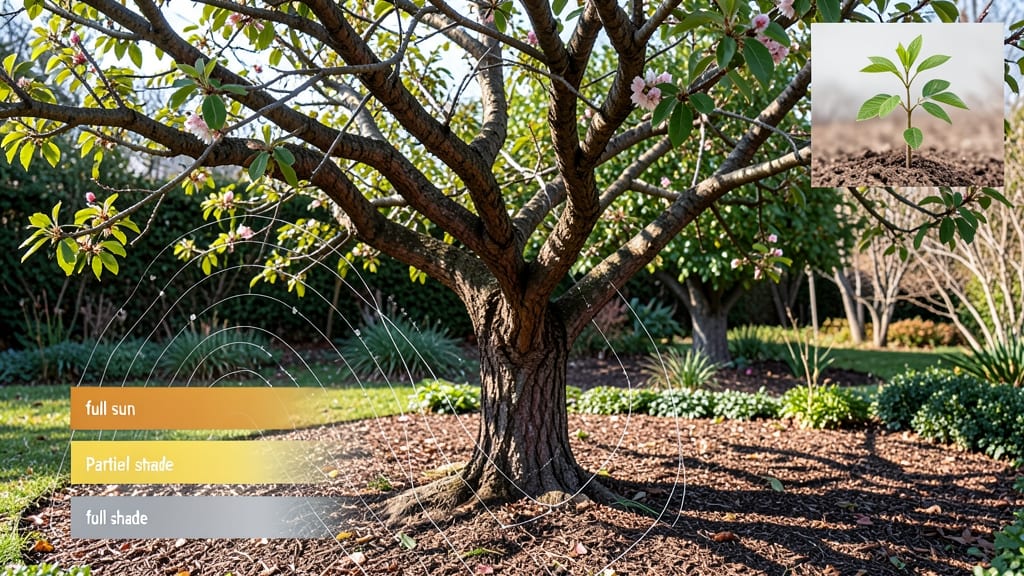
A cherry tree needs 6 to 8+ hours of sunlight daily 🍒 to produce sweet fruit and grow strong, and getting this right makes the difference between a thriving tree and one that barely sets fruit.
Picture this: You’ve planted your cherry tree with the best soil, watering schedule, and even pruned it just right—yet the fruit stays small, tart, or never ripens.
That’s often the sunlight talking. Too little, and your tree won’t bloom well; too much, and the fruit can scorch or split. The balance is everything.
Most gardeners in USDA Zone 6a assume full sun means "all day," but cherry trees—especially sweet varieties—need consistent, direct light without harsh afternoon glare. Shade from nearby structures or taller trees can trick the tree into thinking it’s getting enough sun, leading to weak branches and poor harvests.
In this guide, I’ll break down the exact sunlight needs by variety, how to spot signs of too much or too little light, and pro tips to maximize fruit quality even in smaller yards or urban spaces. Let’s get your cherry tree basking in the right amount of sun.


Optimal sunlight requirements for cherry trees by variety
Cherry trees are sun-worshippers, but not all varieties crave the same amount of light. Sweet cherries like Bing and Rainier demand 8+ hours of full sun daily for optimal fruit development, while tart cherries such as Montmorency can thrive with 6-8 hours.
Ornamental varieties, like the Black Tartarian, often tolerate partial shade but still need at least 5 hours of direct light to produce vibrant blooms. Understanding these differences is key to maximizing fruit quality and tree health.
Dwarf varieties—such as the Stella® or Sweetheart® cherries—require the same sunlight intensity as their standard counterparts but benefit from reflective surfaces (like white walls) to amplify light in tight spaces. Meanwhile, standard cherry trees (15-30 feet tall) need unobstructed sunlight to support their massive canopies and heavy fruit loads.
Even a 10% reduction in sunlight can slash fruit production by up to 40%.
Sunlight isn’t just about quantity—it’s about quality. Morning sun (6 AM–10 AM) is ideal for drying dew quickly, reducing fungal risks, while afternoon sun (2 PM–6 PM) helps ripen fruit faster.
However, intense midday sun (11 AM–2 PM) can scorch leaves on young trees, so light afternoon shade (via nearby trees or lattice) can be beneficial in hot climates like USDA Zones 8-10.
Here’s a quick breakdown of how sunlight impacts cherry trees:
| Variety Type | Sunlight Needs | Fruit Quality Impact | Growth Notes |
|---|---|---|---|
| Sweet Cherries (Bing, Rainier) | 8+ hours full sun | Max sugar content, vibrant color | Needs pruning for airflow |
| Tart Cherries (Montmorency, Morello) | 6-8 hours full sun | Balanced acidity, firm texture | Tolerates light shade in heat |
| Ornamental (Black Tartarian, Double Star) | 5-6 hours sun (partial shade OK) | Bold blooms, minimal fruit | Prune after blooming to preserve flowers |
| Dwarf Varieties (Stella®, Sweetheart®) | 6-8 hours (reflective surfaces help) | Compact fruit, high yield | Use containers for mobility |
| Standard Trees (all types) | 8+ hours (unobstructed) | Heavy fruit load, strong wood | Stake young trees for sun exposure |
For sweet cherries, insufficient sunlight leads to small, pale fruit with low sugar levels, while tart cherries may produce sour, underdeveloped fruit if light is lacking. Ornamental varieties, however, prioritize flower production over fruit, so they’re more forgiving with partial shade—though blooms will be less vibrant.
Always plant south-facing to maximize morning-to-afternoon sun exposure.
Regional adjustments matter too. In cooler climates (Zones 4-6), cherry trees benefit from extended sunlight to ripen fruit fully, while hot climates (Zones 8-10) may require afternoon shade cloth to prevent leaf scorch.
Test your yard’s sunlight with a sunlight tracker app for 3 days to pinpoint the best spot—aim for at least 6 hours of direct light even for shade-tolerant varieties.
Young cherry trees (under 3 years) are especially sensitive to light deprivation. Without adequate sunlight, they’ll develop weak stems and fewer blossoms the following spring. To compensate, prune competing branches in winter to open the canopy and avoid planting near tall structures that cast long shadows.
Even a 10-foot-tall fence can reduce sunlight by 30% during peak hours.
Pro tip: Mulch around the base with wood chips to retain soil moisture and reflective mulch (like white gravel) to bounce extra light onto the tree’s lower branches.
This is especially useful for dwarf varieties in containers, where roots compete for nutrients and light. Pair your cherry tree with low-growing companions
Signs your cherry tree isn’t getting enough (or too much) sunlight
Your cherry tree might be silently screaming for help if its sunlight exposure is off. Too little sun leads to weak growth, while too much can scorch leaves and stunt fruit production.
I’ve seen both extremes in my own garden, and the results are eye-opening. Let’s decode the visual clues your tree is giving you.
First, check the leaves. If they’re pale, sparse, or clustered only at the top, your tree is likely starving for sunlight. On the flip side, crispy brown edges or bleached patches mean it’s getting too much direct sun.
Both extremes tell a story—your tree’s health depends on finding that sweet spot of 6-8 hours of full sun daily.
Sunlight Needs Rating
If your cherry tree is producing tiny, underripe fruit or none at all, it’s likely not getting enough sun. Sweet cherries, in particular, need plenty of sunlight to develop their signature flavor.
I’ve found that moving a struggling tree just a few feet closer to the sun can double its fruit yield in a single season.
For over-sun exposure, watch for sunburnt leaves—they’ll look crispy with brown or white patches. This often happens on young leaves or in hot climates. To fix this, I recommend pruning lower branches to improve airflow and reduce direct sun exposure on sensitive areas.
A light layer of mulch can also help regulate soil temperature.
Don’t overlook the bark either. If it’s cracking or peeling excessively, your tree might be struggling with temperature swings caused by too much sun. In this case, consider planting near a reflective surface or using shade cloth during peak afternoon hours to protect it without sacrificing all sunlight.
Finally, pay attention to blooming patterns. Cherry trees need sunlight to trigger flowering. If blooms are sparse or absent, it’s a clear sign your tree isn’t getting enough light.
In my experience, relocating a tree to a sunnier spot can encourage vibrant blooms and better fruit set the following year.