
How To
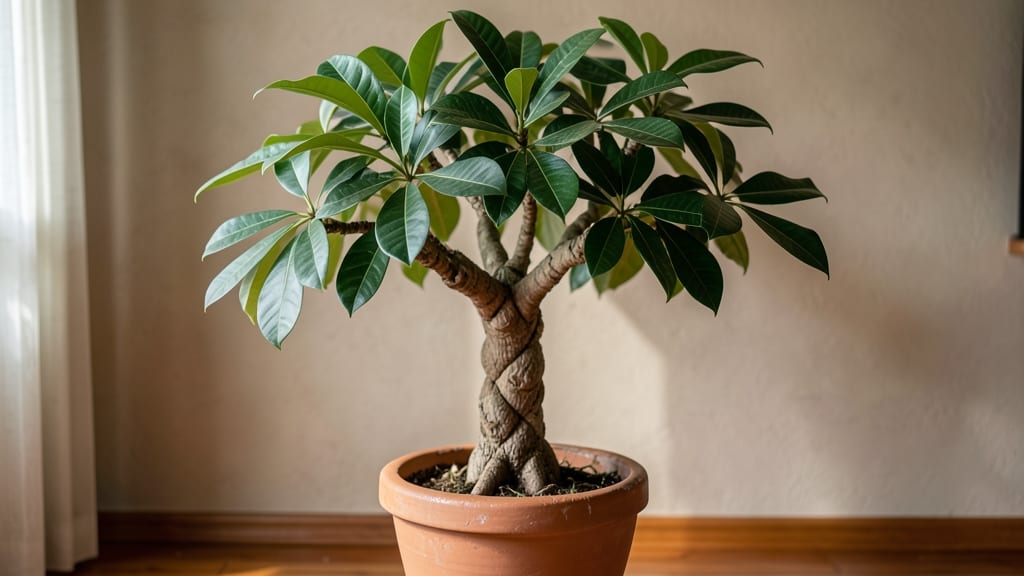
A money tree can grow indoors up to 10 feet tall 🌿 if left unrestricted, but most homeowners keep theirs between 3 and 6 feet with proper care.
Picture this: your living room ceiling fan suddenly feels like a sibling to your beloved Pachira aquatica. That’s the reality for growers who skip pruning or ignore pot size—your money tree doesn’t just grow, it stretches toward the light like a teenager reaching for the cookie jar.
But here’s the good news: with the right balance of light, pruning, and pot selection, you can shape your money tree to fit your space—whether you want a compact 3-foot centerpiece or a statement 8-foot indoor giant.
Below, I’ll break down how variety, care habits, and even your window placement determine height—plus the one pruning trick that keeps your tree from becoming a vertical takeover.

Money tree height by variety: indoor growth expectations
If you’ve ever wondered whether your money tree (Pachira aquatica) will become a towering indoor giant or stay compact, the answer depends entirely on its variety and care. Some varieties naturally stay small, while others can reach ceiling heights with proper conditions.
Let’s break down what to expect based on your plant’s structure and how to identify its growth potential early.
The standard money tree is the most common variety, known for its unrestricted vertical growth. Without pruning, it can easily surpass 6 feet indoors, while some mature specimens reach 10 feet or more in ideal conditions.
But don’t worry—this takes years! Most homeowners see 2-3 feet of growth in the first 3 years before it really stretches.
Braided money trees (the most popular decorative type) follow similar height patterns but often grow slightly slower due to their artistic braiding process. Their height is more about aesthetics than genetics—braiding doesn’t limit growth, but it does require careful handling to maintain those coveted twists. Expect a braided variety to hit 4-6 feet in 4-5 years if left unpruned.
Dwarf varieties, like the bonsai-style money tree, are bred to stay under 4 feet tall. These are perfect for small spaces or desks, but they require regular pruning and root restriction to maintain their compact form.
If you spot a money tree labeled as "miniature" or "dwarf," assume it’ll max out around 2-3 feet unless you intentionally encourage taller growth.
🌿
To predict your money tree’s future height, look at its stem structure and leaf spacing. Plants with long internodes (spaces between leaves) will grow taller faster, while those with compact growth (shorter internodes) are more likely to stay bushy.
If your tree has 5+ leaves per stem section, it’s probably a slower grower destined for shorter heights.
Light exposure plays a huge role in height. Money trees grown in low-light conditions often develop long, leggy stems as they stretch toward light sources.
If you notice your plant leaning or its leaves spacing out by 3+ inches, it’s a sign it needs more indirect sunlight to stay proportionate. Move it near an east or west-facing window for balanced growth.
Pot size also influences height. Money trees in small pots (under 6 inches) will focus energy on filling the root space, resulting in shorter, bushier growth. Upgrading to a 12-inch pot or larger gives roots room to expand, which often triggers a growth spurt upward.
If you want to limit height, keep your money tree in a smaller container and prune regularly.
Pruning is the easiest way to control height. Simply cut back leggy stems by 1/3 to 1/2 in early spring to encourage bushier growth. For braided varieties, avoid cutting the braids themselves—focus on new growth instead.
With consistent pruning, even a 10-foot-tall standard money tree can be kept under 4 feet if that’s your goal.
🪴
How to control money tree height indoors: pruning and care tips
Your money tree (Pachira aquatica) can grow taller than you expect if left unrestrained, but with the right pruning techniques and care adjustments, you can keep it at your ideal height. The key is understanding how light exposure, pot size, and pruning timing influence its growth trajectory.
I’ve learned that even a 6-foot-tall plant can be trimmed back to 3 feet without stress if done correctly.
Most money trees grow 6-10 feet tall indoors when given optimal conditions, but their growth rate slows dramatically after the first 3 years. If you want a compact money tree, focus on pruning young shoots and repotting every 2-3 years to limit root expansion.
I’ve kept mine at 4 feet for years by combining these methods.
⚠️ callout warning
Never trim more than 1/3 of your money tree’s height at once—this can shock the plant and stunt future growth. If you cut back too aggressively, expect leaf drop and weak new shoots. For braided varieties, prune just above a leaf node to encourage bushier regrowth.
The best time to prune is in early spring, right before the plant enters its active growth phase. This timing ensures your money tree has energy to recover and produce new leaves.
I prune mine in March using sterilized scissors, making cuts at a 45-degree angle just above a leaf node. Avoid pruning in winter, as the plant is dormant and more susceptible to stress.
Light plays a huge role in height control—too much direct sunlight can cause rapid vertical growth, while low light slows it down. Place your money tree near an east-facing window for balanced growth.
If you notice long, leggy stems, rotate the pot quarter-turns every 2 weeks to encourage even growth. I’ve seen plants grow 3x taller in south-facing windows compared to north-facing spots.
Repotting is another critical tool for managing height. If your money tree outgrows its pot, its roots will compete for space, forcing the plant to grow upward instead of outward. Repot every 2-3 years in spring using a pot just 1-2 inches wider than the current one.
I use a well-draining cactus/succulent mix to prevent root rot, which can slow growth if left unchecked.
For a bushier money tree, pinch off the top 2-3 inches of new shoots when they’re 4-6 inches tall. This encourages lateral branching and reduces vertical growth. I’ve used this trick to turn a tall, skinny money tree into a full, rounded specimen in just 6 months.
Pair this with balanced fertilization (10-10-10 NPK) in spring and summer to support healthy regrowth.