
Watering
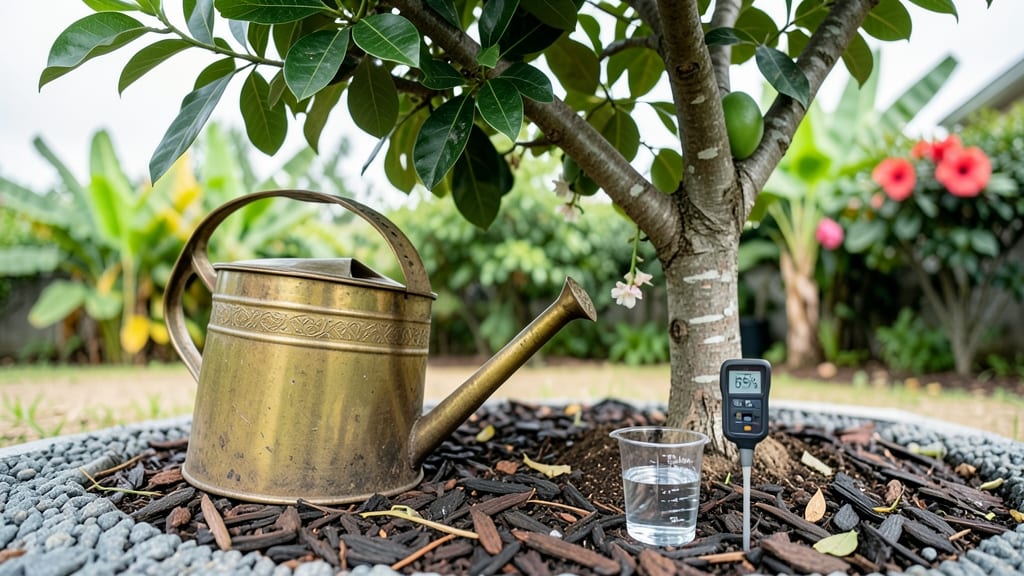
A mango tree needs deep, infrequent watering—about 15-20 gallons per session for mature trees in General (Tropical/Subtropical Regions)—but getting it right is the difference between a thriving 🥭 and a struggling one.
Picture this: you’ve poured water every few days, only to watch your mango tree’s leaves yellow and drop. Or worse, the soil stays soggy, and the roots rot. The truth?
Mango trees hate both extremes—they need moisture deep in the soil, not just a quick surface drink. Without the right balance, you’re either drowning the roots or leaving them parched.
Here’s the game-changer: watering isn’t a one-size-fits-all task. A young mango tree in Zone 10-11 needs more frequent deep soaks than a mature one, while a drought-prone summer demands extra care.
I’ll break down the exact schedule by climate, how to tell if you’re over- or underwatering, and the easiest tricks to keep your tree happy year-round.
By the end, you’ll know not just how much to water, but when and how—so your mango tree grows strong, flowers boldly, and rewards you with sweet, juicy fruit every season.
Mango tree watering requirements by climate zone: exact monthly schedule
Mango trees thrive in tropical and subtropical climates, but their watering needs vary dramatically depending on where you live. In humid Florida, you’ll water far less than in dry Arizona—yet both require precision. The key?
Understanding your USDA hardiness zone, soil type, and the tree’s age. Young mango trees need frequent deep watering, while mature trees store water better but still demand consistency during flowering and fruiting seasons.
Soil type plays a critical role: Sandy soil drains quickly, requiring daily checks in summer, while clay soil holds moisture longer, reducing frequency.
For example, a 5-year-old mango tree in Zone 10 might need 15 gallons of water every 5 days in sandy soil but only 10 gallons every 7 days in clay. Let’s break it down by climate zone so you can tailor your watering routine for peak health and fruit production.
| Climate Zone | Monthly Watering Schedule (Gallons/Week) | Soil Adjustments | Key Seasonal Notes |
|---|---|---|---|
| Tropical (Zones 10-11) | Jan: 10 | Feb: 12 | Mar: 15 | Apr: 20 | May: 25 | Jun: 30 | Jul: 35 | Aug: 35 | Sep: 25 | Oct: 15 | Nov: 10 | Dec: 8 | Sandy: +30% | Clay: -20% | Reduce watering during flowering (Mar-Apr) to prevent fruit drop. |
| Subtropical (Zone 9) | Jan: 8 | Feb: 10 | Mar: 12 | Apr: 18 | May: 22 | Jun: 28 | Jul: 32 | Aug: 32 | Sep: 20 | Oct: 12 | Nov: 8 | Dec: 6 | Sandy: +25% | Clay: -15% | Increase watering in summer heatwaves; reduce in winter dormancy. |
| Arid (Zones 8-9) | Jan: 5 | Feb: 6 | Mar: 8 | Apr: 12 | May: 18 | Jun: 22 | Jul: 28 | Aug: 28 | Sep: 15 | Oct: 8 | Nov: 5 | Dec: 4 | Sandy: +40% | Clay: -10% | Use mulch to retain moisture; water deeply at night to reduce evaporation. |
| Young Trees (<5 yrs) | 50% more than mature trees | Always use well-draining soil | Monitor soil moisture daily in summer; avoid waterlogging. |
In tropical zones (10-11), mango trees experience year-round growth, so watering remains high from March through September. The peak demand hits during summer months (June-August), where mature trees may need up to 35 gallons per week in sandy soil.
However, during flowering season (March-April), reduce water by 30% to encourage fruit set—overwatering here leads to premature fruit drop. In Zone 10, I’ve seen homeowners double their watering in July only to watch leaves scorch by August.
The fix? Deep watering every 3-4 days with morning irrigation to prevent fungal issues.
For subtropical climates (Zone 9), the schedule shifts with cooler winters. From November to February, cut watering by 50%—your tree enters a light dormancy phase. But watch out: Zone 9 freezes can damage roots if soil stays soggy.
In spring (March-May), ramp up watering as new leaves emerge, but avoid wetting foliage to prevent anthracnose disease. A trick I use? Drip irrigation placed at the drip line (not the trunk) keeps roots hydrated without splashing leaves.
Arid zones (like Southern California or Arizona) present unique challenges. Here, evaporation rates soar, and clay soil can bake hard in summer. Adjust your schedule by adding mulch (3-4 inches of wood chips) to lock in moisture.
In June and July, water every 2-3 days but only at night to minimize loss. Pro tip: Bury a rain gauge near your tree—m
5 Signs your mango tree is overwatered or underwatered (and how to fix it)
Your mango tree might look lush, but too much or too little water can silently damage its roots and leaves. Overwatering suffocates roots, while underwatering stresses the plant, both leading to poor fruit production.
The key is balancing moisture without drowning your tree—here’s how to spot the signs and act fast.
First, check the soil. Stick your finger 2-3 inches deep—if it’s soggy, you’re overwatering. If dry, it’s time to hydrate. Mature mango trees need 15-20 gallons per watering, but young trees require less. The goal? Deep, infrequent watering to encourage strong root growth.
🌱 How Much Water Does a Mango Tree Need?
- 🌿 Young Trees (1-3 years): 5-10 gallons every 5-7 days (adjust for heat/drought).
- 🌳 Mature Trees (4+ years): 15-20 gallons every 7-10 days (deep soak).
- ☀️ Hot/Dry Climates: Increase frequency to every 3-5 days (monitor soil moisture).
- 🌧️ Rainy Season: Reduce watering by 50% to prevent root rot.
- 🪴 Potted Trees: Water every 3-5 days (containers dry faster).
Watch for yellowing leaves—a classic sign of overwatering. If the leaves feel mushy or drop easily, your tree’s roots are suffocating. Prune affected branches and improve drainage by amending soil with perlite or sand. For underwatered trees, wilting leaves that curl at the edges are your warning.
Root rot is a silent killer. If your tree’s leaves turn brown and crispy while the soil stays soggy, you’re overwatering. Fix it by stopping water for a week, then repot in well-draining soil with gravel at the bottom.
Mulch around the base to retain moisture without suffocating roots—use 2-3 inches of organic mulch like wood chips.
Underwatered trees show dry, brittle leaves that may drop prematurely. To revive your mango tree, water deeply until soil is moist 6 inches down. Use a moisture meter to avoid guesswork—aim for 40-60% moisture in the root zone.
For potted trees, bottom-watering helps prevent overwatering while ensuring roots absorb moisture evenly.
Adjust your watering based on the season. During flowering/fruiting stages, reduce water slightly to prevent fruit drop. In winter, cut back to monthly watering unless you’re in a frost-free zone. Always water in the early morning to minimize evaporation and fungal risks.