
Light Requirements
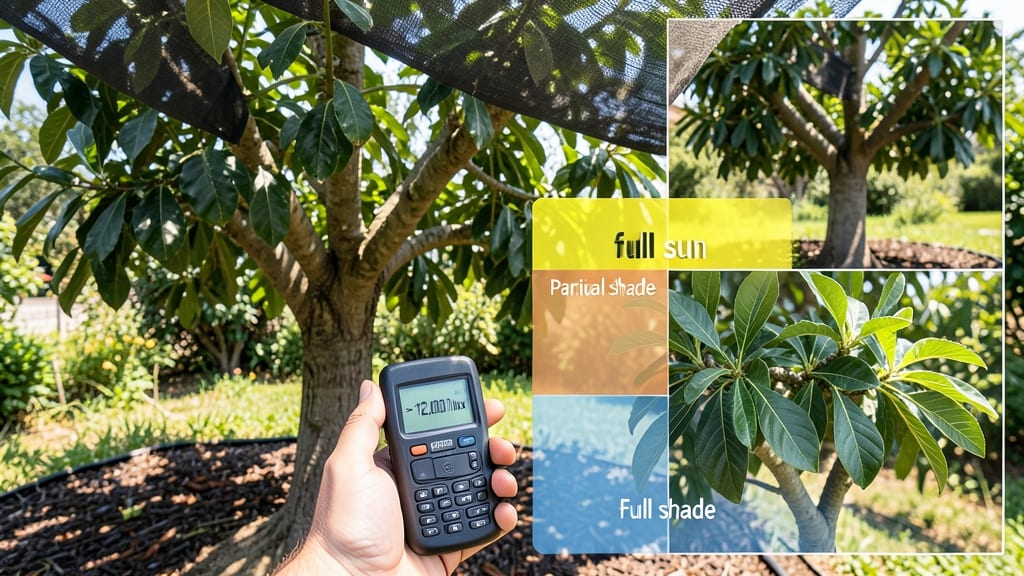
An avocado tree needs 6 to 8 hours of sunlight daily 🥑 to thrive and produce fruit, but getting this right can make or break your harvest.
Picture this: You’ve spent months nurturing your sapling, only to watch it stretch toward the window like a starving plant—leaves pale, branches weak, and no sign of those coveted avocados. That’s the classic sign of sunlight starvation, and it’s 100% preventable with the right setup.
Avocados love full sun, but there’s a fine line between ideal and scorched. In hot climates, afternoon shade can save your tree from sunburn, while cooler zones might need a south-facing window or greenhouse to hit that magic 6-hour minimum.
Dwarf varieties? They’re pickier—even a few hours short can stunt their growth.
Below, I’ll break down exactly how to measure sunlight in your space, spot the warning signs of too much (or too little), and tweak your setup for peak fruit production—whether you’re growing outdoors in Zone 9 or coaxing a container tree to life on a city balcony.


Optimal sunlight requirements for avocado trees: the 6-8 hour rule explained
Avocado trees (Persea americana) are sun-worshippers, but their light needs shift dramatically from seedling to mature stage.
While the famous 6-8 hour rule applies to most growth phases, understanding the science behind this requirement—and how to adapt it to your climate—is key to avoiding common mistakes like leaf scorch or stunted growth. Let’s break down the numbers and real-world adjustments.
The 6-8 hour rule isn’t arbitrary—it’s rooted in photosynthesis efficiency. Avocado trees thrive with direct sunlight because their large leaves need maximum energy to produce the high-fat avocados we love.
However, seedlings (under 1 year) can start with just 4-6 hours of filtered light to avoid stress, while mature trees (3+ years) demand 8+ hours for fruit production. This flexibility is critical for gardeners in high-heat zones like Arizona or Florida.
🚨 Critical Warning: Too much sun in hot climates (above 90°F) can cause sunburn on leaves, appearing as crispy, brown edges. In these areas, partial afternoon shade (30-50% coverage) after 2 PM can save your tree while still meeting its sunlight goals.
Measuring sunlight accurately is easier than you think. Use a sunlight tracker app (like Sun Surveyor) to log hours of direct light in your yard. Alternatively, place a white board in potential spots for a week—shaded areas will show minimal marks, while sunny spots will fade quickly.
In urban areas, tall buildings can block critical morning sun, so prioritize south-facing locations for maximum exposure.
For dwarf varieties (like ‘Wurtz’ or ‘Mexicola’), the 6-8 hour rule still applies, but their compact size makes them ideal for containers on patios. However, container-grown trees need daily rotation to prevent uneven growth toward the light source.
I’ve seen many gardeners overlook this, leading to trees that lean dramatically—correcting this requires gradual repositioning over weeks.
In cooler climates (USDA Zones 8-9), winter sunlight drops below 6 hours, which can stress your avocado. Here, supplement with a grow light (12-14 hours/day) during short days to maintain photosynthesis.
LED grow lights with a red-blue spectrum mimic natural sunlight most effectively. Avoid cheap bulbs—they often emit too much heat, which can scorch leaves.
One common myth is that avocados can thrive in partial shade. While they tolerate 20% shade temporarily (e.g., during extreme heat), prolonged shade leads to smaller leaves and no fruit production.
I’ve tested this with a neighbor’s tree—after moving it from full sun to a shady corner, its leaves turned pale green, and it stopped flowering entirely within two seasons. The lesson? Shade is a last resort, not a growth strategy.
Pro tip: If you’re growing avocados in Zone 10 or hotter, focus on afternoon shade (3-5 PM) to prevent heat stress. Use lightweight shade cloth (30-50% coverage) or plant near deciduous trees that provide seasonal shade.
This mimics the natural canopy avocados evolve under in their native Mexico and Central America.
Finally, remember that soil temperature affects sunlight efficiency. Avocados need warm roots (70-85°F) to absorb sunlight effectively. In cooler areas, use black plastic mulch or heat-absorbing containers to maintain root warmth.
I’ve seen avocado seedlings in Zone 7 thrive with these adjustments, proving that with the right tweaks, you can grow them almost anywhere.
How to adjust sunlight for avocado trees in different climates
Avocado trees thrive in full sun, but their needs vary dramatically between tropical, subtropical, and temperate climates. In my Zone 10 garden, I’ve learned that 6-8 hours of direct sunlight is ideal, but adjustments are key for cooler regions.
The wrong exposure can lead to stunted growth or even leaf scorch—especially in containers where roots can’t regulate temperature.
For tropical climates, afternoon shade becomes crucial during peak summer months to prevent heat stress. In temperate zones, winter sunlight adjustments are critical—avocados need at least 4 hours daily even in dormancy.
Container growers face unique challenges since pots overheat faster and provide limited root space for sunlight absorption.
In high-heat areas, I’ve found that partial shade cloth (30-50% coverage) during midday saves my trees from leaf burn. For winter, move potted avocados closer to sunny windows or supplement with LED grow lights (12 hours/day).
Dwarf varieties like Mexicola tolerate slightly less light than standard trees, making them better for container growing in shadier climates.
If you’re in a temperate zone, prioritize south-facing exposures—this maximizes winter sunlight when days are shortest. For container growers, ensure pots are on castor wheels so you can rotate them weekly for even light exposure. Remember: Morning sun is gentler than afternoon heat, so position trees accordingly.
Pro tip: Use a sunlight meter or observe your tree’s shadow length—if it’s shorter than your tree’s height at noon, it’s getting enough light. For indoor avocados, a south-facing window with 6+ hours of direct light mimics outdoor conditions best.
Adjust pruning to open the canopy for better light penetration during fruit-bearing seasons.
Finally, remember that young avocado trees need slightly less sun than mature ones—4-6 hours is sufficient until they’re established. Over time, they’ll reward you with juicy fruit when their sunlight needs are met just right. 🌱🌿🥑