
Blooming
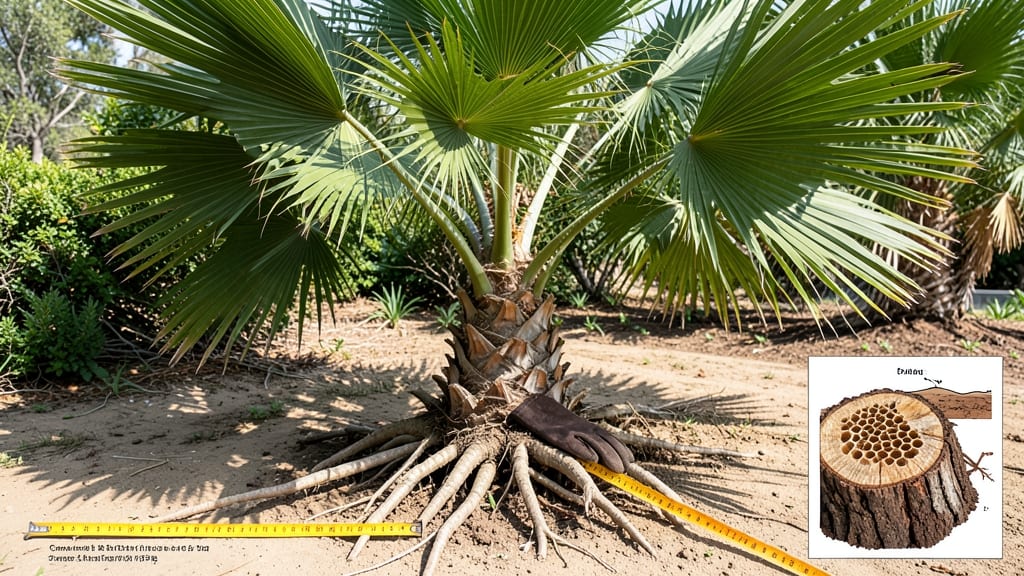
Palm tree roots spread 1.5 to 3 times the tree’s height horizontally while typically extending 6 to 12 inches deep, though varieties like the coconut palm can develop deeper taproots for extra stability. The spread varies significantly by species, soil composition, and environmental factors, with mature specimens often anchoring much wider than younger palms.
Understanding palm tree root systems helps explain why some species thrive in sandy soils while others struggle. 🌳 The horizontal spread is what most people overlook—it's why palm trees need plenty of space to prevent root competition with sidewalks or nearby structures.
For instance, a 30-foot-tall royal palm could have roots stretching up to 90 feet outward, which is why many cities require specific planting distances from foundations.
Soil type plays a huge role too. In loose, sandy soils, roots spread wider but stay shallow, while clay-heavy soils force roots to grow deeper for stability. This is why coconut palms—native to tropical beaches—often develop those impressive taproots to anchor against wind and waves.
If you're planting palms near your home, always check local guidelines to avoid future structural damage from aggressive root growth.
💡 In This Article
- Palm Tree Root Systems by Species: Spread vs. Depth
- Planting Palm Trees Safely: Avoiding Root Damage
Palm tree root systems by species: spread vs. depth
Palm tree root systems vary dramatically between species, with horizontal spread being the defining characteristic. The coconut palm, for example, develops a unique combination of shallow lateral roots and a deep central taproot that can reach 3 to 5 feet deep—critical for anchoring against coastal winds.
Meanwhile, species like the Mexican fan palm spread their roots in a wide, shallow network that stays within the top 12 inches of soil, making them ideal for rocky or poor-quality soils where deep penetration isn't possible. 🌴
Date palms represent another extreme, with roots that can extend horizontally up to 50 feet from the trunk while maintaining a depth of just 18 to 24 inches. This wide but shallow structure allows them to efficiently absorb water from the vast desert soils they inhabit.
In contrast, the windmill palm (Trachycarpus fortunei) grows a more compact root system that spreads only about 1.5 times its height but develops thicker, more fibrous roots that penetrate deeper than most ornamental palms—up to 3 feet in some cases.
The key factor influencing these differences is soil composition. Sandy soils, common in coastal regions where many palms thrive, offer little resistance to horizontal growth, encouraging wide-spreading root systems.
Clay-heavy soils, however, force roots to grow deeper in search of nutrients and stability, which is why you'll see palms in tropical gardens with more pronounced vertical roots when planted in heavy soil conditions.
This adaptation explains why coconut palms can survive hurricane-force winds—their deep taproots act like underwater anchors in loose beach sand. 🌊
Age also plays a critical role in root development. Young palm trees focus their energy on vertical growth, so their roots remain relatively shallow and compact.
As the tree matures, the root system expands horizontally at a rate of about 6 to 12 inches per year, while depth increases more gradually.
This is why a 20-foot-tall palm might have roots extending only 2 feet deep initially, but that same tree at 50 feet tall could have roots reaching 4 feet or more in ideal conditions.
One fascinating exception is the African oil palm (Elaeis guineensis), which develops a unique "plate" root system. These roots grow horizontally but remain very close to the surface, forming a dense mat that can spread up to 100 feet in ideal conditions.
This adaptation helps the tree stabilize itself in the nutrient-poor, waterlogged soils of its native African rainforest habitat. The trade-off is that these shallow roots make the tree particularly vulnerable to soil erosion and flooding. 🌧️
Understanding these variations helps explain why some palms thrive in urban landscapes while others struggle.
For instance, the Mediterranean fan palm (Chamaerops humilis) grows a more contained root system that makes it suitable for planting near sidewalks, while the towering California fan palm (Washingtonia filifera) requires significantly more space due to its aggressive horizontal spread.
Always research the specific species before planting near structures or other vegetation.