
Pruning
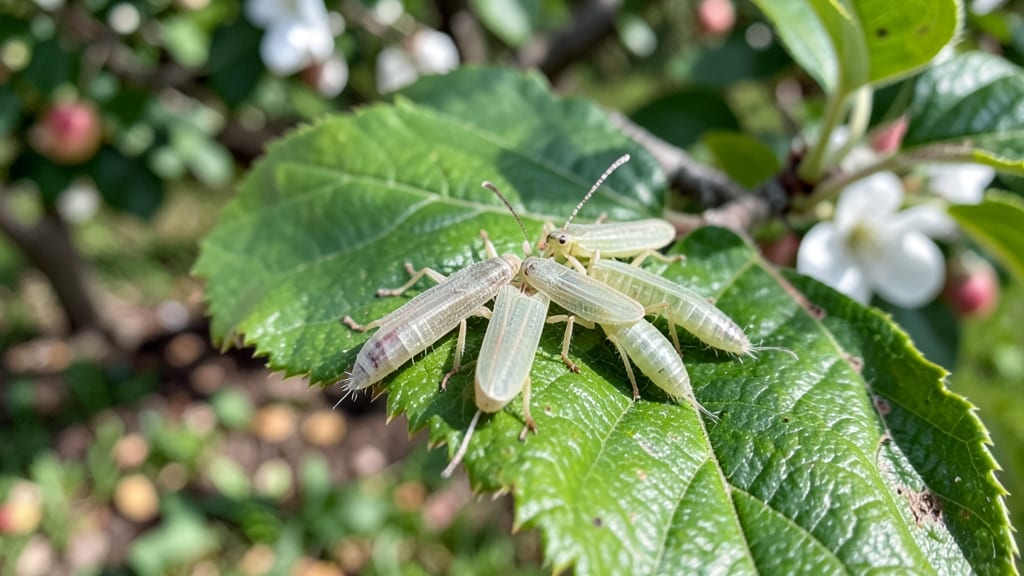
Apple tree leaf bugs can turn your lush canopy into a skeleton in weeks—unless you act fast. 🌿 I’ve battled aphids, mites, and leafhoppers on my orchard trees, and these organic sprays stop the damage within 24-48 hours without harming bees or your soil.
The key is identifying the culprit first, then hitting them with targeted, plant-safe solutions.
Most leaf bugs—like aphids or spider mites—leave behind sticky residue, yellowed leaves, or tiny webs. Aphids cluster on new growth, while mites create fine webbing between branches. A quick water spray test (hose off leaves) often dislodges soft-bodied pests, but stubborn infestations need stronger action.
The good news? Neem oil, insecticidal soap, and garlic spray work faster than you’d expect when applied correctly.
You’ll see results almost immediately with the right mix: neem oil disrupts feeding within hours, while garlic spray deters repeat visits. Prevent future outbreaks by pruning infected branches in late winter, encouraging beneficial insects like ladybugs, and avoiding over-fertilizing (which attracts pests).
My trees stay bug-free for months after just one treatment season.
If the bugs return despite your efforts—or if you spot sawdust-like frass (a sign of borers)—it’s time to call an arborist. But for 90% of leaf bug problems, these DIY fixes work like magic. Let’s get your tree back to healthy, vibrant growth.
Root Causes Of Leaf Damage
When your apple tree’s leaves start looking like a bug buffet, it’s often due to a mix of environmental stress and hungry pests. Understanding why these issues arise is the first step to protecting your tree.
Below, we break down the most common culprits—from tiny invaders to overlooked growing conditions—and explain the science behind their behavior.
Apple trees are magnets for sap-sucking insects, each with its own strategy for feasting on your foliage. Here’s how they operate:
🍎 Sap-Sucking Insects: The Silent Thieves
Many leaf bugs—like aphids, mites, and psyllids—insert their mouthparts into leaf tissue to drain nutrients. This disrupts the tree’s ability to photosynthesize, causing:
- Yellowing or stippling (tiny white or brown dots) from cell damage.
- Curling or distorted leaves as the tree tries to "wall off" the attack.
- Sticky residue (honeydew) that attracts sooty mold, further weakening the tree.
Why it happens: These pests thrive in warm, humid conditions and often target stressed trees (more on that below). Their saliva contains toxins that trigger leaf deformities, making early intervention critical.
🐛 Leaf-Chewing Culprits: The Visible Destroyers
Unlike sap-suckers, bugs like leafhoppers, caterpillars, and Japanese beetles take bites out of leaves, leaving behind:
- Irregular holes or notches along leaf edges.
- Skeletonized leaves (veins remain, but tissue is gone).
- Frass (insect droppings) scattered on foliage.
Why it happens: These insects are drawn to young, tender leaves and often swarm in late spring/early summer when new growth is most vulnerable. Overcrowded trees or those near wild apple orchards are higher-risk targets.
Bugs love a weakened host. If your apple tree is already struggling, it’s an open invitation for pests. Common stress factors include:
💧 Water Woes: Too Much or Too Little
- Overwatering: Soggy soil suffocates roots, starving the tree of nutrients and making it less resilient to pests. Result: Soft, pale leaves that attract aphids and mites.
- Underwatering: Drought-stressed trees produce thick, waxy leaves—ideal hiding spots for spider mites and scale insects.
Why it happens: Proper watering (1–1.5 inches per week) keeps the tree’s immune system strong. Stress signals, like wilting or yellowing, often arrive before bugs do—so act fast!
🌡️ Extreme Temperatures: Heat and Cold Shock
- Heatwaves: High temps (above 90°F) accelerate pest reproduction. For example, spider mites multiply 20x faster in heat.
- Late frosts: New leaves emerging after a freeze are tender and easy pickings for leafhoppers.
Why it happens: Temperature swings disrupt the tree’s natural defenses. Mulching (2–4 inches of organic material) helps regulate soil temp and retain moisture.
🌿 Poor Nutrition: The Silent Weakener
Apple trees need balanced nutrients (especially nitrogen, phosphorus, and potassium) to produce tough leaves. Deficiencies show up as:
- Pale yellow leaves (nitrogen deficiency) → Aphids move in.
- Purple or red stems (phosphorus deficiency) → Weakens root systems, making trees prone to borers.
Why it happens: Soil tests reveal imbalances. A slow-release organic fertilizer (like compost or fish emulsion) can restore vigor before bugs arrive.
Not all apple trees are equally attractive to pests. Here’s how genetics and age play a role:
🍎 Young Trees: Prime Targets
Newly planted apple trees have thin bark and tender leaves, making them easy prey. Common early-stage pests:
- Apple curculio (weevil) lays eggs in buds, leading to deformed fruit and leaves.
- Woolly aphids cluster on branches, exuding sticky cotton-like strands.
Why it happens: Young trees lack the resinous defenses of mature trees. Pruning to improve airflow and applying neem oil (a natural deterrent) can help.
🌿 Susceptible Varieties: Some Trees Are Bug Magnets
Certain apple cultivars are more attractive to pests due to:
- High sugar content (e.g., ‘McIntosh’ draws codling moths).
- Thin leaf cuticles (e.g., ‘Gala’ is prone to mites).
Why it happens: Research-backed varieties like ‘Liberty’ or ‘Enterprise’ are bred for pest resistance. If you’re stuck with a high-risk type, regular monitoring** is key.
Pro Tip: 🔍 Inspect leaves undersides and new growth first—this is where bugs hide and strike. Use a magnifying glass for early detection!
Quick Fixes for Leaf Bugs
If your apple tree is under siege by leaf bugs—whether they’re aphids, lacewings, or leafhoppers—you’ll want to act fast to protect your harvest. The good news? Most of these pests can be managed with simple, organic methods that work in hours or days.
Below, we break down the most effective solutions, tailored to the root cause of your problem.
When bugs are still in small numbers, a hands-on approach is the fastest way to stop them before they multiply.
- 👨🍳 Inspect daily: Check leaves, buds, and stems for clusters of bugs, especially on the undersides of leaves. Early detection means less damage.
- 💦 Spray with water: Use a strong stream from a hose to blast bugs off leaves. Repeat every 2–3 days for severe infestations.
- 🍃 Prune affected branches: If bugs are concentrated on specific limbs, trim and dispose of heavily infested branches in a sealed bag.
Pro tip: Do this in the early morning when bugs are sluggish, and repeat after rain to maximize effectiveness. 🌧️
If the infestation is spreading, organic sprays can provide immediate relief while being safe for your tree and the environment.
🔥 Neem Oil Spray (Best for Aphids & Soft-Bodied Bugs)
Neem oil disrupts the life cycle of many leaf bugs and has a strong scent that repels them.
- 🛒 Mix: 1 tbsp neem oil + 1 tsp mild soap (like castile) + 1 quart water.
- 🌿 Apply: Spray thoroughly on both sides of leaves and the tree trunk. Do this at dusk to avoid harming beneficial insects.
- ⏰ Repeat: Every 5–7 days until the bugs are gone.
🍳 Garlic & Chili Pepper Spray (Deters Leafhoppers & Lacewings)
A natural, non-toxic repellent that bugs hate.
- 🧄 Blend: 2 cloves garlic + 1 tbsp cayenne pepper + 1 quart water. Let steep overnight.
- 🌿 Strain and spray: Apply to leaves, focusing on new growth where bugs love to hide.
- ⏰ Frequency: Reapply after rain or every 3–4 days.
Pro tip: Add a few drops of dish soap to help the spray stick to leaves longer. 🧼
🌡️ Horticultural Oil (For Sticky Residue & Eggs)
If your tree has a sticky residue (from aphid honeydew), horticultural oil suffocates bugs and their eggs.
- 🛒 Use: A pre-mixed oil like JMS Stylet Oil or Safer Brand Horticultural Oil.
- 🌿 Apply: Spray evenly on all surfaces, including the undersides of leaves.
- ⏰ Timing: Best used in cool weather (below 85°F) to avoid burning leaves.
Once your tree is bug-free, keep it that way with these proactive steps.
💡 Encourage Beneficial Insects
Ladybugs, lacewings, and parasitic wasps are natural predators of leaf bugs. Attract them with:
- 🌼 Planting dill, fennel, or yarrow nearby as companion plants.
- 🌿 Avoiding broad-spectrum pesticides that kill helpful insects.
🌡️ Maintain Tree Health
Healthy trees resist pests better. Keep your apple tree strong with:
- 💧 Regular watering (deep but infrequent to encourage deep roots).
- 🍃 Mulching around the base to retain moisture and deter weeds.
- 🌿 Pruning in late winter to improve airflow and sunlight penetration.
🔥 Early Season Monitoring
Catch problems before they start with these habits:
- 🔍 Inspect new leaves and buds in early spring for the first signs of bugs.
- 📅 Set a reminder to apply preventive sprays (like neem oil) before blooming season.
With these targeted fixes, your apple tree should bounce back quickly—and stay bug-free for the season. The key is speed and consistency, so don’t wait until the infestation spreads! 🚀
Frequently asked questions
What are the most common apple tree leaf bugs I should watch for?
The top culprits are aphids (tiny green/black clusters), spider mites (red/yellow specks with webbing), and leafhoppers (small, wedge-shaped bugs that jump). Look for curled leaves, sticky residue (honeydew), or tiny holes—these are dead giveaways.
Can I use dish soap to kill apple tree leaf bugs?
Yes! Mix 1 tablespoon mild castile soap with 1 quart water and spray directly on bugs. The soap disrupts their protective coating, causing dehydration. Test on a small leaf first—some trees are sensitive to concentrated soaps. Reapply every 3-5 days for severe infestations.
Why do my apple tree leaves turn yellow after treating for bugs?
Yellowing can happen if you overapply sprays (especially oils) or if the tree was already nutrient-deficient. Always dilute treatments properly and water the soil before spraying to prevent leaf burn. Check for nitrogen deficiency (pale yellow leaves) and fertilize with compost if needed.
How often should I check my apple tree for leaf bugs?
Inspect your tree weekly during growing season (spring to fall), focusing on new leaves and undersides. Early detection is key—bugs multiply rapidly! Use a 10x magnifying glass for hard-to-spot pests like mites. Morning inspections work best when bugs are sluggish.
Will neem oil harm bees if I spray my apple tree?
Neem oil is safe for bees when used at dusk or dawn (when they're not active) and applied below 85°F. Never spray during bloom time—wait until flowers have fallen. For extra safety, choose bee-friendly varieties like 'Liberty' apples that resist pests naturally.