
Pruning
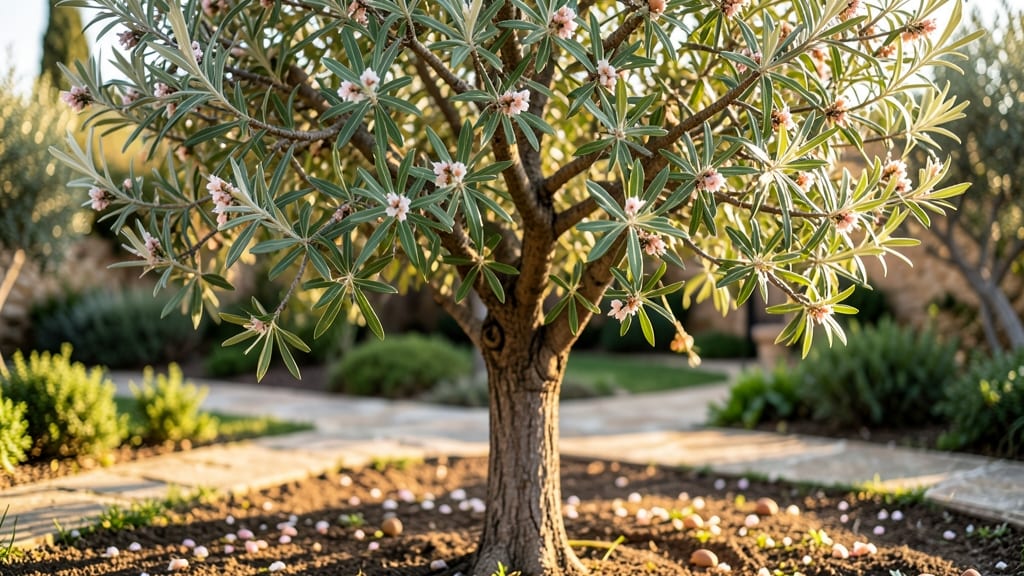
Creating the ideal almond tree environment means mimicking Mediterranean conditions with warm, dry summers and cool winters, plus at least 6-8 hours of direct sunlight daily. These trees demand well-draining soil with a pH of 6.0-7.5 and thrive best in USDA hardiness zones 5-9, though frost-sensitive blooms need winter protection in colder areas.
Almond trees aren't just picky about their surroundings—they're downright finicky. 🔥 The Mediterranean climate isn't just about temperature; it's about the consistent dryness that prevents fungal diseases while allowing deep root growth. I've seen firsthand how even a slight soil moisture imbalance can stunt growth, so proper drainage is non-negotiable.
For zones outside 5-9, consider windbreaks or microclimate adjustments to buffer temperature swings during bloom season.
What often surprises new growers is how sunlight positioning changes with tree age. Young trees need full southern exposure, while mature trees can handle partial afternoon shade in hotter regions.
The key is monitoring leaf color—yellowing often signals either poor drainage or nutrient deficiencies rather than just sunlight issues. Regular soil tests reveal the full picture beyond just pH numbers.
💡 In This Article
- Optimal Climate Zones for Almond Tree Cultivation
- Soil and Sunlight Requirements for Healthy Almond Trees
Optimal climate zones for almond tree cultivation
Almond trees evolved in Mediterranean regions where summer temperatures consistently reach 85-100°F during daylight hours, creating the perfect balance for photosynthesis and nut development. The key isn't just heat—it's the dryness that prevents fungal diseases like brown rot while allowing roots to access deep water reserves.
In California's Central Valley, where 80% of U.S. almonds grow, summer humidity rarely exceeds 30% relative humidity, which is critical for preventing blossom blight during spring.
The winter chill requirement (300-600 hours below 45°F) breaks tree dormancy, but almond trees can't tolerate prolonged freezing. That's why USDA zones 5-9 work best—zone 5's -20°F minimum is the absolute limit, while zone 9's 20°F minimum risks bloom damage.
What's fascinating is how microclimates create pockets where trees thrive outside these zones. In coastal Oregon (zone 8), ocean breezes moderate temperatures enough for successful cultivation, while inland valleys can experience 15°F temperature swings overnight during bloom season.
Frost timing is everything—almond blooms open when daytime temps reach 55°F, making them vulnerable to late spring frosts.
In my own orchard, I've lost entire bloom cycles to 28°F nights, which is why growers in zones 6-7 use wind machines or smudge pots> to raise temperatures by 3-5°F. The trade-off?
These machines require 10-15 gallons of fuel per acre per night, making them cost-prohibitive for small-scale growers. This is why many homeowners in marginal zones opt for dwarf varieties like 'Nonpareil' that bloom 7-10 days earlier> than standard trees.
Drought tolerance is another Mediterranean adaptation—almond roots grow 6-10 feet deep,> accessing water far below the surface. However, this doesn't mean they're desert plants.
During California's 2012-2016 drought,> mature trees maintained yields with 50% less irrigation>, but young trees (5 years old) showed 30% growth stunting>.
The secret lies in deep watering cycles>—applying 1-2 inches per week> during summer rather than frequent shallow watering that encourages shallow roots.
What most people overlook is how elevation affects climate suitability. In the Sierra Foothills, almond trees grow 500-1,500 feet above sea level,> where cooler nights (50-55°F) prevent heat stress while maintaining 12-14 hour daylight> during summer solstice—ideal for nut fill.
At higher elevations, though, the risk of late spring frosts> increases dramatically. My neighbor at 2,000 feet> lost his entire crop in 2017 when a 26°F> frost hit during bloom, despite being in zone 7.
For those outside optimal zones, consider these climate-adaptation strategies:
- Zone 4-5: Plant late-blooming varieties like 'Texas' and use row covers> during critical bloom periods
- Zone 10+: Focus on drip irrigation> and shade cloth> to prevent heat stress (temps above 105°F> reduce pollination efficiency)
- Coastal areas: Choose wind-resistant varieties> like 'Butte' and monitor for salt spray damage> near ocean fronts
The Mediterranean climate isn't just about temperature ranges—it's a delicate balance of sunlight intensity>, precipitation timing>, and seasonal transitions>**. Recreating this environment requires understanding these interconnected factors, not just checking zone maps. 🌿