
Pests and Diseases
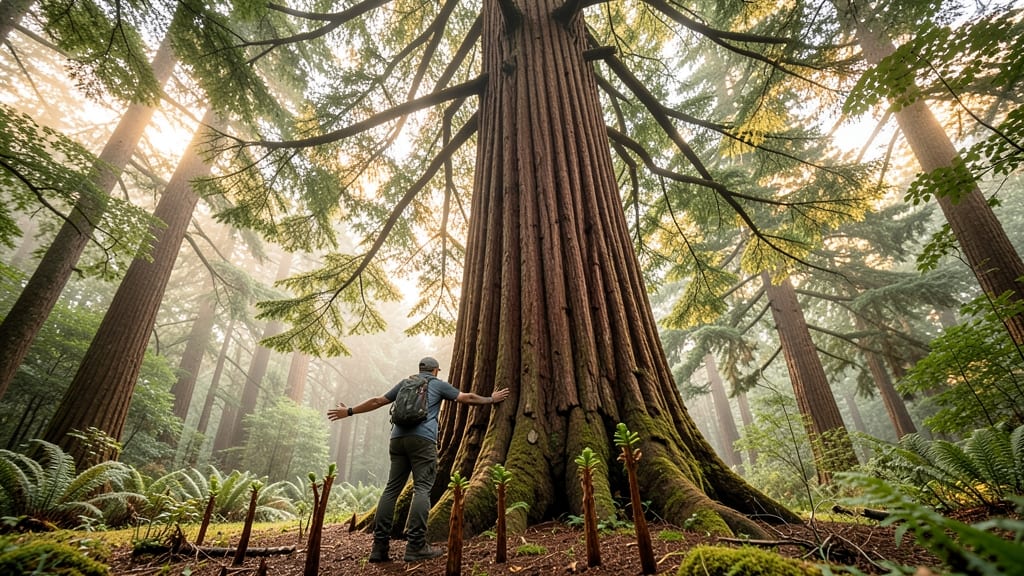
The tallest type of tree in the world is the coast redwood (Sequoia sempervirens), which can grow over 379 feet tall, with the tallest recorded specimen reaching 380.1 feet. These towering giants thrive in California’s foggy coastal regions and rely on deep root systems and ideal climate conditions.
The coast redwood holds the world record for tallest trees, dwarfing even the mighty Douglas fir and giant sequoia. 🌲 These ancient giants grow so high because their shallow but extensive root systems anchor them while their rapid vertical growth—up to 3 feet per year in ideal conditions—lets them outpace competitors.
The foggy coastal climate provides the perfect balance of moisture and sunlight, creating the ideal environment for their massive height. Unlike many trees, redwoods don't need deep soil—they spread their roots wide to capture water from the thick fog that rolls in daily.
What's fascinating is how these trees maintain their height over centuries. Their bark, which can be up to 12 inches thick, protects them from fires and pests, while their needle-like leaves minimize water loss.
This combination of adaptations allows them to dominate their ecosystem, reaching heights that seem almost otherworldly. For perspective, a fully grown redwood could tower over a 40-story building!
💡 In This Article
- How Coast Redwoods Achieve Unmatched Heights
- Cultivating Giant Trees: Tips for Growing Tall Trees
How coast redwoods achieve unmatched heights
Coast redwoods (Sequoia sempervirens) dominate the forest canopy thanks to their extraordinary vertical growth rates—young trees can grow 3 to 4 feet per year under ideal conditions, with some reaching 6 feet annually when young.
This rapid ascent is fueled by their shallow but expansive root systems, which spread horizontally up to 100 feet wide to capture water from the dense coastal fog.
Unlike deep-rooted trees, redwoods rely on this wide network to stabilize their towering trunks while accessing moisture from both soil and atmospheric sources.
Their success also stems from genetic advantages: redwoods produce hormones that suppress lateral branching, directing all energy upward. This vertical growth strategy contrasts sharply with Douglas firs, which grow more slowly (1-2 feet per year) and develop dense, conical crowns.
Redwoods' needle-like leaves further optimize their height advantage by reducing water loss while maximizing photosynthesis in the dim understory light. The combination of these traits allows them to outcompete other species in their foggy, nutrient-rich habitat.
Climate plays a crucial role—coast redwoods thrive in California's mild, foggy coastal regions where temperatures rarely drop below freezing or exceed 90°F. The persistent fog provides up to 40% of their water needs, while the stable climate prevents the stress that would stifle growth in more extreme environments.
This ideal combination of moisture, temperature, and genetic adaptations creates the perfect storm for producing trees that can reach 380 feet—taller than a 100-foot basketball court stacked vertically.
What's especially remarkable is how redwoods maintain their height over centuries. Their fire-resistant bark (up to 12 inches thick on mature trees) protects them from wildfires, while their thick, fibrous wood resists decay.
This resilience allows them to live for 2,000 years or more, continuously adding height throughout their lifespan. Even when damaged, redwoods can regenerate from their base, ensuring their dominance in the forest ecosystem.
For comparison, the giant sequoia (Sequoiadendron giganteum), while wider in diameter, rarely exceeds 300 feet in height. The key difference lies in their growth strategies: giant sequoias grow thicker trunks to store water, while coast redwoods prioritize vertical expansion.
This fundamental contrast explains why coast redwoods hold the world record for height—it's not just about size, but about how they've evolved to maximize upward growth in their unique environment. 🌲