
Pests and Diseases
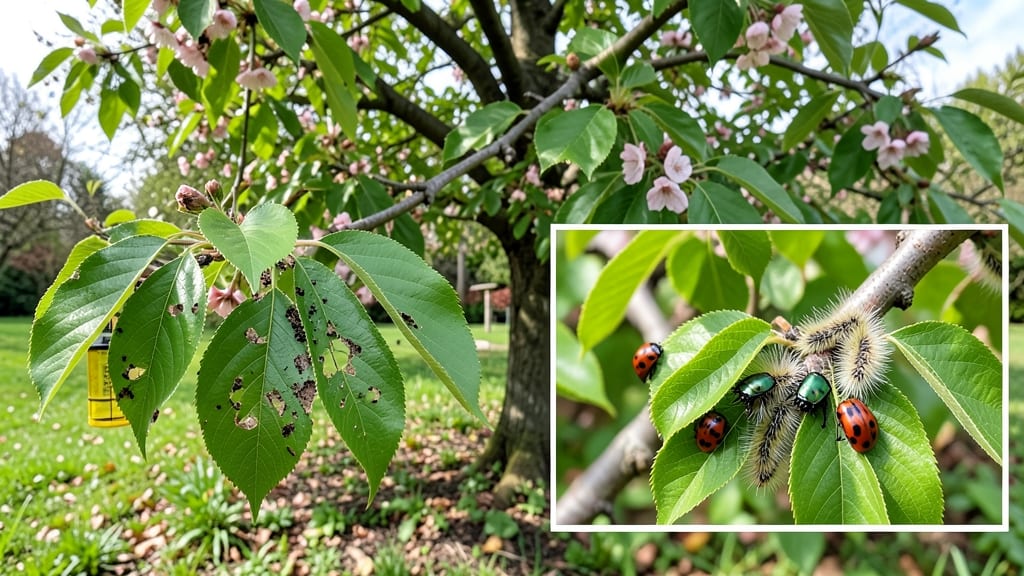
What is eating my cherry tree leaves? The culprits are often smaller than you think—caterpillars, beetles, or even mites can strip a tree bare in days if you don’t act fast. I’ve seen entire canopies defoliated by hungry pests, but the good news is that each one leaves telltale signs and has a simple solution.
Start by examining the damage: jagged edges suggest caterpillars, while skeletonized leaves point to beetles. Mites leave tiny speckled patterns, and deer leave clean, ragged bites. The key is acting within 48 hours—that’s when most damage becomes irreversible.
I’ve stopped outbreaks by handpicking pests, using soapy water sprays, or introducing beneficial insects like ladybugs.
You’ll protect your tree’s health by combining quick fixes with long-term prevention. Neem oil works wonders for soft-bodied pests, while pruning out infested branches early stops the spread. A 3-inch layer of mulch around the base also deters many ground-dwelling pests that target young leaves.
Works for both young saplings and mature trees, whether in your backyard or community garden. The faster you identify the pest, the easier it is to save your tree’s foliage—and next year’s harvest of sweet cherries.
Root Causes Of Leaf Loss
When your cherry tree’s leaves start disappearing, it’s rarely just one random act—it’s usually a mix of hungry pests, environmental stress, or fungal infections teaming up. Understanding why this happens is the first step to stopping it.
Below, we break down the science behind the most common culprits, so you can identify the problem and act fast.
Insects are the most aggressive leaf-eaters in your cherry tree’s world. They don’t just nibble—they devour foliage, leaving behind telltale signs like:
- Holes or chewed edges (caterpillars, beetles, sawflies)
- Sticky residue (honeydew) (aphids, scale insects)
- Skeletonized leaves (leaf miners, spider mites)
🔬 Why it happens: Many insects target cherry trees because their leaves are nutrient-rich. For example:
- Japanese beetles prefer cherry, rose, and grape leaves—they release pheromones to attract swarms, leading to rapid defoliation.
- Aphids pierce leaves to suck sap, weakening the tree and spreading viral diseases.
- Leaf miners (larvae of flies or sawflies) tunnel between leaf layers, blocking sunlight and photosynthesis.
💡 Pro Tip: Check the underside of leaves—that’s where many pests hide. Early detection (before eggs hatch) is key to stopping an outbreak.
Fungi thrive in moist, shaded conditions and can turn your cherry tree’s leaves into a buffet. Common fungal attackers include:
- Powdery mildew (white, powdery patches)
- Leaf spot diseases (brown/black spots with yellow halos)
- Anthracnose (dark, sunken lesions)
🔬 Why it happens: Fungi spread via spores, which hitchhike on wind, water, or tools. Once they land on leaves:
- They penetrate the leaf surface using enzymes to break down cell walls.
- They consume organic matter, causing tissue death (the spots you see).
- They block stomata (leaf pores), reducing the tree’s ability to breathe and photosynthesize.
🌡️ Key Trigger: Fungal growth explodes when nights are cool (<60°F) and days are humid (>75% moisture). Overhead watering makes it worse.
Not all leaf loss comes from living creatures—sometimes, it’s your tree’s way of surviving. Common stress factors include:
- Drought (leaves curl and drop to conserve water)
- Extreme heat (sunburn causes browning and leaf scorch)
- Poor soil drainage (root suffocation leads to nutrient starvation)
- Nutrient deficiencies (yellowing between veins = iron/chlorosis)
🔬 Why it happens: Cherry trees are mesophytes—they prefer moderate conditions. When stressed:
- They abscise (drop) leaves to redirect energy to roots or fruit.
- They reduce photosynthesis, slowing growth and weakening defenses against pests.
- They become more attractive to pests (stressed plants = easier meals).
✨ Quick Fix: If your tree is thirsty, water deeply 1–2 times per week (not daily light sprinkles). Mulch with wood chips to retain moisture.
While insects get the blame, larger critters also munch on cherry leaves. Suspects include:
- Deer (cleanly clipped leaves, often at night)
- Rabbits (irregular, jagged bites near the ground)
- Squirrels (partial leaf removal, often near nuts/fruit)
- Birds (holes or pecked edges, especially in spring)
🔬 Why it happens: Animals target cherry trees because:
- They’re high in nitrogen (great for young, growing herbivores).
- They’re easily accessible (unlike tougher oak or pine leaves).
- They provide shade (deer and rabbits often graze under trees).
👨🍳 Defense Strategy: Use physical barriers (fencing, tree wraps) or repellents (garlic spray for rabbits, motion-activated lights for deer).
Now that you know why your cherry tree’s leaves are disappearing, the next step is identifying the exact culprit and stopping it fast. Don’t wait—early action saves your tree!
Quick Fixes for Cherry Tree
Now that you’ve identified the culprit behind your cherry tree’s leaf loss, it’s time to act! Below are practical, step-by-step solutions tailored to each common pest or disease, along with prevention tips to keep your tree thriving.
Whether you’re dealing with hungry caterpillars, stubborn fungi, or sneaky mites, these fixes will help you restore your tree’s health fast—without breaking the bank or harming the environment.
🔥 Step 1: Handpick the pests (best done early morning or evening)
- Wear gloves and inspect leaves for green, brown, or black caterpillars (e.g., tent caterpillars, gypsy moths).
- Drop them into soapy water (1 tbsp dish soap + 1 gallon water) to kill them instantly.
- Pro tip: 🌡️ Time it right—caterpillars are sluggish after rain or in cool weather, making them easier to remove.
🍳 Step 2: Apply organic sprays for prevention
- Bt (Bacillus thuringiensis): A natural bacteria that targets caterpillars but is safe for bees and pets. Mix 1 tsp per gallon of water and spray every 7–10 days until the threat passes.
- Neem oil (1% solution): Disrupts caterpillar feeding and growth. Spray at dusk (avoids harming bees) and reapply after rain.
- ✨ Bonus: Kaolin clay (food-grade) creates a physical barrier that deters pests—mix 2 lbs per gallon of water and spray leaves.
🚫 Prevention:
- Prune heavily infested branches and dispose of them in sealed bags (don’t compost!).
- Install pheromone traps for gypsy moths in early spring to reduce egg-laying.
- Encourage natural predators like parasitic wasps by planting dill, fennel, or yarrow nearby.
🔪 Step 1: Remove infected leaves & branches
- Cut out any yellowing, spotted, or mushy leaves with sterilized pruners (wipe with rubbing alcohol between cuts).
- Burn or trash infected debris immediately—do not compost to prevent reinfection.
- 💡 Tip: Prune in dry weather to let the tree heal faster.
👨🍳 Step 2: Treat with fungicides (organic or chemical)
| Disease | Recommended Treatment | Application Tips |
|---|---|---|
| Leaf Spot | Copper fungicide (e.g., Bonide Copper Fungicide) | Spray every 7–14 days until new growth appears. |
| Powdery Mildew | Neem oil + baking soda spray (1 tbsp oil + 1 tsp baking soda + 1 tsp soap per gallon) | Spray undersides of leaves where mildew hides. |
| Brown Rot | Organic: Hydrogen peroxide (3%) or Chemical: Captan | Apply at bud break and after harvest to prevent fruit infection. |
🚫 Prevention:
- Water at the base (not overhead) to keep leaves dry.
- Space trees properly (15–20 ft apart) for better airflow.
- Clean up fallen leaves in autumn to reduce fungal spores.
🥘 Step 1: Blast off pests with water (for spider mites)
- Spray leaves with a strong hose (50–100 psi) to knock off mites and aphids.
- Do this every 3–4 days for 2 weeks to break their life cycle.
- 🎯 Tip: Focus on undersides—that’s where mites love to hide!
🍳 Step 2: Use insecticidal soap or oil
- Insecticidal soap (2–3 tbsp per gallon): Spray directly on pests (avoid hot sun—it can burn leaves).
- Horticultural oil (1–2% solution): Apply in early spring or fall (avoid temps above 85°F).
- ✨ Pro move: Reapply every 5–7 days until pests are gone.
🐝 Step 3: Introduce natural predators
- Ladybugs (buy online) devour aphids—release 1,000 per tree in early morning.
- Predatory mites (e.g., Phytoseiulus persimilis) hunt spider mites—sprinkle on leaves with water.
- Plant companion flowers like marigolds or cosmos to attract beneficial insects.
🚫 Prevention:
- Avoid over-fertilizing (weak trees attract pests).
- Mulch around the base to retain moisture and reduce stress.
- Inspect new plants before bringing them home to stop infestations early.
🔥 Step 1: Handpick beetles (best in early morning)
- Shake branches over a bucket of soapy water—beetles fall in and drown.
- Wear long sleeves—they bite!
- 💡 Tip: Work in teams for large trees—more hands = faster cleanup.
🎣 Step 2: Use traps (but strategically!)
- Place traps 20+ ft from your tree—otherwise, they’ll swarm your cherry tree!
- Check traps daily and drown beetles in soapy water.
- ⚠️ Warning: Avoid traps if you have roses nearby—beetles will attack both.
🍳 Step 3: Apply organic repellents
- Neem oil (2%) or kaolin clay—spray every 5–7 days.
- Milky spore powder (for long-term control)—apply to soil in spring and fall.
🚫 Prevention:
- Plant trap crops like grapevines or roses far from your cherry tree.
- Mulch heavily to discourage beetle egg-laying.
- Encourage birds (like starlings and robins)—they love eating Japanese beetles!
- 💪 Fertilize properly: Use a balanced 10-10-10 fertilizer in early spring (follow package rates).
- 🌧️ Water deeply but infrequently: 1–2 inches per week (deep soak, not frequent light watering).
- 🪓 Prune in late winter: Remove dead/diseased wood before pests arrive.
- 🔍 Monitor regularly: Check leaves weekly (especially undersides) for early signs.
🎉 Final Thought: Most leaf-eating problems are preventable with consistent care and early action. Once you’ve treated the issue, keep an eye out—pests often return if conditions (like stress or humidity) stay favorable.
With these steps, your cherry tree will bounce back stronger and produce sweeter fruit next season!
Frequently asked questions
What are the most common signs that caterpillars are eating my cherry tree?
Look for jagged, irregular holes along leaf edges or completely skeletonized leaves where only veins remain. You may also spot green or brown caterpillars (like tent caterpillars) hiding on undersides or in silk tents between branches. Check early morning when they're sluggish.
How can I tell if deer are eating my cherry tree leaves instead of insects?
Deer leave clean, ragged edges on leaves, often 2–4 inches from the ground where they can easily reach. Unlike insects, deer damage appears evenly distributed across multiple branches. You might also find small piles of half-eaten leaves at the base of the tree. Check for tracks or rub marks on tree trunks.
Is it safe to use chemical pesticides on my cherry tree before harvest?
Never use chemical pesticides within 30 days of harvest—they can contaminate fruit. For organic solutions, try neem oil (safe when applied 2 weeks before harvest) or Bt (Bacillus thuringiensis), which breaks down quickly. Always check the EPA label for specific wait times. Your safety (and fruit quality) matters!
Why do some leaves get eaten while others on the same tree stay untouched?
Pests often target young, tender leaves first (they're more nutritious) or focus on sun-exposed branches where they're easier to find. Stress factors like nutrient deficiencies (yellowing between veins) or poor watering can make certain branches more vulnerable. Check for aphid trails or webbing—these often indicate localized outbreaks.
Will my cherry tree recover if I lose all its leaves?
Mature cherry trees can survive complete defoliation (especially in one season), but young trees may struggle. The tree will flush new leaves in 4–6 weeks if roots are healthy. Focus on deep watering (1–2 inches per week) and avoid fertilizing until new growth appears. Monitor for pests—they'll return to weakened trees!