
Companion Plants
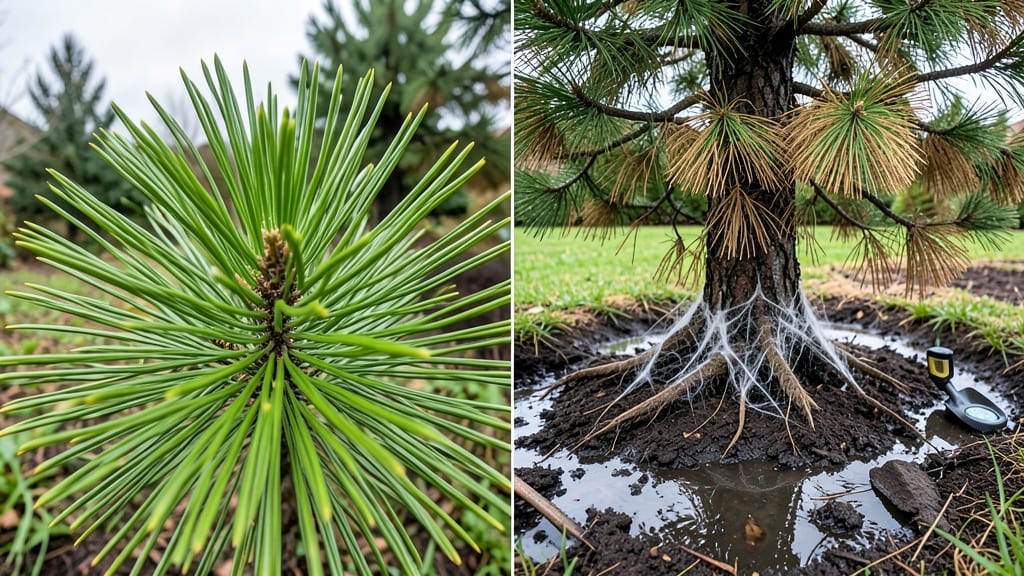
What does an overwatered pine tree look like? It reveals itself through yellow needles that won't wash away—this is the first clue most gardeners miss. 🌲 I've seen it too often: trees that look thirsty but are drowning in soggy soil, with roots suffocating under excess moisture.
The damage starts at the tips and spreads inward, leaving behind a sad, patchy crown.
The real giveaway? Needles that stay yellow even after a week of dry weather, combined with drooping branches that feel limp to the touch. Fungal growth at the base of the trunk or orange-brown roots when you dig are red flags—these trees need immediate help.
The confusion comes from symptoms that mimic pests or disease, but overwatering leaves a distinct, waterlogged smell when you check the soil.
Fixing it starts with letting the soil dry out completely between waterings and improving drainage with organic matter. Prune back the worst-affected branches to redirect energy to healthier growth.
Within weeks, you'll see fresh green needles pushing through, proving the tree can recover—if you act fast enough. The key is patience and observation.
This works for all pine varieties, from dwarf pines to towering evergreens. The same principles apply whether your tree is in a pot or planted in the ground. The sooner you spot the signs, the better the chances of saving your tree from permanent damage.
Root Causes Of Overwatering
Overwatering your pine tree isn’t just a gardening mistake—it’s a silent killer that disrupts the tree’s natural balance. Understanding the why behind the problem is the first step to fixing it. Let’s break down the key factors that turn your soil into a suffocating swamp for your pine.
Pine trees thrive in well-draining soil, but when water pools around their roots, it creates a toxic environment. Here’s why:
- Compacted or Clay Soil: Heavy, dense soils (like clay) don’t allow excess water to escape, forcing roots to sit in soggy conditions.
Pines, native to sandy or loamy soils, hate being waterlogged. - Lack of Amendments: If your soil isn’t mixed with organic matter (like compost or perlite), it holds moisture like a sponge.
Without air pockets, roots suffocate and rot. - Improper Planting Depth: Burying the root flare (where roots meet the trunk) too deep traps water against the stem, blocking oxygen flow.
Actionable Fix: Test your soil’s drainage by digging a hole, filling it with water, and timing how long it takes to drain. If it takes more than 2 hours, amend with sand, gravel, or organic mulch.
Even if your soil drains well, watering too often or too much can drown pine roots. Pines are drought-tolerant—they prefer dry spells between waterings. Common mistakes include:
- Automatic Irrigation Overrides: Sprinklers or drip systems set on timers may deliver more water than needed, especially after rain.
- Surface Watering Without Soaking: Light, frequent watering keeps the topsoil wet but leaves deeper roots thirsty—pines need deep hydration, not surface moisture.
- Ignoring Seasonal Needs: Pines slow their growth in winter and need far less water than in scorching summer heat.
Actionable Fix: Water deeply once a week (or less in winter) and always check soil moisture before watering. Stick your finger 3 inches into the soil—if it’s damp, wait.
Not all water comes from your hose. External conditions can also lead to overwatering:
- Heavy or Frequent Rainfall: Pines in humid climates or after prolonged rain may not need extra watering.
Overwatering on top of natural rainfall drowns the roots. - Low-Lying Areas: Planting pines in depressions or near downspouts means water pools around them, mimicking a swamp. - Mulch Gone Wrong: Too much mulch (over 3 inches deep) or impermeable mulch (like thick plastic) traps moisture against the trunk.
Actionable Fix: Plant pines on slightly elevated mounds to improve drainage. Use organic mulch (like pine straw) in a 2-inch layer, keeping it 6 inches away from the trunk.
When roots sit in permanently wet conditions, they become prime targets for pathogens like Phytophthora and Pythium fungi. These cause:
- Root Decay: Fungi consume living root tissue, cutting off the tree’s water and nutrient supply.
- Needle Discoloration: Yellowing or browning needles are a late-stage sign—by then, roots may already be severely damaged.
- Weakened Immune System: Overwatered pines are more susceptible to pests (like pine beetles) because they’re already stressed.
Actionable Fix: If you suspect root rot, stop watering immediately and let the soil dry out. In severe cases, fungicide treatments (like copper-based sprays) may help, but prevention is key.
Pines in hot, dry climates vs. cool, damp ones have different water needs. Misjudging these can lead to overwatering:
- Cooler Weather = Slower Evaporation: In spring or fall, soil stays wet longer, increasing the risk of root suffocation.
- High Humidity = Less Transpiration: Pines in shady, humid areas (like near ponds or in forests) don’t need as much water because they lose less through evaporation.
Actionable Fix: Adjust your watering schedule based on weather forecasts. Use a rain gauge to track natural moisture—if you’ve had 1+ inch of rain, skip watering.
Overwatering doesn’t happen in isolation—it’s often a combination of factors. A pine tree with poor drainage + heavy mulch + automatic sprinklers is a recipe for disaster.
The good news? Most cases are reversible if caught early. The key is observation and adjustment—don’t wait until the needles start falling! 🌲💧
Revive Your Pine Tree: Step-by-Step Fixes
Overwatering can stress your pine tree, but the good news is that with the right approach, you can nurse it back to health—even if it’s looking a little sad right now.
The key is to act fast, adjust your care routine, and give your tree the space it needs to breathe. Below, we’ll break down the most common causes of overwatering and the practical fixes to turn things around, plus tips to keep your pine thriving long-term.
Cause: Waterlogged soil from frequent or heavy watering, poor drainage, or rainy weather. Fix:
- Stop Watering Immediately 🚰
- Let the soil dry out completely before watering again. Pines hate soggy roots!
- If the ground is still damp after 2–3 days, wait longer.
- Improve Drainage 🏗️ - Raise the soil level by adding a mix of sand, perlite, or gravel to the root zone.
This helps excess water drain away. - If planted in a container, ensure it has drainage holes and use a well-draining potting mix (like a 50/50 blend of pine-specific soil and coarse sand).
- Check for Root Rot 🔍
- Gently loosen the top 2–3 inches of soil and inspect the roots. Healthy roots are firm and white; rotted roots are mushy, brown, or black.
- If rot is present, trim away the affected roots with sterilized pruners and treat with a fungicide (like copper fungicide or mycorrhizal powder).
- Water Deeply but Infrequently 💧
- Pines prefer deep, infrequent watering over shallow, frequent soaks. Aim for 1–1.5 inches of water every 7–10 days (adjust for climate).
- Water at the base of the tree, not overhead, to avoid wetting the needles (which can lead to disease).
💡 Pro Tip: Use a moisture meter to track soil dampness. If it reads "wet" after 48 hours, hold off on watering!
Cause: Clay or dense soil traps moisture, suffocating roots and preventing oxygen flow. Fix:
- Aerate the Soil 🏗️
- Use a garden fork or tiller to loosen the top 6–12 inches of soil around the tree’s drip line (the area where branches extend).
- For container-grown pines, repot into fresh, well-draining soil if the current mix is compacted.
- Amend the Soil 🌱
- Mix in organic matter like pine bark fines, composted wood chips, or coarse sand to improve drainage.
- Avoid fresh mulch or compost—it can retain too much moisture.
- Mulch Correctly 🍂
- Apply a 2–3 inch layer of organic mulch (like pine straw or wood chips) 3–4 inches away from the trunk.
- Never pile mulch against the trunk—this can trap moisture and cause rot.
✨ Prevention Tip: Test your soil’s drainage by digging a hole, filling it with water, and timing how long it takes to drain. If it takes longer than 30 minutes, you need to amend the soil!
Cause: Potted pines often suffer from overwatering due to small containers, no drainage, or root-bound conditions. Fix:
- Repot if Necessary 🏺
- If roots are circling the pot or the tree is top-heavy, move it to a slightly larger container (just 1–2 inches wider) with fresh, fast-draining soil.
- Choose a pot with drainage holes and elevate it on feet or a saucer to prevent water pooling.
- Refresh the Soil 🌱
- Remove the top 2–3 inches of old soil and replace it with a sandy, acidic mix (pH 4.5–6.0). Pines need low fertility—avoid rich compost!
- Fluff the roots gently to encourage new growth.
- Adjust Watering for Containers 💧
- Potted pines dry out faster than in-ground trees. Stick your finger 1–2 inches into the soil—if it’s dry, water until it drains from the bottom.
- Empty the saucer after watering to prevent root rot.
🎯 Quick Fix: If repotting isn’t an option, top-dress with fresh soil every few months to improve drainage.
Cause: Excess moisture encourages fungal diseases like needle cast, root rot, or tip blight. Fix:
- Prune Affected Areas ⏰
- Remove yellowing, brown, or mushy needles with clean pruners to improve airflow.
- Disinfect tools with rubbing alcohol between cuts to prevent spreading disease.
- Apply Fungicide 💊
- Use a copper-based fungicide or neem oil spray to treat fungal infections. Follow label instructions for frequency.
- For root rot, add beneficial fungi like Trichoderma to the soil to outcompete harmful pathogens.
- Improve Air Circulation 🌬️
- Thin out dense branches to allow sunlight and air to reach the center of the tree.
- Avoid planting pines in shady, damp spots—they prefer full sun to partial shade.
🔥 Emergency Tip: If your pine is severely infected, reduce watering further and focus on drying out the soil while treating with fungicide.
Once your pine tree recovers, prevent future overwatering with these habits:
- Water in the morning so foliage dries quickly.
- Use a rain gauge to track moisture—pines typically need less water in winter.
- Monitor soil moisture with a moisture sensor or the finger test.
- Avoid fertilizing unless needles are pale (over-fertilizing encourages thirsty growth).
- Inspect regularly for signs of stress—drooping, yellow needles, or mold mean it’s time to adjust care.
🌲 Remember: Pines are drought-tolerant once established—underwatering is usually better than overwatering! With these fixes, your tree should bounce back in 4–8 weeks, showing new green needles and perky branches. 🌿✨
Frequently asked questions
How can I tell if my pine tree's yellow needles are from overwatering or pests?
Overwatered pines show uniform yellowing starting at the needle tips, while pests like spider mites create irregular brown spots or webbing. Check the soil—if it smells sour or stays soggy, it's overwatering. Pests often leave tiny eggs or frass (sawdust-like droppings) on branches.
Will my pine tree recover if I've been overwatering it for months?
Yes, but recovery depends on how severe the damage is. Stop watering immediately and let the soil dry completely. If roots show signs of rot (black/mushy), prune them and improve drainage. Most pines rebound within 4-8 weeks with proper care, though severe cases may take longer.
Why does my potted pine keep getting overwatered even when I'm careful?
Containers dry out faster than ground soil, but they also trap moisture if lacking drainage. Use pots with holes and a sandy, acidic mix. Water only when the top 1-2 inches are dry, and empty saucers after watering to prevent root rot.
Can I save a pine tree with fungal growth at the base from overwatering?
Early-stage fungal growth is treatable! Stop watering and apply copper fungicide or neem oil. Remove affected mulch and improve airflow around the trunk. Severe cases may need root pruning, but most recover with consistent drying and fungicide applications.
How often should I water my pine tree in winter?
Pines need far less water in winter—typically once every 3-4 weeks unless you have extreme drought. Check soil moisture before watering; if the ground is frozen, hold off until spring. Overwatering in winter suffocates roots and invites fungal growth.