
Pruning
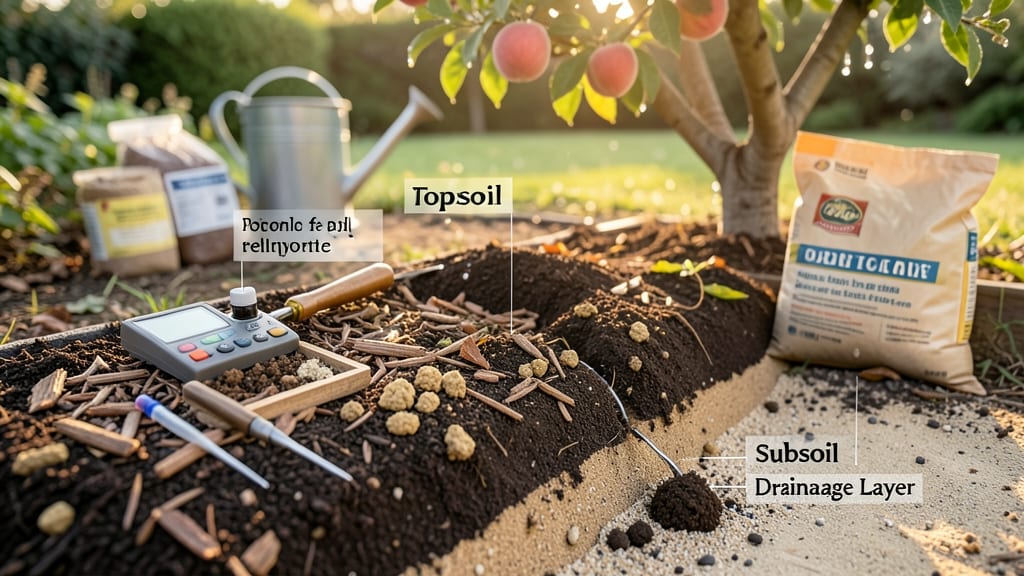
Peach tree soil requirements are the foundation of a thriving orchard, and getting them right means the difference between juicy, sweet fruit and a struggling tree.
If you’ve ever planted a peach tree 🍑 only to watch it wilt despite your best care, the problem might be lurking right under your feet.
Soil that’s too heavy, too acidic, or poorly drained can starve your tree of the nutrients it needs to grow strong roots and produce fruit.
In this guide, we’ll break down the ideal soil mix, pH levels, and drainage needs for peach trees in Zone 6, plus how to fix common soil mistakes that could be holding your tree back.
You’ll learn how to test your soil, amend it for better structure, and keep your peach tree healthy from planting to harvest—so you can finally enjoy that perfect summer peach.
Ideal pH levels and soil composition for peach trees
Peach trees thrive when planted in soil with the right balance of nutrients, structure, and acidity. The ideal pH range for peach trees is 5.5 to 6.5, slightly acidic to neutral. This range ensures optimal nutrient absorption, particularly for essential elements like nitrogen, phosphorus, and potassium.
If your soil pH falls outside this range, your tree may struggle to access vital minerals, leading to stunted growth or poor fruit production.
Beyond pH, peach trees prefer loamy soil—a well-balanced mix of sand, silt, and clay. This texture provides excellent drainage while retaining enough moisture to support root health. Sandy soils drain too quickly, while clay soils can become waterlogged, both of which stress peach trees.
Adjusting your soil’s composition can make the difference between a thriving tree and one that barely survives.
If your soil is clay-heavy, focus on improving drainage by incorporating organic amendments like compost or leaf mold. Clay soils retain too much moisture, which can suffocate roots and invite fungal diseases.
For sandy soils, blend in peat moss or compost to boost water retention and nutrient-holding capacity. Both adjustments help mimic the ideal loamy texture peach trees crave.
Before planting, conduct a soil test to pinpoint deficiencies. Many garden centers offer affordable kits, or send a sample to your local cooperative extension office for professional analysis. This step saves time and ensures you’re addressing specific issues—whether it’s adjusting pH, improving texture, or adding nutrients.
For example, if your soil tests at pH 7.2, you’ll need to lower it with elemental sulfur before planting.
Peach trees also benefit from a mulch layer (2–4 inches) of organic material like wood chips or straw. Mulch helps regulate soil temperature, reduces moisture loss, and slowly releases nutrients as it decomposes.
Just keep the mulch 3–4 inches away from the tree trunk to prevent rot. This simple step can significantly improve root health and fruit quality over time.
In regions with heavy rainfall, consider planting your peach tree on a slight slope or in a raised bed to prevent waterlogging. Poor drainage is a leading cause of root rot, which can kill a peach tree within weeks.
If your yard has low-lying areas, opt for a well-draining soil mix with added perlite or vermiculite to create air pockets for oxygen flow.
Remember, peach trees are heavy feeders, especially during their first few years. After planting, apply a balanced fertilizer (e.g., 10-10-10) in early spring to support root establishment. Over time, maintain soil health with annual applications of compost or composted manure.
This ongoing care ensures your tree has the nutrients it needs to produce abundant, flavorful peaches year after year.
By prioritizing soil pH, texture, and drainage, you’re setting your peach tree up for success. Healthy soil means stronger roots, better disease resistance, and a tree that rewards you with juicy, sweet fruit for decades. Start with these foundational steps, and watch your peach tree thrive!
Nutrient requirements: what peach trees need to thrive
Peach trees are hungry plants—they demand a steady supply of key nutrients to fuel their rapid growth and produce those juicy, sweet fruits. Without the right balance, you’ll see signs like yellowing leaves, stunted growth, or even poor fruit set.
The good news? With the right organic amendments and feeding schedule, you can keep your tree thriving year after year.
At the core, peach trees need three primary nutrients: nitrogen (N) for leafy growth, phosphorus (P) for root development and flowering, and potassium (K) for fruit quality and disease resistance. But they also rely on micronutrients like zinc, iron, and manganese to prevent deficiencies that can cripple your harvest.
Let’s break down what your peach tree needs—and how to deliver it naturally.
For established peach trees, I recommend a balanced organic fertilizer like a 5-5-5 or 6-6-6 blend in early spring, followed by a low-nitrogen feed in late summer to support fruit maturation. Slow-release options, such as composted cow manure or alfalfa meal, are ideal—they feed your tree steadily without risking nutrient burn.
Watch for deficiency signs like yellowing leaves (nitrogen deficiency), purple stems (phosphorus deficiency), or weak branches (potassium deficiency). If you spot these, adjust your amendments immediately. For example, a zinc deficiency often shows as stunted growth or small leaves—sprinkle zinc sulfate around the root zone to fix it.
Don’t forget: Mulch is your best friend. A 3-inch layer of organic mulch keeps soil moist, regulates temperature, and slowly releases nutrients as it breaks down. Just keep it 6 inches away from the trunk to prevent rot.
With the right nutrients and care, your peach tree will reward you with abundant, sweet fruit for years to come! 🍑