
Pruning
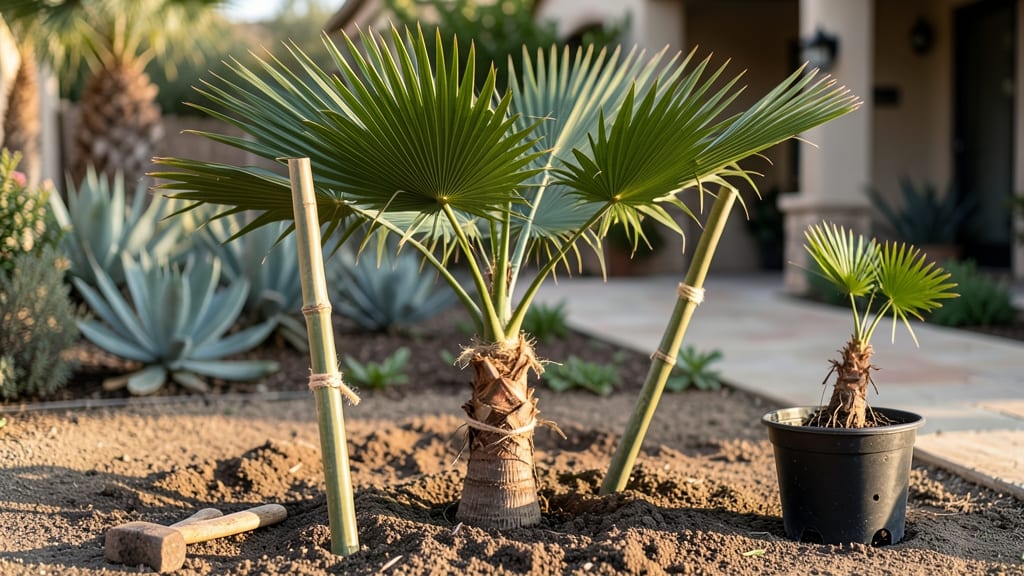
Staking palm trees isn’t just about looking good—it’s about survival when winds hit. 🌴 I learned this the hard way when a young Mexican fan palm leaned so far it nearly toppled in a summer storm.
The right staking turns a fragile sapling into a storm-ready tree that grows straight and strong.
You’ll need 3-4 bamboo stakes (or sturdy wooden ones) per tree, soft tree ties (no wire—it cuts), and a mallet for driving stakes deep. The stakes go at a 45-degree angle, buried 12-18 inches into the soil, with ties 3-4 feet apart up the trunk.
This creates a triangle of support that mimics natural wind resistance.
Done right, your palm will grow taller and straighter without the staking scars you see on poorly supported trees. The stakes stay in place for 1-2 years, until the trunk thickens enough to stand alone. Just check ties every few months—they loosen as the tree grows.
Skip the metal stakes (they rust) and never tie too tight (it strangles the trunk). In coastal areas, add a 5th stake on the windward side. The goal isn’t to turn your palm into a statue—it’s to teach it to stand up to nature’s push.
📚 In This Guide
- What you need
- Instructions
- Tips and common mistakes
- Wrapping up and next steps
What you need
- ● Stakes: 2–4 wooden or metal stakes (3–4 feet tall, ½–1 inch in diameter). Pro tip: 💡 Use galvanized metal stakes for extra durability in windy areas!
- ● Staking straps or soft ties: 3–6 wide, stretchy straps (2–3 inches wide) or tree saver straps (avoid wire or tight ropes—they can damage the trunk!).
- ● Measuring tape or ruler: To ensure stakes are placed at the correct angle (about 1/3 of the tree’s height from the base).
- ● Shovel or post hole digger: For burying stakes 12–18 inches deep (deeper = more stability!).
- ● Gloves and safety glasses: Because handling stakes and digging can get a little rough! 🛡️
- ● Tree guard or protective wrap: Wrap the trunk where straps touch to prevent rubbing or damage.
- ● Concrete or gravel: Mix with water to secure stakes in place (great for sandy or loose soil).
- ● Adjustable or spiral stakes: For trees that need flexible support as they grow.
- ● Water and fertilizer: Give your palm a drink and a nutrient boost before and after staking to help it recover faster.
Step-by-step palm tree staking for storm protection
Here's how to properly stake young palms so they stand strong through wind and storms.
🪴 Step 1: Choose the Right Stakes and Hardware
For a 4-foot-tall palm, use two 3-foot wooden stakes (2x2 inches) or metal tree stakes with 1-inch diameter. Drive one stake 12 inches away from the trunk on each side, angled 30 degrees outward. This creates a V-shape that prevents leaning. I always use galvanized hardware—rusted screws will weaken over time.
You'll need three 12-inch galvanized metal straps (or soft tree ties) to attach the stakes to the trunk. Avoid wire ties—they can cut into bark as the tree grows. The straps should be adjustable so you can tighten them as the palm grows taller. If your palm is already 5-6 feet, increase stake length to 4 feet and use four straps for extra support.
✂️ Step 2: Position and Secure the Stakes
Dig a 6-inch-deep hole for each stake, just deep enough to hold it firmly but not so deep the palm can't adjust as it grows. The top of the stake should sit 6 inches above ground level—this keeps it visible and prevents rot. Angle the stakes slightly outward (about 15 degrees) so they naturally guide the trunk upright.
Once the stakes are in place, wrap the first strap around the trunk 6 inches above ground level, then loop it around both stakes. Cross the straps in an X pattern for stability. The second strap goes 12 inches higher, and the third 18 inches up. Tighten each strap snugly but not too tight—you should be able to fit one finger between the strap and the trunk. Too tight now will restrict growth.
🌿 Step 3: Adjust and Monitor Over Time
Check the staking system every 4-6 weeks to ensure the straps aren’t digging into the trunk. If you see dark lines or grooves where the strap sits, loosen it immediately. Palms grow fast—if the trunk outgrows the top strap, add a fourth strap at the new height. I like to mark the trunk with a soft pencil at strap levels so I remember where to add new ones.
After 12-18 months, most palms are sturdy enough to remove stakes. Look for thickened trunks and minimal sway in wind. To remove, cut the straps with pruning shears (don’t pull—they can tear bark) and dig out the stakes. If your palm is in a high-wind zone, leave stakes longer—some varieties need support for 2-3 years.
🌪️ Step 4: Storm-Proofing Extra Tips
Before hurricane season, reinforce the stakes by tying 3 feet of burlap around the base of each stake and anchoring it to the ground with u-shaped metal pins. This prevents the stake from pulling out in strong winds. For very large palms (10+ feet), use three stakes in a triangle formation instead of two—this distributes wind force better.
Water the palm deeply 24 hours before staking so the soil is moist but not soggy. Wet soil holds stakes better, reducing the risk of them shifting in a storm. After staking, mulch the base with 2-3 inches of wood chips to protect roots and retain moisture. Avoid piling mulch against the trunk—keep it 6 inches away to prevent rot.
Tips & tricks for perfect palm tree staking
Here’s what I’ve learned from years of staking palms—these little details make all the difference when hurricane season rolls around.
Strap Placement Matters: When you’re securing those three 12-inch straps, position the first one just 6 inches above ground level—this is where the most stress occurs during storms. I’ve seen palms snap right at this height when stakes are too high. The X-pattern crossing gives maximum stability, but don’t forget to leave that finger-width gap between strap and trunk. Too tight now means restricted growth later.
Hardware Longevity: Galvanized metal straps and stakes are non-negotiable—they won’t rust like regular hardware. I’ve had to replace rusted hardware mid-storm, and let me tell you, that’s not ideal. If you’re using wooden stakes, treat them with a waterproof sealant before planting to extend their life in wet climates.
Storm Season Prep: The 24-hour deep watering before staking is crucial—wet soil grips stakes better and prevents shifting. But here’s what nobody tells you: if you’re in a coastal area with salty air, rinse your galvanized hardware with fresh water after installation. Salt accelerates corrosion, and you don’t want your stakes failing when winds hit 80 mph.
Visual Growth Tracking: That soft pencil marking trick for strap levels is a game-changer. I’ve used masking tape before, but it falls off in rain. A simple pencil mark lets you see exactly where to add new straps as your palm grows. Plus, it’s easy to check during your 4-6 week inspections for those telltale dark grooves where straps are cutting in.
Pro Tips for Palm Tree Staking
- Here’s what I’ve learned from years of staking palms—these little details make all the difference when hurricane season rolls around.
- Strap Placement Matters: When you’re securing those three 12-inch straps, position the first one just 6 inches above ground level—this is where the most stress occurs during storms.
- Hardware Longevity: Galvanized metal straps and stakes are non-negotiable—they won’t rust like regular hardware.
Frequently asked questions
Got questions about palm tree staking? You’re not alone! Here are some of the most common concerns—and straightforward answers—to help you get it right the first time.
How do I know if my palm tree needs staking?
Young palm trees (typically under 3–5 years old or 10–15 feet tall) are most vulnerable to wind, storms, or even heavy fruit. If your tree leans, sways excessively in the breeze, or has shallow roots, staking is a smart move. Look for trunk movement—if it wobbles more than a few inches, it’s time to stabilize it!
When is the best time to stake a palm tree?
Stake your palm tree before hurricane season (May–October in most coastal regions) or during mild weather when the ground is workable. Avoid extreme heat or cold, as stressing the tree further can hinder root growth. If you’re planting a new palm, stake it immediately—just be sure to remove stakes after 6–12 months to avoid girdling.
What’s the best material for palm tree stakes?
Use galvanized steel or bamboo stakes (3/8”–1/2” diameter) for durability and rust resistance. Avoid untreated wood, which rots quickly in tropical climates. For extra support, opt for flexible, spiral-wrapped stakes that won’t damage the trunk as the tree grows. Pro tip: Pair stakes with soft tree ties (like rubber or woven straps) to prevent trunk abrasions.
How do I fix a palm tree that’s already leaning?
If your tree is already leaning, don’t force it upright—this can snap roots or trunk. Instead, stake on the windward side (the side the wind pushes from) at a 45-degree angle to gently guide growth. For severe leans, consult an arborist to assess root health. Warning: Never stake a mature, healthy tree—it’ll weaken over time!
Can I reuse stakes from last year’s storm?
Reusing stakes is fine if they’re still straight, rust-free, and structurally sound. However, inspect them for bends, corrosion, or weakened spots—especially after storms. If the stakes are bent or the ties are frayed, replace them. Pro tip: Store stakes in a dry place to extend their lifespan for future use!
What are some alternatives to traditional staking?
If staking feels too invasive, try root ball protection (mulching heavily around the base) or windbreaks (like temporary fencing). For very young palms, a cage-like support system (e.g., PVC pipes) can work too. Just monitor the tree closely—alternatives may not offer the same storm resistance as proper staking.
Wrapping up and next steps
Proper palm tree staking is your secret weapon for keeping young trees strong and resilient—especially when storms roll in! 🌪️ By using the right materials, following best practices, and checking in regularly, you’re giving your palms the best chance to thrive. Remember, consistency is key, so don’t skip those follow-ups.
Ready to take action? Grab your supplies, roll up your sleeves, and give your palm tree the support it deserves—before the next big weather hits! Your future tropical oasis will thank you! 🌴✨