
Pruning
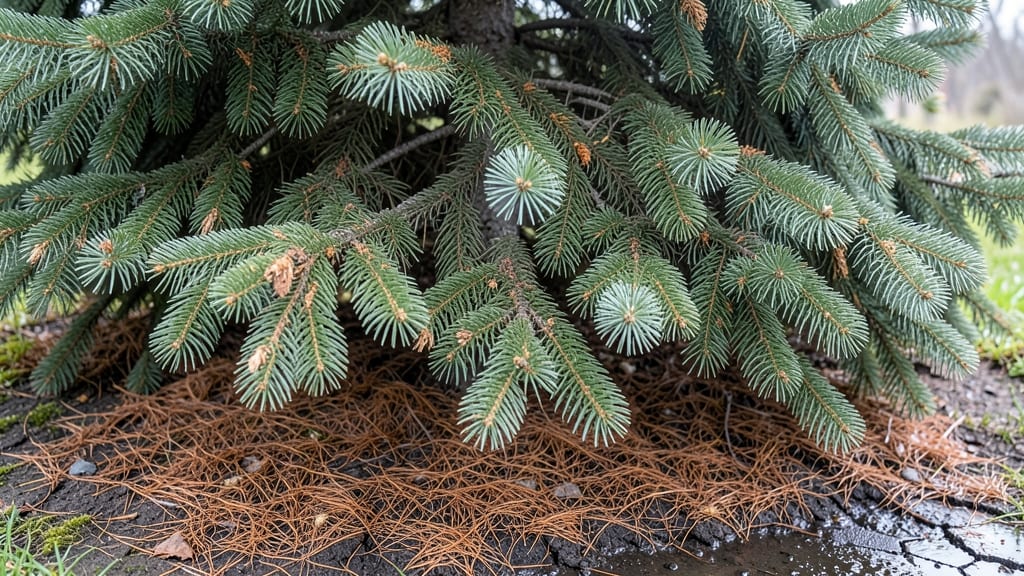
Nordmann fir tree problems turn brown and brittle when pests or disease strike—don’t panic, there’s a fix. 🌲 I’ve nursed back more than my share of these evergreens after spider mites, bagworms, or fungal infections took their toll, and the solutions are simpler than you’d think.
The real culprits are often overlooked: dry air, poor drainage, or a buildup of old needles trapping moisture. Once you spot the symptoms—yellowing needles, webbing, or rust-colored spots—you can target the problem directly with the right treatments and pruning techniques.
By the end of this, your tree will look vibrant and full again, with healthy new growth pushing out within weeks. The key is acting fast and addressing both the symptoms and the underlying conditions keeping your fir thriving year-round.
Whether it’s a small urban tree or a large landscape specimen, these fixes work. Let’s get your Nordmann fir back to its lush, green best.
Root Causes Behind Nordmann Fir Struggles
Understanding why your Nordmann fir (Abies nordmanniana) is acting up starts with science—and a little detective work. These evergreens are hardy, but they’re not invincible.
Below, we break down the real culprits behind common Nordmann fir issues, from environmental stress to biological threats, with clear explanations of why they happen.
Nordmann firs thrive in cool, moist climates with well-drained soil, but push them outside their comfort zone, and problems arise. Here’s how:
- ❄️ Extreme Cold or Freezing Winds While cold-hardy (USDA Zones 3–7), Nordmann firs can suffer winter burn when temperatures drop below -20°F (-29°C) or when dry, icy winds desiccate needles.
The issue? Transpiration (water loss through needles) continues even in winter, but frozen roots can’t replenish moisture. - Why it matters: Needles turn brown at tips (a classic sign of winter damage) because cells rupture from ice crystal formation.
Young trees or those with shallow root systems are most vulnerable.
- ☀️ Heat Stress & Drought Heatwaves (>90°F/32°C) and prolonged drought trigger needle scorch.
The fir’s shallow roots can’t absorb enough water, leading to: - Stomatal closure (needles "sweat" less to conserve water). - Resin buildup in needles, clogging vascular tissue and turning them yellow or rust-colored. - Pro tip: 💡 Mulch heavily (3–4 inches) to retain moisture, but keep it 6 inches away from the trunk to avoid rot.
- 💧 Overwatering or Poor Drainage "Too much love" can kill a Nordmann fir. Waterlogged soil cuts off oxygen to roots, leading to: - Root rot (caused by fungi like Phytophthora). - Needle drop as the tree struggles to photosynthesize. - Science alert: Fir roots need aeration—compacted or clay-heavy soils trap water, suffocating roots.
Test drainage by digging a hole: if water pools after 6 hours, amend with sand or compost.
Nordmann firs are a buffet for insects, but a few stand out as major troublemakers:
- 🐜 Spider Mites & Aphids (Sap-Suckers) - Why they attack: These tiny pests pierce needles to drink sap, injecting toxins that cause: - Yellow stippling (tiny white/yellow dots on needles). - Sticky honeydew (aphids’ waste) that attracts sooty mold. - Key trigger: Drought stress weakens trees, making them more appealing.
Mites thrive in hot, dry conditions (they’re not insects—they’re arachnids!).
- 🪰 Bark Beetles (Boring Menaces) - Why they win: Beetles like the Douglas fir beetle (Dendroctonus pseudotsugae) burrow under bark, disrupting xylem (water transport).
Signs: - Sawdust-like frass at the base. - Needle loss (tree "flags" dying branches). - Red flag: Trees under water stress or weak from disease are easy targets. Beetles release pheromones to recruit mates, turning a single infestation into an outbreak.
- 🐛 Sawfly Larvae (The Leaf Munchers)
- Why they’re bad: These caterpillar-like larvae skeletonize needles, leaving a lace-like pattern. Heavy infestations cause premature needle drop.
- Seasonal clue: Peaks in late spring/early summer. Look for white, worm-like larvae on new growth.
Fungal pathogens love Nordmann firs—especially when the tree is already stressed. Here’s how they exploit weaknesses:
- 🍄 Needle Cast Fungi (Rhizosphaera spp.)
- How it spreads: Spores infect needles in cool, wet springs, causing:
- Band-like discoloration (dark brown bands on needles).
- Premature needle drop (tree looks "sparse").
- Why it’s sneaky: Infected needles stay on branches for 1–2 years, continuously releasing spores.
- How it spreads: Spores infect needles in cool, wet springs, causing:
- 🍃 Root & Stem Rot (Armillaria or Heterobasidion) - Why it’s deadly: These fungi attack root collars and stems, blocking nutrient flow.
Signs: - Mushrooms at the base (like "shelf fungi"). - Wilting even when soil is moist. - Soil science: Fungi thrive in compacted, waterlogged soil—poor drainage is their best friend.
- 🌿 Canker Diseases (Leucostoma or Valsa)
- How it starts: Fungal spores enter through pruning wounds or bark damage, creating sunken, oozing cankers. The tree’s vascular system gets clogged, leading to:
- Dieback in branches.
- Gum-like resin oozing from cracks.
- How it starts: Fungal spores enter through pruning wounds or bark damage, creating sunken, oozing cankers. The tree’s vascular system gets clogged, leading to:
Even the best-intentioned gardener can harm a Nordmann fir. Here’s how:
- ✂️ Improper Pruning Cuts
- Why it backfires: Cutting too close to the branch collar (the swollen base where branch meets trunk) creates wounds that heal poorly, inviting:
- Bacterial/fungal infections.
- Dieback above the cut.
- Fix it: Use clean, sharp tools and make cuts just outside the collar (never flush with the trunk).
- Why it backfires: Cutting too close to the branch collar (the swollen base where branch meets trunk) creates wounds that heal poorly, inviting:
- 🚜 Mechanical Damage (Lawnmowers, String Trimmers)
- Why it’s brutal: Scraped bark exposes cambium tissue (growth layer), leading to:
- Girdling (if damage circles the trunk).
- Entry points for pests/diseases.
- Prevention: Create a 3–4 foot "no-mow" zone around the base.
- Why it’s brutal: Scraped bark exposes cambium tissue (growth layer), leading to:
- 🎄 Overloading with Ornaments
- Why it’s risky: Heavy decorations can break branches or disrupt the tree’s balance, leading to:
- Sun scorch on newly exposed wood.
- Pest attraction (weakened wood = easy target).
- Why it’s risky: Heavy decorations can break branches or disrupt the tree’s balance, leading to:
Nordmann firs are acid-loving (pH 4.5–6.0) and need specific nutrients to thrive. Get it wrong, and they’ll show their distress:
- 🔥 Nutrient Deficiencies
- Yellow needles? Likely nitrogen deficiency (most common).
- Purple stems? Phosphorus shortage.
- Weak growth? Potassium or magnesium deficiency.
- Soil test tip: 💡 Send a sample to a lab—many "problems" are just hungry trees.
- 🧪 Soil pH Imbalance
- Too alkaline (pH >7)? Micronutrients like iron and manganese become unavailable, causing:
- Yellowing between veins (interveinal chlorosis).
- Fix: Apply elemental sulfur or peat moss to lower pH gradually.
- Too alkaline (pH >7)? Micronutrients like iron and manganese become unavailable, causing:
- 🪴 Compaction & Poor Soil Structure
- Why it stunts growth: Compacted soil restricts root expansion, leading to:
- Shallow root systems (more drought-prone).
- Reduced nutrient uptake.
- Solution: Aerate with a soil probe or add organic matter (compost, pine bark fines).
- Why it stunts growth: Compacted soil restricts root expansion, leading to:
Quick Fixes for Nordmann Fir
Revitalizing your Nordmann fir doesn’t have to be a daunting task—just a few targeted steps can turn things around. Below, we’ve mapped out practical solutions for the most common issues, from pests to poor growth, along with prevention tips to keep your tree thriving long-term.
🔥 Spider Mites & Aphids: Knock Them Out Fast
Spider mites and aphids love the soft needles of Nordmann firs, but you can banish them in 3 steps: - 🍳 Spray with Neem Oil: Mix 1 tsp neem oil + 1 tsp mild soap + 1 quart water in a spray bottle.
Apply early morning or late evening (avoid direct sunlight) to prevent leaf burn. Reapply every 5–7 days until pests disappear. - 👨🍳 Rinse with Water: For severe infestations, hose down the tree with a strong stream of water to dislodge aphids.
Do this every 2–3 days for a week. - 🔪 Introduce Beneficial Insects: Ladybugs and lacewings devour spider mites. Buy them online or release them near your tree.
💡 Prevention Tip: Mulch properly (2–3 inches of organic mulch) to retain moisture—dry conditions attract mites. Also, inspect new plants before bringing them home!
🍄 Bagworms: Trap & Trap Again
Bagworms are sneaky—by the time you see the bags, it’s too late. Act now: - 🔪 Handpick Bags: Wear gloves and crush the bags (or drop them in soapy water) to kill larvae.
Check every branch, especially undersides. - 🥘 Use Bt (Bacillus thuringiensis): Spray Bt kurstaki (a natural bacteria) every 2 weeks starting in June.
It’s safe for pets and humans but only kills larvae, not eggs. - 🌡️ Monitor with Pheromone Traps: Set up traps before July to catch males before mating.
✨ Prevention Tip: Prune infested branches in fall or winter (when larvae are dormant) and burn or bag them to stop the cycle.
🍎 Nutrient Deficiency: Feed the Right Way
Yellowing needles? Your Nordmann fir might be hungry or thirsty. - 📊 Test the Soil: Use a DIY soil test kit (available at garden centers).
Nordmann firs prefer acidic soil (pH 5.0–6.5). - 💪 Fertilize Correctly: Apply a slow-release, acid-loving fertilizer (like 10-10-10 or 8-3-9) in early spring. Avoid over-fertilizing—too much nitrogen burns roots! - 🥗 Water Deeply: Water 1–2 inches per week, especially in drought-prone areas.
Use drip irrigation to keep roots moist without wetting needles (which encourages disease).
🎯 Prevention Tip: Mulch annually with pine bark or pine needles to maintain acidity and moisture.
🌡️ Fungal Diseases: Stop the Spread
Brown needles or sawdust-like spores? Fungal infections (like needle cast or root rot) need immediate action.
- 🔪 Prune Infected Branches: Cut off all diseased branches 6 inches below the damage using sterilized pruners (wipe with rubbing alcohol between cuts).
- 🥘 Fungicide Treatment: Spray with a copper-based fungicide (like Copper Soap) every 3–4 weeks until new growth appears.
- 🌿 Improve Airflow: Thin out dense branches to reduce humidity near the tree.
💡 Prevention Tip: Avoid overhead watering—water at the base instead. If your tree is in a shady, damp spot, consider relocating it to partial sun.
🔪 Over-Pruning or Wrong Timing: Fix the Mistakes
Did you prune too late or too hard?
Here’s how to correct it: - ⏰ Prune at the Right Time: Late winter to early spring (before new growth starts) is best. Avoid pruning in fall—it stresses the tree. - 🌿 Shape Gently: Use clean, sharp shears and make cuts just above a branch collar (the swollen area where the branch meets the trunk). Never leave stubs! - 🌱 Stimulate Growth: If your tree looks sparse, prune selectively to encourage new, healthy branches from the lower third.
🎯 Prevention Tip: Never remove more than 25% of the tree in one year—this weakens it. For large cuts, seal with pruning sealant (optional but helpful for thick branches).
- 🌡️ Monitor Year-Round: Check for pests, disease, or unusual growth every 2–4 weeks.
- 💧 Adjust Watering in Seasons: Water deeply in summer, but reduce in winter (unless in a drought-prone area).
- 🍃 Avoid Chemical Sprays Nearby: Herbicides and pesticides can damage your fir’s roots.
✨ Pro Tip: Plant companion plants like lavender or rosemary nearby—they repel pests naturally!
By following these targeted fixes, your Nordmann fir should bounce back stronger than ever. Act fast for pests, feed and water properly for weak trees, and prune with care to keep it looking its best! 🌲✨
Frequently asked questions
Why are my Nordmann fir needles turning brown at the tips?
This is likely winter burn from cold, dry winds or drought stress. Nordmann firs lose moisture through needles even in winter, so frozen roots can't replenish it. Try wrapping the tree with burlap in harsh winters or increasing mulch depth (3-4 inches). Water deeply in late fall if your area is drought-prone.
What should I do if I see tiny white webs on my fir tree?
Those are spider mites! These pests thrive in dry conditions and suck sap, causing yellow stippling. Spray with neem oil solution (1 tsp neem + 1 tsp soap per quart of water) every 5-7 days until they're gone. For severe cases, introduce beneficial insects like ladybugs or use a strong water spray to knock them off.
How do I tell if my Nordmann fir has a fungal infection?
Look for dark brown bands on needles (needle cast) or sawdust-like spores at the base (root rot). Prune infected branches 6 inches below damage and apply copper fungicide every 3-4 weeks. Improve airflow by thinning dense branches and avoid overhead watering to prevent spread.
Can I prune my Nordmann fir in summer?
No—summer pruning stresses the tree. Always prune in late winter to early spring before new growth starts. Make clean cuts just above the branch collar (the swollen area where branch meets trunk) and never remove more than 25% of foliage in one year. For large cuts, seal with pruning sealant.
What's the best way to prevent bagworms on my fir?
Start with early detection—look for small brown bags on branches in spring. Set up pheromone traps before July to catch males, then handpick bags and crush them. For treatment, use Bt (Bacillus thuringiensis) every 2 weeks starting in June. Prune and dispose of infested branches in fall.