
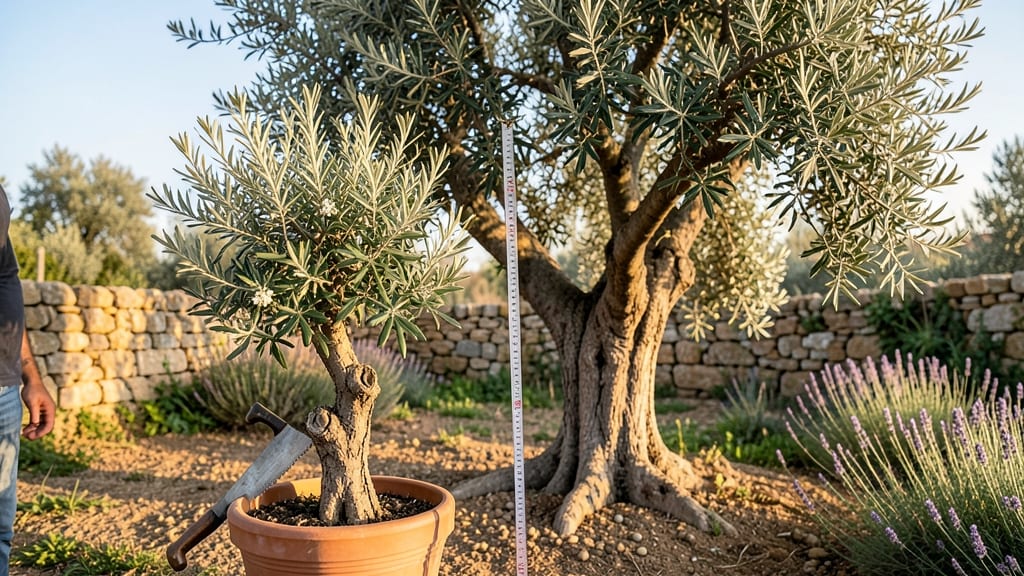
How Tall Do Olive Trees Grow: Mature Heights by Variety and Climate

How To

How Tall Do Olive Trees Grow: Mature Heights by Variety and Climate

An olive tree šŸ«’ can grow anywhere from 8 feet to towering 50 feet tall, depending on the variety and how you care for it.

Wondering if that tiny olive tree sapling in your backyard will one day tower over your house? Olive tree height varies dramatically—from dwarf varieties perfect for pots to ancient giants reaching 50 feet in Mediterranean climates—so understanding the factors is key to planning your garden wisely.

Standard varieties like the Mission olive tree can reach 25-50 feet when left unpruned, while dwarf varieties like Arbequina stay under 6 feet, making them ideal for containers. The difference comes down to rootstock, pruning, and even your local climate.

In this guide, you’ll discover how to choose the right size for your space, how pruning can control height, and which varieties thrive in USDA Zone 6a—so you can grow olives year-round without losing your yard to a 50-foot giant.

Olive Tree Height Range
10 ftto50 ft
0 ft 3 ft 6 ft 9 ft 12 ft
🌱 Tall Tree

Olive tree height by variety: from dwarf to giant sizes

Choosing an olive tree isn't just about flavor—it's about space planning. Some varieties stay compact enough for container gardening, while others grow into towering Mediterranean giants.

The right selection depends on your yard size, climate zone, and whether you want olives for culinary use or just ornamental beauty. Here's how 10 popular varieties compare in height and growth habits.

Native to Mediterranean climates, olive trees thrive in USDA zones 8-11 but can be grown in cooler zones with winter protection. Their growth rates vary dramatically—some reach maturity in 5 years, while others take decades.

Understanding these differences helps you avoid planting a 50-foot monster where a 6-foot potted tree would fit better.

Below is a detailed comparison of mature heights, growth rates, and spacing needs for both home gardens and commercial orchards. This table includes dwarf varieties perfect for urban spaces and standard varieties that dominate rural landscapes.

šŸ«’ Olive Tree Variety Height Comparison
Variety Mature Height (ft) Growth Rate (ft/year) Home Garden Spacing (ft) Orchard Spacing (ft) Best For
Arbequina 8-12 0.5-1 6-8 15-20 Containers, small yards
Frantoio 20-30 1-2 12-15 25-30 Medium yards, hedges
Mission 25-40 1.5-2.5 15-20 30-40 Large estates, culinary olives
Manzanillo 30-50 2-3 20-25 40-50 Commercial orchards
Leccino 25-45 1.5-2 15-20 30-40 High-quality oil production
Kalamata 15-25 1-1.5 10-12

Climate and pruning factors that control olive tree height

Your olive tree's final height depends heavily on where you live and how you prune it. In USDA zones 8-11, olive trees thrive, but their growth patterns shift dramatically between coastal climates and inland deserts.

For example, a Mission olive tree in zone 10 might reach 30 feet without pruning, while the same tree in zone 8 could max out at 20 feet due to cooler winters slowing growth.

Sunlight exposure also plays a critical role. Olive trees need full sun (6+ hours daily), but too much intense afternoon sun in hot climates (zones 9-11) can stress young trees, reducing vertical growth by up to 30%.

In contrast, partial shade in cooler zones (8) may encourage bushier, more controlled growth patterns.

Here’s how climate and pruning work together to shape your olive tree’s height:

šŸŒ”ļø Climate & Pruning Height Control

USDA Zone 8:
20-25 ft
Cooler winters slow growth; prune aggressively in late winter to maintain shape.
USDA Zone 9-10:
25-40 ft
Faster growth; prune post-harvest (winter) to control height by 30-50%.
Pruning Style:
Espalier
Reduces height by 70% while maximizing fruit yield in small spaces.
Pro Tip: In zone 11, prune twice yearly (spring & fall) to manage 50+ ft growth. Use sharp pruners to avoid disease.

Pruning techniques can dramatically alter your olive tree’s height. For example, standard pruning (removing 1/3 of new growth annually) keeps trees at 20-30 feet, while espalier training flattens them against walls or fences, reducing height by up to 70%.

This method is perfect for urban gardens where space is limited.

If you’re growing olives for culinary use, consider hedge pruning to maintain a 6-10 foot height. This involves shearing branches annually in late winter to encourage dense foliage and fruit production.

Just be sure to use sterilized tools to prevent bacterial infections like verticillium wilt, which can stunt growth.

Timing is everything when it comes to pruning. For young trees (under 3 years), focus on structural shaping in late winter to establish a strong framework. Mature trees should be pruned after harvest (November-December) to avoid removing next year’s fruit buds.

In warmer zones (9-11), a light pruning in early spring can stimulate new growth before the heat sets in.

Don’t forget that soil quality and watering habits also influence height. Olive trees in well-draining, slightly alkaline soil (pH 7.5-8.5) grow taller and stronger than those in compacted or waterlogged soil.

If your tree isn’t reaching its expected height, check for root-bound conditions or nutrient deficiencies, which can slow growth by up to 40%. A balanced fertilizer (10-10-10) applied in early spring can give your tree the boost it needs.

ā˜…ā˜…ā˜…ā˜…ā˜…5.0(5 reviews)
Categories How To