
How To
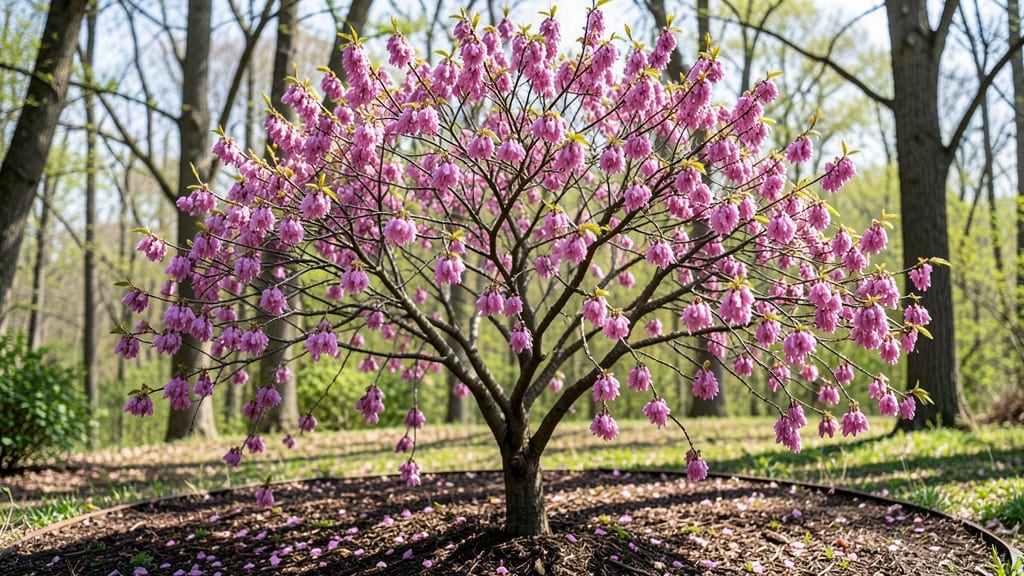
A redbud tree grows how tall does it reach between 10 and 30 feet at maturity, but the exact height depends on the variety and growing conditions you provide.
If you're dreaming of adding vibrant spring blooms to your landscape, the redbud tree (Cercis canadensis) delivers stunning color—but first, you need to know its exact growth potential to plan your space wisely.
Standard varieties like the Eastern redbud reach 20 to 30 feet, while dwarf cultivars stay compact at just 8 to 12 feet, making them perfect for smaller yards or containers. Sunlight, soil quality, and pruning habits all play a role in how tall your 🌳 grows over time.
Below, I break down the height ranges by variety, growth rates, and spacing tips so you can choose the perfect redbud for your garden—whether you want a towering focal point or a charming patio tree.

Redbud tree height by variety: exact mature size expectations
Choosing a redbud tree (Cercis canadensis) means selecting a spring bloomer with stunning foliage—but first, you must know its mature height to avoid overcrowding or underwhelming landscapes.
Redbud varieties range from compact shrubs to tall shade trees, so let’s break down the exact size expectations for each type to help you plan your planting strategy.
The Eastern redbud (Cercis canadensis), the most common variety, typically reaches 20 to 30 feet tall at maturity, with a spreading canopy of 25 to 35 feet wide. This multi-trunked beauty thrives in USDA zones 4-9 and becomes a landscape focal point when given space to flourish.
If you’re working with limited room, smaller varieties like 'Forest Pansy' or 'Lavender Twist' offer compact alternatives without sacrificing color.
Here’s a comparison table of redbud tree heights by variety, including growth habits and ideal spacing to ensure your tree has room to grow:
| Variety | Mature Height | Mature Width | Growth Habit | Spacing Needs |
|---|---|---|---|---|
| Eastern Redbud | 20–30 ft | 25–35 ft | Upright, multi-trunk | 20–25 ft from structures |
| Western Redbud (Cercis occidentalis) | 10–15 ft | 10–12 ft | Compact, rounded | 10–12 ft from structures |
| Forest Pansy | 15–20 ft | 15–20 ft | Spreading, multi-stemmed | 15 ft from structures |
| Lavender Twist | 8–12 ft | 8–12 ft | Twisting branches, compact | 8–10 ft from structures |
| Ruby Falls | 6–10 ft | 6–10 ft | Weeping, cascading | 6–8 ft from structures |
| Covey's Dwarf | 6–8 ft | 6–8 ft | Bushy, rounded | 6–8 ft from structures |
The Western redbud (Cercis occidentalis) is a drought-tolerant alternative, staying 10 to 15 feet tall—perfect for smaller yards or rock gardens. Its rounded shape and lighter purple blooms make it a unique accent plant without dominating the space.
If you’re aiming for vertical interest, the 'Lavender Twist' variety grows 8 to 12 feet tall with twisting branches, adding textural drama to your garden.
For weeping redbuds, the 'Ruby Falls' cultivar is a showstopper at 6 to 10 feet tall, with cascading branches that create a waterfall effect. This variety is ideal for containers or small patios where you want height without bulk.
Meanwhile, 'Covey’s Dwarf' is the ultimate space-saver, maxing out at 6 to 8 feet tall while still delivering vibrant spring color. These dwarf varieties are perfect for urban gardens or balconies where space is limited.
When planning your redbud tree placement, consider not just height but also canopy spread. A 20-foot-tall Eastern redbud with a 30-foot spread needs ample room to avoid root competition with nearby plants or structural interference with buildings.
Always plant at least 10 feet away from sidewalks or driveways to allow for future growth and easy maintenance. If you’re unsure, check your local nursery’s spacing recommendations for the specific variety you choose.
Another key factor influencing redbud tree height is pruning. While redbuds are low-maintenance, regular pruning in late winter or early spring can shape growth and control height. Avoid heavy pruning after blooming, as this can reduce next year’s flowers.
Instead, focus on removing dead branches and thinning out crowded stems to encourage airflow and healthier growth. With the right pruning approach, you can guide your redbud’s height while preserving its natural beauty.
Finally
How fast do redbud trees grow? Annual height increase explained
If you're planning to plant a redbud tree (Cercis canadensis) for its stunning spring blooms, knowing its growth rate helps you visualize your landscape in just a few years.
Most redbud varieties grow at a moderate pace, typically gaining 12 to 24 inches per year under ideal conditions.
This means a tree planted in spring could reach 6 to 12 feet tall within 5 years, making it a great choice for gardeners who want quick but manageable growth.
However, several factors influence how fast your redbud tree grows, including soil quality, sunlight exposure, and pruning habits. For example, a redbud planted in full sun with well-draining soil will outpace one in shady, compacted soil.
Even small differences in care can mean the difference between a 10-foot tree in 5 years versus a 15-foot tree in the same timeframe.
Key Growth Factors for Redbud Trees
- 🌱 Annual Growth Rate: 12–24 inches per year
- 🌞 Sunlight Needs: Full sun (6+ hours) for fastest growth
- 💧 Watering: Deep watering 1–2 times per week (first year)
- 🌿 Soil Type: Well-draining, slightly acidic (pH 6.0–7.0)
- ✂️ Pruning: Light pruning after flowering boosts growth
- 🌡️ Climate Impact: Faster growth in USDA Zones 5–9
To estimate when your redbud will reach maturity, start by checking its cultivar-specific growth rate. For instance, the Eastern redbud (Cercis canadensis) typically matures at 20–30 feet tall in 10–15 years, while dwarf varieties like 'Lavender Twist' stay under 10 feet.
If you plant in Zone 7 or warmer, expect slightly faster growth due to longer growing seasons.
Pruning plays a surprising role in height control. While redbuds don’t require heavy pruning, removing suckers or crossing branches in late winter can redirect energy to upward growth.
Avoid heavy pruning in spring, as this removes next year’s blooms. Instead, focus on structural shaping after the tree finishes flowering but before new growth hardens.
One common misconception is that redbuds grow uniformly every year. In reality, growth spurts often occur in spring and early summer, with minimal growth in fall and winter.
If your tree seems stagnant, check for root-bound conditions or nutrient deficiencies. Amending the soil with compost or a balanced fertilizer (like 10-10-10) in early spring can jumpstart growth.
For gardeners in small spaces or containers, choose dwarf cultivars like 'Ruby Falls' or 'Covey,' which grow just 6–10 feet tall. Even standard redbuds can be kept smaller with annual pruning and root restriction (e.g., planting in a large container).
Always measure your space first—redbuds hate being cramped, which slows growth and weakens the tree.
With the right conditions, your redbud could surprise you with 2-foot annual gains in its prime. Track its growth by marking the trunk height each spring—this simple habit helps you adjust care as needed.
Whether you’re aiming for a quick shade tree or a low-maintenance ornamental, understanding these growth patterns ensures your redbud thrives for decades. 🌳