
How To
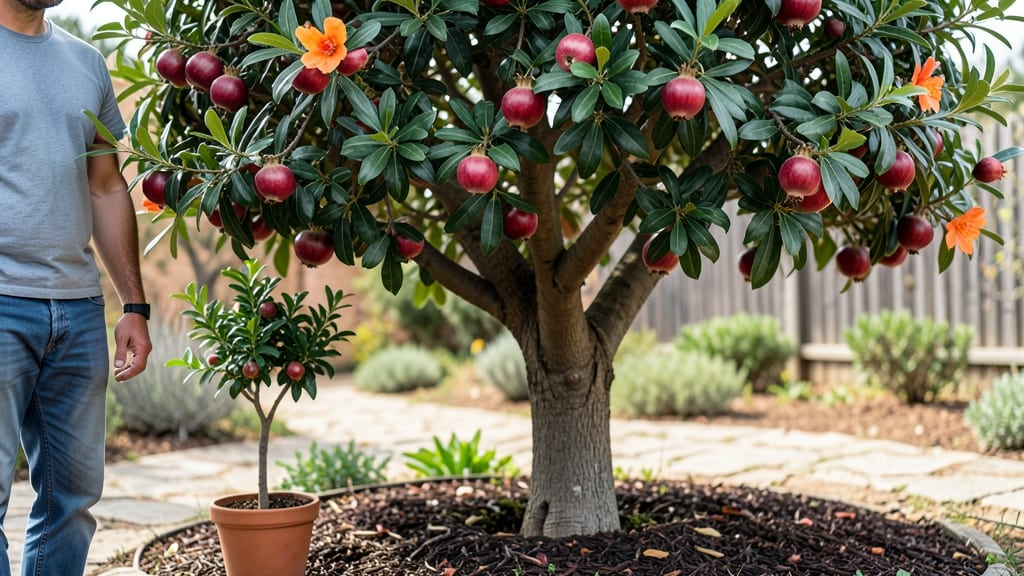
A pomegranate tree grows between 15 and 30 feet tall at maturity, but the exact height depends on the variety you choose—some stay compact enough for containers, while others reach towering proportions.
If you’re dreaming of a lush pomegranate tree in your garden but wondering whether it’ll tower over your backyard or stay neatly contained, the answer depends entirely on the variety—and we’re breaking down the exact heights you can expect.
Standard pomegranate trees like ‘Wonderful’ can easily climb to 20 feet or more, making them a statement piece in larger landscapes. Meanwhile, dwarf varieties like ‘Nana’ top out around 8 feet, perfect for patios or small yards.
Below, I’ll cover how pruning, climate, and even soil quality influence growth, plus the best ways to manage a pomegranate tree’s height—whether you want it to stay small or stretch skyward.

Pomegranate tree height by variety: dwarf vs. standard vs. giant sizes
Choosing the right pomegranate variety is key when planning your garden layout, especially if space is limited. Some varieties stay compact enough for containers or small yards, while others can grow taller than a two-story house. The good news? You can find a perfect fit for any backyard size.
Pomegranate trees typically fall into three height categories: dwarf (6–12 ft), standard (15–25 ft), and giant (25–30+ ft). Your selection will depend on your garden's size, climate, and whether you're growing for fruit or ornamental value. Let’s explore the most popular varieties and their mature heights.
If you're working with limited space, dwarf varieties like 'Punica granatum 'Nana' or 'Sweetheart' are ideal. These stay under 10 feet tall and thrive in containers or small gardens. For larger properties, standard varieties like 'Wonderful' or 'Parfianka' will provide ample fruit without overwhelming your yard.
Giant varieties like 'Herskovits' or 'Ganesh' are best suited for rural settings or large estates, where their towering presence can become a stunning landscape feature. Always consider spacing requirements—these trees need room to grow and develop strong root systems for optimal fruit production.
Another factor to consider is growth rate. Most pomegranate trees grow about 1–2 feet per year, but dwarf varieties may grow slightly slower. With proper pruning and training, you can further control height and encourage a bushier,
How to control pomegranate tree height: pruning, training, and container gardening tips
Pomegranate trees can grow tall—some reaching 30 feet—but with the right techniques, you can shape them to fit your space perfectly. Whether you want a compact patio tree or a trained espalier, controlling height starts with understanding your tree’s growth habits and using the right tools.
Pruning is the most effective way to manage height, but timing matters. Cut back late winter or early spring before new growth begins to avoid damaging fruit production. For dramatic height reduction, prune 25-30% of the canopy annually, focusing on removing suckers and water sprouts that encourage vertical growth.
If you’re working with limited space, consider dwarfing rootstocks like 'Wonderful' or 'Eversweet' grafted onto 'Cartagena' rootstock. These varieties stay between 8-12 feet tall and thrive in containers, making them ideal for balconies or small yards.
- Choose the right rootstock for your desired height—dwarf varieties like 'Cartagena' stay under 10 feet, while standard rootstocks can reach 20+ feet.
- Prune late winter to shape the tree before spring growth. Remove 1/3 of the canopy to control height and improve airflow.
- Use trellising or espalier techniques to train branches horizontally, reducing vertical growth while maximizing fruit production.
- For container gardening, select a pot at least 24 inches wide with drainage holes and prune roots annually to prevent overgrowth.
- Fertilize with low-nitrogen fertilizer (e.g., 5-10-10) to promote fruit development over foliage growth, keeping the tree manageable.
Trellising is another great option for controlling height while adding visual interest. Install a strong trellis or arbor and train the main branches to grow horizontally. This method works especially well for espalier pomegranates, which can be shaped into decorative screens or flat panels against fences.
Container gardening is ideal for small spaces, but it requires extra care. Use a well-draining potting mix and prune roots every 2-3 years to prevent root-bound stress. Choose a large container (24+ inches) and place it in full sun to ensure healthy growth and fruit production.
Regular maintenance is key—monitor your tree’s growth and adjust pruning or training methods as needed. With the right approach, your pomegranate tree can stay compact, productive, and beautiful without overwhelming your garden. 🌱✂️🪴