
Size
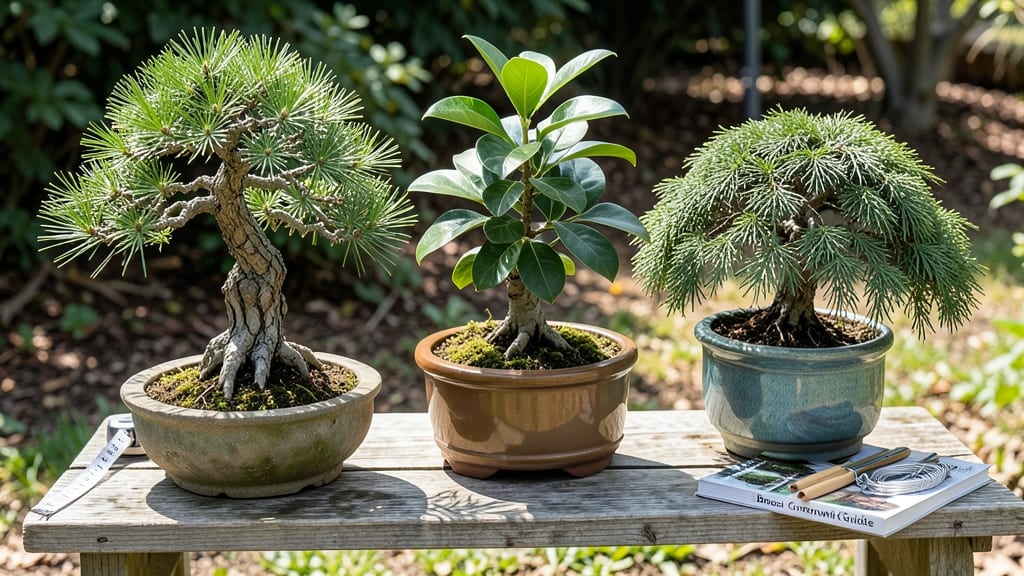
A bonsai tree can grow anywhere from a few inches to over 5 feet tall, depending on the species, pruning, and your artistic vision—far beyond what most people expect.
If you’ve ever dreamed of owning a bonsai tree but wondered whether its size could fit your coffee table—or your living room—you’re not alone. These miniature masterpieces are famous for their delicate beauty, but their potential height spans a surprising range, from tiny trinkets to impressive statement pieces.
The key to controlling height lies in understanding your bonsai’s species and growth habits. Some, like the Juniper, naturally stay small, while others, like the Chinese Elm, can grow taller if left unchecked. Pruning and wiring techniques also play a huge role in shaping their final size.
In this guide, I’ll break down the typical height ranges, how to manage growth, and which species work best for small spaces versus larger displays—so you can create the perfect bonsai for your home.

Understanding bonsai tree height ranges: from miniature to standard sizes
Bonsai trees are often associated with their tiny, tabletop-friendly forms, but their height potential actually varies dramatically depending on species, cultivation techniques, and artistic goals. While some bonsai can fit in a thimble-sized pot, others grow tall enough to become living room centerpieces.
The key lies in understanding how biological growth interacts with human-guided training.
The smallest bonsai—called shohin or micro-miniature—can stay under 6 inches tall for decades, while standard bonsai often reach 12 to 36 inches. Even larger exhibition-style bonsai can exceed 5 feet, though these are rare outside specialized collections.
Your bonsai’s height isn’t just about the species—it’s about root restriction, pruning discipline, and training patience.
Here’s how species selection directly impacts height potential. Fast-growing trees like Chinese Elm or Willow can reach standard sizes in 5-10 years with minimal pruning, while slow growers like Juniper or Pine may never exceed 18 inches even after decades.
The root-over-pot technique further limits growth by confining roots to small containers, forcing the tree to grow upward instead of outward.
| Bonsai Type | Height Range | Key Species | Growth Rate | Training Time |
|---|---|---|---|---|
| Micro-Miniature (Shohin) | Under 6 inches | Ficus, Azalea, Dwarf Juniper | Slow (1-2 inches/year) | 5-10 years |
| Miniature | 6-12 inches | Japanese Maple, Boxwood, Cotoneaster | Moderate (2-3 inches/year) | 3-7 years |
| Standard | 12-36 inches | Chinese Elm, Pine, Willow | Fast (3-6 inches/year) | 2-5 years |
| Exhibition | 36-72+ inches | Japanese Black Pine, Serissa, Wisteria | Variable (1-4 inches/year) | 10+ years |
The pruning cycle is your most powerful tool for controlling height. By removing new growth tips (called apical buds), you encourage lateral branching while stunting vertical growth. For micro-miniature bonsai, I recommend monthly pruning during the growing season, while standard bonsai can often tolerate quarterly pruning.
Remember: over-pruning weakens the tree, so always leave at least 2-3 sets of leaves per branch.
Wiring techniques also play a critical role in shaping height. By carefully wrapping branches with aluminum or copper wire, you can guide growth upward or downward. For cascade-style bonsai, wiring helps create dramatic downward curves, while formal upright styles benefit from vertical wiring to maintain height symmetry. Always remove wires within 3-6 months to avoid permanent scarring or branch breakage.
Root restriction is another underestimated factor in height control. By repotting every 2-3 years and trimming 30-50% of roots, you force the tree to focus energy on above-ground growth rather than expanding its root system.
Use shallow, wide pots for broader trees and tall, narrow pots for vertical growth. Pro tip: Aka-dama soil (a Japanese volcanic soil) drains exceptionally well, reducing root expansion and promoting compact growth.
Light exposure also influences height. Most bonsai thrive with 4-6 hours of direct sunlight daily, but low-light conditions can cause leggy growth (long, weak stems). If your bonsai stretches toward the light, it’s signaling nutrient deficiency or insufficient light.
For indoor bonsai, place them near south-facing windows or supplement with
How to control bonsai tree height: pruning, training, and species selection
Controlling your bonsai tree height is an art that blends science and creativity. While some species naturally stay small, others can grow surprisingly tall if left unchecked. The key lies in understanding pruning cycles, wiring techniques, and how species selection influences your bonsai's ultimate size.
For example, a Juniper bonsai might max out at 12 inches, while a Chinese Elm could reach 36 inches with proper care.
Most beginners focus only on top pruning, but the real magic happens below ground. Root pruning during repotting—every 2-3 years—restricts nutrient flow, slowing vertical growth. Pair this with defoliation (removing leaves) to encourage denser foliage and shorter internodes.
I once saw a Ficus bonsai grow 6 inches in a year before implementing these techniques—now it stays neatly under 18 inches.
⚠️ WARNING: Common Mistakes That Stunt Your Control ⚠️
Different bonsai styles also dictate height limits. A formal upright design encourages vertical growth up to 24 inches, while cascade styles keep trunks shorter but extend branches downward. For example, my Azalea bonsai in a cascade style stays under 12 inches tall but sprawls elegantly over the pot's edge.
To achieve this, I use aluminum wiring to gently bend branches into position, then secure them with branch holders until new growth sets.
Species selection is your first line of defense against unwanted height. Dwarf varieties like Dwarf Pine or Dwarf Chinese Elm rarely exceed 12 inches, making them ideal for desks or shelves. Conversely, tropical species like Ficus or Carmona grow faster and need stricter pruning.
I recommend starting with Juniper or Ficus—they’re forgiving for beginners but respond well to height control when trained properly.
Timing your pruning is critical. Always prune after new growth appears in spring, never more than 25% of the foliage at once. For evergreens, a light trim in late summer can prevent winter legginess.
Pro tip: Use concave cuts (cutting at a slight angle) to encourage branching and reduce height. I also swear by pinching new shoots in early summer to redirect energy into trunk thickness rather than height.
Remember, patience is key. A bonsai’s height isn’t just about cutting—it’s about balancing growth, style, and health.
My 5-year-old Juniper bonsai started as a 6-inch seedling and now stands at 18 inches, but its trunk is thick and its branches are dense—proof that controlled growth creates art. Start small, observe your tree’s response, and adjust your techniques.
With time, you’ll master the perfect height for your vision. 🪴