
How To
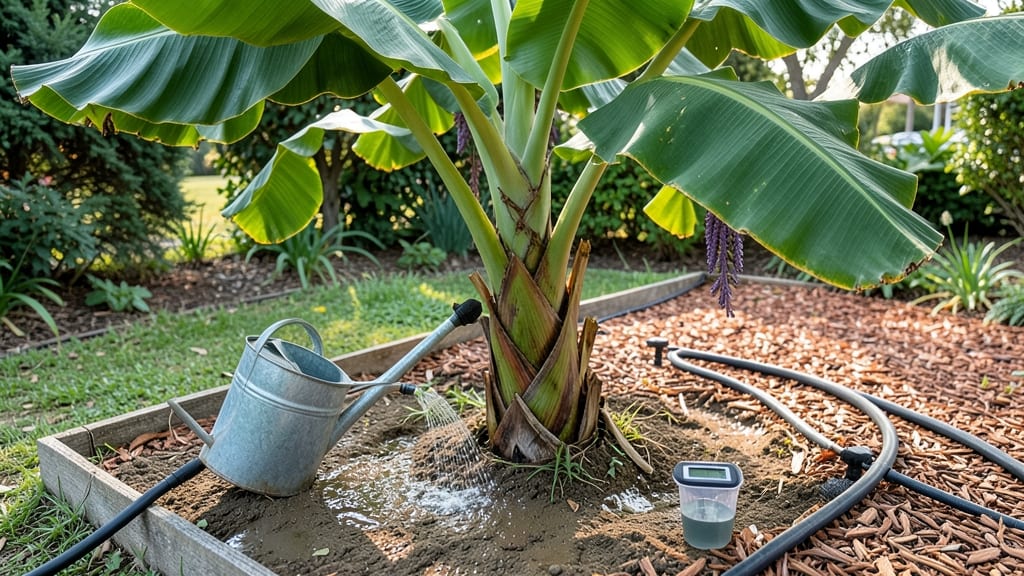
A banana tree 🍌 needs 1 to 5 gallons of water per day, depending on its age, climate, and soil—but most gardeners either drown it or let it thirst. The difference between a thriving giant and a struggling plant often comes down to precision, not guesswork.
Picture this: your young banana tree wilts by midday because the soil dried out, while your mature neighbor’s roots rot from overzealous watering. Both mistakes happen when we treat hydration like a one-size-fits-all task.
The truth? A juvenile plant in a pot needs 1–2 gallons daily, while a mature tree in the ground can drink 3–5 gallons—and that’s just the baseline.
Climate throws another wrench in the mix. In humid tropical zones, you might cut back by 20% in summer, while subtropical growers in Zone 9b need to monitor soil moisture like a hawk.
Below, I break down the exact formula for your banana tree’s age, season, and soil type—so you can stop guessing and start growing.
You’ll learn how to spot overwatering vs. underwatering, the best times to water (hint: morning is key), and why deep soaks beat shallow sprinkles every time. Let’s get your banana tree drinking the right amount—no more, no less.
Daily water requirements for banana trees by age and growth stage
Banana trees are tropical powerhouses that thrive on consistent moisture, but their water needs change dramatically as they grow.
A juvenile banana tree (1-3 years old) has shallow roots and requires frequent hydration to establish its root system, while a mature tree (3-5+ years) can access deeper water sources but still demands regular attention—especially during fruiting.
Understanding these stages helps you avoid both root rot from overwatering and leaf scorch from drought.
In my Zone 10 garden, I’ve learned that watering banana trees isn’t one-size-fits-all. A 1-year-old plant in a 5-gallon container might need 1-2 gallons daily, while a 5-year-old tree in well-draining soil could require 5-10 gallons every 2-3 days.
The key is monitoring soil moisture and adjusting for climate—humid tropical regions need less frequent watering than dry subtropical zones.
| Growth Stage | Age Range | Daily Water Needs (Gallons) | Watering Frequency | Root Depth | Key Focus |
|---|---|---|---|---|---|
| Juvenile | 1-3 years | 1-2 gallons | Daily (containers), Every 1-2 days (ground) | 0-12 inches | Root establishment |
| Mature (Non-Fruiting) | 3-5 years | 3-5 gallons | Every 2-3 days | 12-24 inches | Maintenance growth |
| Mature (Fruiting) | 5+ years | 5-10 gallons | Every 1-2 days (deep watering) | 24+ inches | Fruit development |
| Container-Grown (All Ages) | 1+ years | 1-3 gallons (scalable) | Daily (small pots), Every 2 days (large pots) | Root-bound | Prevent drying out |
For juvenile banana trees, focus on shallow but frequent watering. Their roots are still developing, so I water mine in the morning to let excess moisture evaporate before nightfall.
A soil moisture meter is invaluable here—aim to keep the top 2-3 inches of soil damp, not soggy. If the soil feels dry at this depth, it’s time to water.
When your banana tree reaches 3-5 years old, its roots dive deeper, but it still needs consistent hydration. Mature trees in well-draining soil can handle slightly longer intervals between waterings, but I’ve seen yellowing leaves appear within days when I skip watering during heatwaves.
During these years, I switch to deep watering techniques, soaking the soil to a depth of 12-18 inches every 2-3 days.
The fruiting stage is when banana trees demand the most water—up to 10 gallons every 1-2 days for large trees. This is when I prioritize drip irrigation systems or soaker hoses to deliver water directly to the root zone without wetting the leaves (which can cause fungal issues).
I also mulch heavily with straw or wood chips to retain moisture and regulate soil temperature.
Container-grown banana trees have unique needs because their root systems are confined. Even a 5-gallon pot can dry out quickly, so I water mine daily in summer and monitor soil moisture closely.
Larger containers (15+ gallons) can stretch watering to every 2 days, but I always check the weight—lift the pot! If it feels light, it’s time to water. Self-watering pots are a game-changer for container banana trees.
One common mistake I see is surface-level watering, which encourages shallow roots and weak stems. Instead, use a long-spout watering can or irrigation tube to water at the base until moisture seeps out the bottom of the pot
Adjusting water needs based on climate and soil type
Your banana tree thrives in tropical conditions, but its daily water needs shift dramatically with climate zones and soil composition. In humid tropical climates like Hawaii or Florida, you might water 20% less than in drier subtropical zones like Southern California.
The key is understanding how evaporation rates and root zone moisture interact with your local environment.
Soil type plays an equally critical role. Sandy soil drains water like a sieve, requiring frequent deep watering (every 1-2 days), while clay soil holds moisture for days, demanding shallow checks before rewatering.
Even container-grown banana trees dry out faster than in-ground plants, needing daily watering in summer heat. Let’s break down how to adjust your schedule precisely.
Seasonal adjustments are non-negotiable. In summer months, increase watering by 20-30% due to higher evaporation rates, while in winter, reduce by 40% as growth slows.
For example, a mature banana tree in clay soil might need 5 gallons daily in July but only 2 gallons every 3 days in January. Always check the top 2 inches of soil—if dry, water deeply.
Watch for overwatering signs like yellowing leaves or mushy stems, which indicate root rot. Conversely, crispy fronds or drooping leaves signal underwatering. Mulching with 3-4 inches of organic matter helps retain moisture in sandy soil while preventing compaction in clay.
Adjust your schedule weekly based on these visual cues.
Pro tip: Use a moisture meter for container plants or stick your finger 4 inches deep into soil for in-ground trees. If the soil feels like a sponge, hold off watering; if it’s dry as sand, it’s time to hydrate.
Your banana tree’s health hinges on this balance—master it, and you’ll see lush fronds and abundant fruit year-round.