
Trees
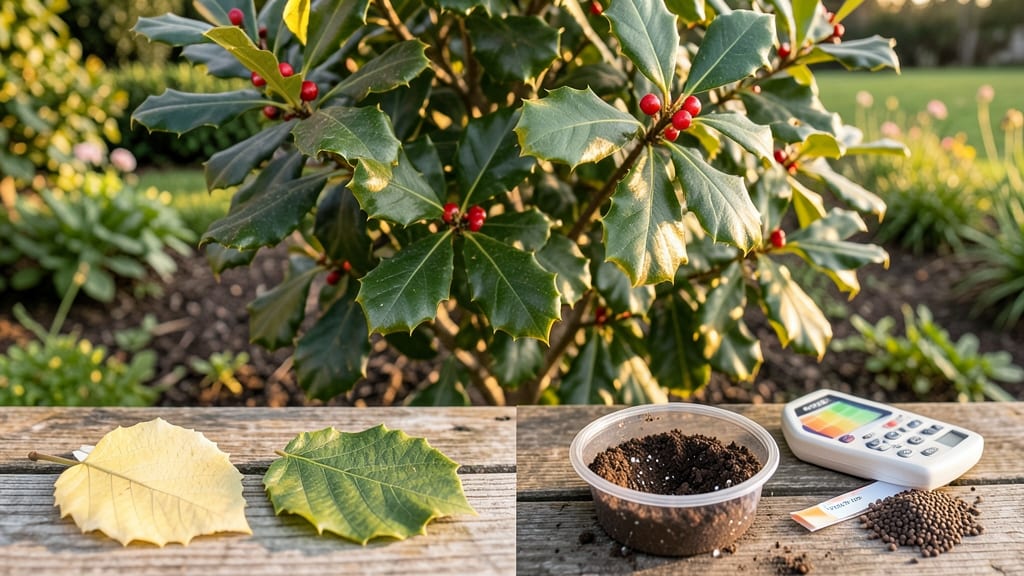
Your holly tree’s yellow leaves could be a fungal spot outbreak—and fixing it fast means stopping the spread before it ruins the whole shrub. 🌿 I’ve diagnosed this exact problem in my own Ilex trees, and the key is acting within 2-3 days of noticing those telltale yellow spots with dark borders.
The most common culprit is Cercospora leaf spot, thriving in wet, humid conditions. Look for small yellow patches that turn brown and develop tiny black specks—the fungus’s spore-producing centers.
Overhead watering or poor air circulation makes holly trees especially vulnerable, and once established, the disease spreads like wildfire through fallen leaves.
Start by removing all infected leaves (gloves on!) and prune back branches with heavy spots to improve airflow. A copper fungicide spray every 7-10 days for 3 weeks stops the fungus in its tracks, and mulching 2-3 inches deep keeps soil moisture steady without drowning roots.
The good news? Holly trees bounce back fast when you catch this early.
For prevention, water at the base (never overhead) and space plants 4-6 feet apart for airflow. If your holly’s yellowing started in shady spots, move it to 6+ hours of sunlight daily—stress from poor light weakens defenses.
Most gardeners see full recovery within 4-6 weeks of treatment, with new growth emerging bright and healthy.
Underlying Causes Of Leaf Discoloration
Holly trees are hardy and resilient, but when their leaves turn yellow, it’s often a sign that something’s off—whether it’s environmental stress, disease, or nutrient deficiencies. Understanding the root cause is key to restoring your holly’s vibrant green foliage.
Below, we break down the most common reasons why holly leaves yellow, along with the science behind each issue.
Holly trees, like all plants, rely on a balanced diet of essential nutrients to thrive. When leaves turn yellow, it’s often a cry for help—specifically, a shortage of key elements. Here’s what’s missing and why:
💡 Iron Chlorosis: The Yellow-Between-Veins Syndrome
Yellowing leaves with green veins are a classic sign of iron deficiency, a condition called chlorosis. Iron is crucial for chlorophyll production, and holly trees—especially those in alkaline soils (pH 7.0 or higher)—struggle to absorb it.
- Why it happens: Iron binds to soil particles in alkaline conditions, making it unavailable to roots.
Even if the soil has iron, the tree can’t access it. - Actionable fix: - Test your soil (pH and nutrient levels) using a home kit or send a sample to a lab. - Apply chelated iron (a water-soluble form) directly to the soil or as a foliar spray.
Products like Ironite or Sequestrene work well. - Lower soil pH gradually with elemental sulfur or peat moss (aim for pH 5.5–6.5 for hollies). - Mulch with compost to improve soil structure and microbial activity, which helps release bound iron.
🌱 Nitrogen Shortage: Slow Growth & Pale Leaves
Yellowing leaves that start at the older, lower leaves and progress upward often signal nitrogen deficiency. Nitrogen is the building block of chlorophyll and protein, and without it, leaves lose their luster.
- Why it happens: Nitrogen leaches quickly from soil, especially in sandy or well-drained soils.
Poor organic matter content or over-pruning (removing too many leaves) can also deplete stores. - Actionable fix: - Apply a balanced fertilizer (e.g., 10-10-10 or 12-4-8) in early spring before new growth begins. - Use organic amendments like composted manure, blood meal, or fish emulsion for a slow-release boost. - Avoid overwatering, which washes away nitrogen.
Water deeply but infrequently.
💧 Magnesium & Potassium Deficiencies: Weak Structure
Yellowing leaves with brown or dead patches (especially along leaf edges) may indicate magnesium or potassium deficiency.
- Magnesium (center of chlorophyll molecule): Leaves yellow between veins, starting on older leaves.
- Potassium (osmotic regulation): Leaves develop scorched edges and may curl.
- Why it happens: Both nutrients are mobile in the plant, so deficiencies show up in older leaves first.
Compacted or acidic soils can lock them out. - Actionable fix: - For magnesium: Apply Epsom salt (magnesium sulfate)—mix 1 tbsp per gallon of water and spray on leaves or soil. - For potassium: Use wood ash, greensand, or a potassium-rich fertilizer (like 0-0-50). - Aerate compacted soil to improve root access to nutrients.
Hollies are adaptable, but extreme conditions can trigger yellowing leaves. Here’s how climate and water play a role:
💦 Overwatering: Drowning the Roots
Yellow, soggy, or mushy leaves with wilting are red flags for overwatering or poor drainage. Holly trees hate "wet feet"—their roots need oxygen to function.
- Why it happens: Waterlogged soil cuts off oxygen, leading to root rot (often caused by Phytophthora fungi).
Compacted or clay-heavy soils worsen the problem. - Actionable fix: - Check drainage: Dig a hole near the tree—if water pools after 30 minutes, amend soil with sand, perlite, or compost. - Adjust watering: Hollies prefer 1–1.5 inches of water per week (including rain).
Water deeply but let the top 2–3 inches of soil dry out between sessions. - Improve soil aeration: Add organic mulch (3–4 inches) around the base (keep it 6 inches away from the trunk).
☀️ Underwatering: Thirsty Leaves Speak
Dry, crispy yellow edges or leaves that curl upward indicate underwatering. Hollies are drought-tolerant but still need consistent moisture, especially in hot climates.
- Why it happens: Shallow root systems (common in newly planted hollies) can’t reach deep water sources.
Heat and wind increase water loss through transpiration. - Actionable fix: - Water deeply 2–3 times per week during dry spells (use a soaker hose to avoid wetting foliage). - Mulch heavily to retain moisture and regulate soil temperature. - Group hollies with other plants to create a microclimate with higher humidity.
🌡️ Temperature & Sunburn
Yellowing leaves on sun-exposed sides of the tree may be suffering from sun scorch, especially in sudden heat waves or after winter.
- Why it happens: Holly leaves aren’t used to intense afternoon sun if the tree was previously shaded (e.g., under another tree that was removed).
Cold snaps followed by hot weather can also stress leaves. - Actionable fix: - Provide afternoon shade with a light fabric shade cloth (30–50% coverage) during extreme heat. - Water deeply in the morning to help leaves withstand heat stress. - Avoid pruning in late summer—new growth is more vulnerable to sunburn.
While nutrient issues are common, fungal or bacterial infections can also cause yellowing, often accompanied by spots, lesions, or unusual patterns. Holly trees are susceptible to:
🍂 Anthracnose: The Spotty Yellow Menace
Yellow or tan spots with dark borders (often with a "frosted" appearance) are telltale signs of anthracnose, a fungal disease that thrives in wet, humid conditions.
- Why it happens: The fungus Colletotrichum or Gloeosporium infects leaves through wounds or natural openings.
Overhead watering or poor air circulation spreads spores. - Actionable fix: - Remove and destroy infected leaves (do not compost them). - Apply a fungicide (copper-based or neem oil) in early spring before new growth appears. - Space trees properly (6–10 feet apart) for better airflow. - Water at the base (avoid wetting foliage) and prune for sunlight penetration.
🍃 Bacterial Leaf Spot: Oozing Trouble
Small, water-soaked yellow spots that turn brown and may ooze bacteria indicate bacterial leaf spot (often caused by Pseudomonas or Xanthomonas).
- Why it happens: Bacteria enter through rain splashes, tools, or insect damage.
Warm, wet weather accelerates spread. - Actionable fix: - Prune infected branches and sterilize tools with 70% rubbing alcohol. - Apply a copper fungicide (bactericides like Copper Soap can help). - Improve drainage to reduce leaf-wetting.
Sometimes, tiny pests sap nutrients from leaves, causing yellowing. Look for:
- Spider mites: Tiny yellow stippling or webbing on leaves.
- Scale insects: Sticky residue (honeydew) and yellowing near buds.
- Aphids: Curled, yellowing leaves with a sticky coating.
- Why it happens: Pests pierce cells to feed, disrupting chlorophyll production. Stress (drought, poor soil) makes hollies more vulnerable.
- Actionable fix:
- Spray with water to dislodge mites/aphids (repeat weekly).
- Use insecticidal soap or neem oil for light infestations.
- **Introduce beneficial insects
Fixing Fungal Spot on Holly Trees
Yellowing leaves on your holly tree could be a sign of fungal spot diseases like anthracnose or leaf spot, but don’t panic—these issues are often treatable with the right steps.
Below, we break down practical solutions tailored to the most common causes, along with prevention tips to keep your holly healthy and vibrant.
Before treating, confirm the issue isn’t something else (like nutrient deficiency or pests). If you’ve ruled those out and suspect fungal spot, proceed with these fixes:
🔪 Prune Infected Leaves & Branches
- How: Use sterilized pruners (wipe with rubbing alcohol between cuts) to remove yellow, brown, or spotted leaves—even if they’re still attached.
- When: Do this early in the season (spring) or late fall to prevent spores from spreading.
- Why: Fungal spores thrive on dead plant matter, so removing infected foliage stops the cycle.
🍂 Rake Up Debris
- Clear fallen leaves, twigs, and mulch from under the tree—fungi love hiding in organic debris.
- Pro Tip: 💡 Bag and dispose of (don’t compost!) infected plant material to prevent reinfection.
🌧️ Water Correctly
- Overhead watering (especially in the evening) can worsen fungal spread. Instead:
- Water deeply at the base (6–12 inches into the soil).
- Morning watering (before 10 AM) helps leaves dry faster, reducing humidity—fungi’s favorite environment.
🌱 Improve Air Circulation
- Thin out dense branches to allow sunlight and airflow.
- Avoid planting hollies in shady, damp spots—they prefer partial sun (4–6 hours of sunlight daily).
🍽️ Feed with the Right Fertilizer
- Test soil pH (ideal: 5.0–6.0 for hollies). Use an acid-loving plant fertilizer (like iron sulfate or peat-based fertilizer) if the soil is alkaline.
- Avoid over-fertilizing—too much nitrogen can weaken the tree, making it more susceptible to disease.
If the problem persists, fungicides can help. Here’s how to use them effectively:
| Fungicide Type | When to Apply | How to Apply | Safety Tips |
|---|---|---|---|
| Copper-based (e.g., copper sulfate) | Early spring (before leaves emerge) | Mix with water (follow label) and spray undersides of leaves (where spores hide). | Wear gloves; avoid spraying on windy days. |
| Neem oil | Spring & fall | Mix 1–2 tbsp neem oil + 1 tsp mild soap per gallon of water. Spray evenly. | Test on a small branch first (neem can burn sensitive plants). |
| Systemic fungicide (e.g., propiconazole) | At first sign of spots | Apply every 2–4 weeks during wet seasons. | Follow label rates; avoid overuse. |
⏰ Best Timing:
- Preventative: Apply fungicide before rainy seasons (spring/fall).
- Curative: Treat immediately if you spot new lesions.
🔄 Rotate Fungicides (if needed) to prevent resistance. 🌡️ Monitor Humidity—use a dehumidifier in greenhouses or mulch strategically (keep 3–4 inches away from the trunk). 🌱 Choose Resistant Varieties—some hollies (like ‘Sky Pencil’ or ‘Dwarf Burford’) are less prone to fungal diseases. 🧹 Clean Tools Regularly—sterilize pruners and rakes after each use to avoid spreading spores.
Healthy hollies resist diseases better. Boost immunity with:
- Mulch (2–3 inches of pine bark or wood chips) to retain moisture and regulate soil temp.
- Avoid wounding—prune correctly (use sharp tools) to prevent entry points for fungi.
By following these steps, your holly should recover its lush green leaves and stay disease-free. Act fast—early intervention is key! 🌿💚
Frequently asked questions
Why do holly tree leaves turn yellow in patches with dark spots?
Those are classic signs of fungal leaf spot, often caused by Cercospora or anthracnose. The fungus thrives in wet, humid conditions and spreads through water splashes or infected debris. Look for small yellow patches that develop dark borders—this is how spores form.
Can I save my holly tree if most leaves are already yellow?
Yes, but act fast! Prune off all infected leaves immediately (sterilize tools first), then apply a copper fungicide every 7-10 days for 3 weeks. Improve airflow by thinning branches and water at the base—never overhead—to prevent reinfection.
How do I tell if yellow leaves are from disease vs. nutrient deficiency?
Check the pattern: Fungal spots show yellow/brown patches with dark edges, often on upper leaves. Nutrient issues (like iron chlorosis) cause uniform yellowing between veins, starting on younger leaves. Test your soil pH—alkaline soil (pH >7.0) locks out iron.
Will rain make fungal leaf spot worse?
Rain splashes spread fungal spores like wildfire. Water your holly at the base in the morning (before 10 AM) so leaves dry quickly. Avoid overhead sprinklers—this is the #1 way fungal diseases spread in gardens.
How long until my holly tree recovers from leaf spot?
With treatment, you’ll see new green growth in 4-6 weeks. The key is consistency: keep pruning infected leaves, applying fungicide, and improving airflow. Most hollies bounce back fully if you catch it early—don’t wait until half the tree is affected!