
Light Requirements
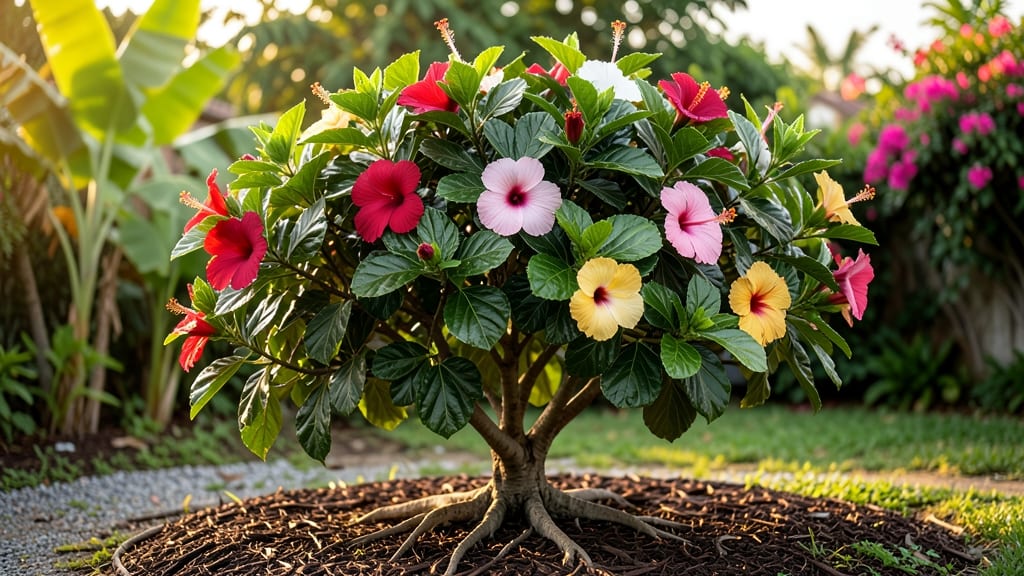
A hibiscus tree thrives in full sun 🌺 but doesn’t always need it to bloom beautifully—this is the surprising truth many gardeners miss.
Stunning hibiscus blooms might seem like a sun-worshipper’s dream, but many gardeners struggle when their hibiscus trees fail to thrive—even with full sun exposure. The truth about light needs is far more nuanced than you think, and understanding it could mean the difference between vibrant flowers and sparse foliage.
While 6-8 hours of sunlight is ideal for most varieties, some hibiscus types—especially hardier ones—can handle partial shade, especially in hot climates where afternoon sun might scorch leaves. The key lies in balancing light, airflow, and even soil moisture to keep your plant happy.
In this guide, I’ll break down exactly how much sun your hibiscus tree needs, how to spot signs of too much or too little light, and which varieties do best in shadier spots—so you can grow a thriving, blooming beauty no matter where you plant it.

How much sun does a hibiscus tree actually need?
When I first planted my hibiscus tree, I assumed it needed full sun all day—just like most sun-loving plants. But after watching my neighbors' hibiscus thrive in partial shade, I realized the truth is more complex.
Most hibiscus varieties actually prefer 4 to 8 hours of sunlight, not the intense 10+ hours many gardeners assume. This range gives them enough energy for vibrant blooms without scorching their leaves in extreme heat.
The myth that hibiscus trees need full sun exposure comes from their tropical origins, where they grow under bright but filtered light. However, hardy hibiscus varieties (like Hibiscus syriacus) can adapt to partial shade, especially in hotter climates where afternoon sun becomes too intense.
Understanding this balance is key to avoiding common mistakes like leaf burn or sparse flowering.
Here’s the breakdown of what your hibiscus tree truly needs, including how light intensity and microclimates play a role in its success:
| Hibiscus Type | Ideal Sunlight | Notes |
|---|---|---|
| Tropical Hibiscus (Hibiscus rosa-sinensis) | 6-8 hours | Needs morning sun; afternoon shade in hot climates |
| Hardy Hibiscus (Hibiscus syriacus) | 4-6 hours | Tolerates partial shade; great for cooler regions |
| Swamp Hibiscus (Hibiscus moscheutos) | 5-7 hours | Prefers moist soil; adapts to filtered light |
| All Hibiscus Types | Avoid full afternoon sun | Prevents leaf scorch and wilting |
For tropical hibiscus, the golden rule is 6-8 hours of sunlight, but the timing matters just as much. Morning sun (6 AM–12 PM) is ideal because it provides energy without the intense heat stress of afternoon rays.
If you live in a hot inland climate, like Arizona or Texas, your hibiscus might need afternoon shade from a nearby tree or lattice to prevent leaf burn. Coastal areas, on the other hand, often have milder sunlight due to cloud cover and ocean breezes, making 5-6 hours sufficient.
Seasonal adjustments are crucial too. In summer months, hibiscus trees can handle less direct sunlight because the sun’s angle is higher and more intense. I’ve found that using a light-colored shade cloth (30-50% coverage) can protect delicate leaves while still allowing enough light for photosynthesis.
In winter or early spring, however, they’ll appreciate a few extra hours of sun to kickstart blooming.
Another factor to consider is your local microclimate. A hibiscus planted in a south-facing garden bed will receive more sunlight than one near a tall fence or building.
Even within the same yard, a spot near a concrete wall can reflect heat and increase light intensity, while a shady corner under a tree might only get dappled sunlight.
Test your spot for a week by placing a sunlight tracker (or even a white plate to measure shadows) to gauge how much light your hibiscus will actually get.
If you’re growing hibiscus in containers, their light needs change slightly. Potted hibiscus can tolerate partial shade more easily because you can move them to sunnier spots as needed. However, they still need at least 4 hours of direct sunlight daily to produce flowers.
I’ve seen potted hibiscus thrive on a sunny patio with morning sun and afternoon shade, especially in USDA Zone 8 or higher.
One common mistake I see is assuming that more sun is always better. While hibiscus trees love light, excessive sunlight without proper watering can lead to leaf drop or stunted growth.
The key is balance: enough light for energy production but not so much that it causes stress or dehydration. Think of it like Goldilocks—you want the just-right amount of sunlight for your specific hibiscus variety and climate.
For gardeners in cooler climates (like Zone 5 or 6), hibiscus can actually benefit from more sunlight to compensate for shorter growing seasons. In these areas, a south-facing location with 8 hours of sun will encourage stronger growth and more blooms.
But if you’re in a tropical zone (like Florida or Hawaii), even 5 hours of morning sun might be plenty, especially if paired with high humidity.
Remember, hibiscus trees are adaptable, and with the right adjustments, they can thrive in a variety of light conditions. Start by choosing the right hibiscus variety for your climate, then monitor how your plant responds to its light exposure.
Adjust gradually—whether by adding shade or moving the plant—and you’ll be rewarded with lush foliage and stunning blooms all season long. 🌺
Signs your hibiscus tree isn’t getting the right light (and how to fix it)
If your hibiscus tree is sporting yellowing leaves or dropping them early, it’s likely sending you a light-related SOS. Even with 6-8 hours of sun, some hibiscus varieties struggle when light conditions aren’t ideal.
The key is recognizing subtle clues—like sparse blooms or stunted growth—that reveal whether your plant is basking in the perfect light or fighting for survival.
First, check your hibiscus’s foliage color. Healthy leaves should be deep green, but pale or yellowing leaves often mean insufficient light. Meanwhile, brown leaf edges or crispy foliage can signal too much direct sun, especially in hot climates.
These visual cues help diagnose whether your plant needs more shade or a sunnier spot to thrive.
⚠️ callout warning ⚠️
When hibiscus trees don’t get enough sunlight, they can’t process water efficiently. This leads to soggy soil and root rot, especially if you’re watering on a strict schedule. Always check soil moisture 1 inch deep before watering—if it’s damp, wait 2-3 more days. Morning watering is key to prevent fungal growth.
To fix light-related issues, start with pruning for airflow. Thick foliage can block sunlight from reaching inner branches. Trim back overgrown branches by 20-30% to improve light penetration and reduce humidity buildup. This simple step can revive a struggling hibiscus by exposing more leaves to sunlight.
For partial shade areas, consider strategic planting. Place your hibiscus near a south-facing wall or under dappled sunlight from taller trees. If your yard lacks natural shade solutions, use lightweight shade cloth (30-50% coverage) during peak afternoon sun to protect delicate leaves without cutting off all light.
In containers or small spaces, rotate your hibiscus quarterly to ensure even light exposure. Uneven growth (like lopsided branches) often signals one side isn’t getting enough sun. Pair this with a balanced fertilizer (10-10-10) every 6 weeks to compensate for lower light levels and encourage blooming.
Remember, hibiscus adaptability varies by variety. Tropical hibiscus (Hibiscus rosa-sinensis) craves full sun, while hardy hibiscus (Hibiscus syriacus) tolerates partial shade. Adjust your care routine based on your specific type—your hibiscus will reward you with bold blooms and lush foliage! 🌺