
Pruning
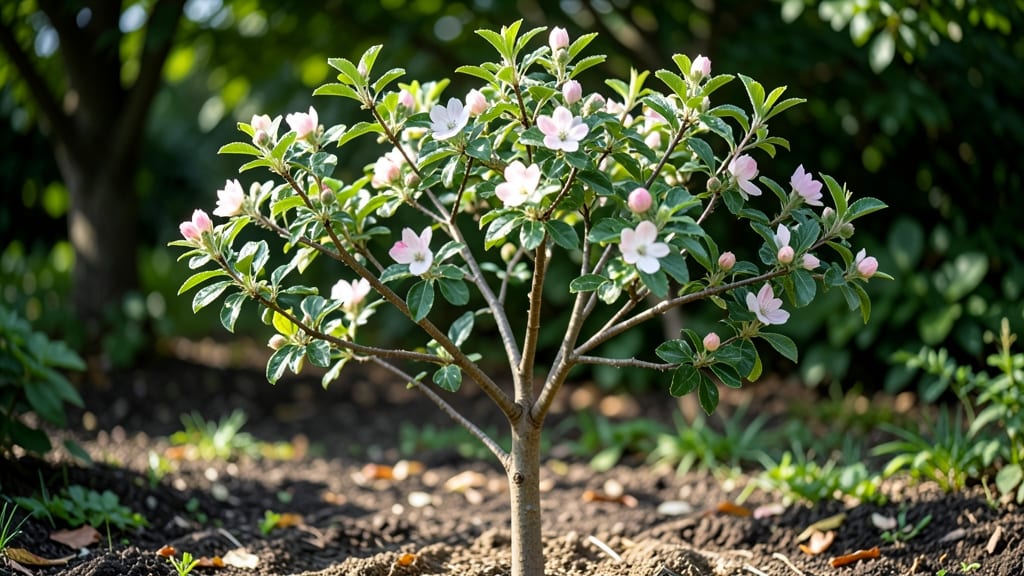
Your young crabapple tree's future beauty starts with this first pruning—done right, it sets the stage for strong branches and abundant blooms for decades. ✂️ I've watched too many young trees develop weak forks or tangled growth because pruning was skipped or rushed.
The key is timing, technique, and a little patience—what you do in these first few years determines whether your tree grows into a sturdy, flowering centerpiece or a tangled mess.
Start by removing any crossing branches or those growing inward—they'll compete for sunlight and nutrients, leaving your tree stunted. Use clean, sharp pruners and cut just outside the branch collar (that little bump where the branch meets the trunk).
For young trees, you're shaping more than trimming: aim for an open center that lets light and air circulate. My first crabapple needed only a few cuts, but those few made all the difference in its growth pattern.
After pruning, you'll notice new growth emerging within weeks—thicker stems and more vibrant leaves are your reward. The tree will also develop a stronger root system, setting it up for better bloom production in just a few years.
Just remember: prune in late winter or early spring before new growth begins, and avoid heavy pruning in fall when the tree is preparing for dormancy.
Common mistakes? Pruning too aggressively (never remove more than 25% of the tree's canopy at once) or using dull tools that tear bark. Stick to the basics, and your young crabapple will reward you with healthy structure and future blooms that make every effort worthwhile.
This is where great trees begin—one careful cut at a time.
📚 In This Guide
- What you need
- Instructions
- Tips and common mistakes
- Wrapping up and next steps
What you need
- ● Pruning shears: Bypass pruners (for branches 1 pair (look for sharp, stainless-steel blades).
- ● Loppers: For branches ½–1½ inches thick – 1 pair (with a 6–8 inch blade for leverage).
- ● Pruning saw: For thicker branches (1½+ inches) – 1 hand saw (bow or pruning-specific).
- ● Gloves: Heavy-duty, cut-resistant (e.g., leather or synthetic) – 1 pair (protects hands from thorns and splinters!).
- ● Disinfectant: 70% isopropyl alcohol or a 10% bleach solution – small spray bottle (prevents disease spread).
- ● Rubbing alcohol or hydrogen peroxide: 3% solution – small bottle (for cleaning tools between cuts).
- ○ Pruning sealant: Optional but helpful for larger cuts (>½ inch) – 1 small tube (e.g., Tanglefoot Tree Wound Pruning Seal).
- ● Extension pole: For hard-to-reach branches – 1 pole saw or telescopic pruners (10–12 feet).
- ● Safety gear: Safety glasses and long sleeves/pants – 1 set (protects from debris and thorns).
- ● Weather check: Prune on a dry, cloudy day (avoid rain or extreme heat).
- ● Tree assessment: Identify dead, diseased, or crossing branches before you start.
- ● Clean workspace: Lay down a tarp or old blanket to collect debris.
- ● Sharp tools: Test your shears/loppers on a scrap branch—dull tools crush wood and damage the tree!
- ● 🔥 Start small: Limit pruning to no more than 25% of the tree’s foliage in the first year to avoid stress.
- ● ✨ Sanitize often: Wipe tools with rubbing alcohol between every 2–3 cuts to prevent bacterial/fungal spread.
- ● 🌡️ Timing matters: Late winter or early spring (just before buds swell) is ideal for young crabapples.
Step-by-step guide to pruning a young crabapple tree
Here's how I shape young crabapple trees for strong structure and future blooms—without stressing the tree.
☀️ Step 1: Time Your First Pruning for Late Winter
Prune your young crabapple tree in late winter (just before buds swell) when the tree is dormant. This timing prevents disease spread and gives you a clear view of the branch structure. I always prune on a dry day—wet wood splinters more easily and invites fungal infections.
Use sharp, clean pruning shears to make cuts at a 45-degree angle about ¼ inch above a bud or branch collar. The angle helps water run off the cut, and the bud location ensures new growth emerges in the right direction. If your tree has any dead, diseased, or crossing branches, remove those first—they're the easiest to spot now.
✂️ Step 2: Remove Weak or Crossing Branches
Look for branches growing directly opposite each other (called "water sprouts" or "crossing branches"). These compete for energy and often rub together, creating wounds. Use your shears to cut these branches back to the branch collar—never leave a stub. You'll see a slight swelling where the branch meets the trunk; that's your target.
Next, remove any branches growing inward toward the center of the tree. These won't receive enough sunlight and can become weak or diseased. Aim to create an open center with branches spaced 6-12 inches apart on the trunk. This airflow prevents fungal issues later. If a branch is too small to cut cleanly with shears, use your hands to snap it off at the collar.
🌿 Step 3: Shape the Tree for Balance
Step back and visualize the tree's natural shape. Young crabapple trees should have a central leader (main upward-growing branch) with 3-5 scaffold branches (larger branches growing outward). If your tree lacks a clear leader, select the strongest upward-growing branch and remove the others at the trunk.
For scaffold branches, aim for even spacing around the trunk. Cut back any branches that grow too close together or are too small (thinner than a pencil). You'll see the tree's structure come together as you remove excess growth. Leave 3-4 strong branches on each side of the leader, pruning others back to the collar. This balance ensures the tree grows sturdy and supports future fruit and blooms.
🪴 Step 4: Clean Up and Monitor Growth
After pruning, sterilize your shears with rubbing alcohol to prevent spreading disease. Collect and dispose of all cuttings—don't leave them under the tree, as they can harbor pests. Water the base of the tree deeply to help it recover from the pruning stress.
Watch the tree over the next few weeks. You'll see new buds swell and leaves emerge—this is a good sign the pruning was successful. If any cuts bleed sap heavily, don't worry; it's normal for young trees. Avoid pruning again for at least 6 months to allow the tree to heal and establish new growth. Next year, focus on maintaining the shape and removing any suckers or weak branches that appear.
Tips & tricks for pruning young crabapple trees
Here's what I've learned from years of shaping young crabapple trees—these tricks make all the difference in creating a strong, healthy tree.
Timing is Everything: Late winter pruning is non-negotiable for young crabapple trees. The dormant season prevents disease spread and gives you a clear view of the tree's structure. I always check for bud swelling first—if you see buds starting to open, you've waited too long. Pruning too early can stress the tree, while waiting too late risks encouraging disease.
Tool Prep Matters: Your pruning shears should be sharper than your focus. Dull blades crush wood instead of cutting cleanly, which invites infections. Before you start, sharpen your shears and sterilize them with rubbing alcohol. I also keep a small spray bottle of alcohol handy to wipe down blades between cuts on different branches. This simple step prevents spreading fungal spores from diseased branches to healthy ones.
Visualizing the Structure: Step back frequently to check your work. The goal is a central leader with evenly spaced scaffold branches—think of it like a well-built scaffold. I imagine the tree's final shape before making cuts. For young trees, aim for 3-5 main branches spaced 6-12 inches apart. This open center allows sunlight to reach all parts of the tree, which is crucial for those beautiful spring blooms and future fruit production.
Cleanup Prevents Problems: After pruning, don't leave cuttings under the tree. I collect all debris and dispose of it in sealed bags. Leaving cuttings invites pests and diseases that can overwinter in the wood. Also, water the base of the tree deeply after pruning—this helps the tree recover from the stress of cutting. Think of it like giving your tree a drink after surgery.
Pro Tips for Crabapple Tree Young
- Here's what I've learned from years of shaping young crabapple trees—these tricks make all the difference in creating a strong, healthy tree.
- Timing is Everything: Late winter pruning is non-negotiable for young crabapple trees.
- Tool Prep Matters: Your pruning shears should be sharper than your focus.
Frequently asked questions
Got questions about nurturing a young crabapple tree?
Here are answers to the most common concerns—from pruning tips to troubleshooting—so you can keep your tree thriving with confidence!
When is the best time to prune a young crabapple tree?
Prune your young crabapple tree in late winter or early spring (just before buds swell) to encourage strong growth and abundant blooms. Avoid heavy pruning in fall, as it can stimulate new growth that may not harden off before winter. Light shaping in summer (after flowering) is fine, but focus on removing dead or crossing branches.
How much should I prune off a young crabapple tree?
For a young tree (under 3 years old), limit pruning to removing no more than 20-25% of the canopy per year. Focus on:
- Dead, diseased, or weak branches
- Branches growing toward the center (to improve airflow)
- Water sprouts (fast-growing vertical shoots)
Why aren’t my young crabapple tree’s flowers as abundant as expected?
Several factors could be at play:
- Over-pruning: Heavy cuts reduce flowering potential. Stick to light shaping.
- Nutrient deficiency: Test soil for phosphorus (key for blooms) and amend with compost or a balanced fertilizer.
- Age: Young trees (under 5 years) may flower lightly—patience pays off!
- Pests/disease: Check for aphids, borers, or fungal spots (like apple scab). Treat early.
Can I prune a young crabapple tree in extreme heat or cold?
Prune during mild weather (ideal temps: 40–60°F). Avoid:
- Extreme heat: Stress from pruning + heat can invite pests/disease.
- Frost: Cold weather slows healing; wait until threats pass.
Are there alternatives to pruning if my young crabapple tree has weak branches?
Yes! Try these low-stress support methods before pruning:
- Staking: Use soft ties and stakes to guide weak branches upright.
- Thinning spreaders: Gently bend (don’t break) drooping branches to encourage stronger growth.
- Fertilizing: Add balanced fertilizer (10-10-10) in early spring to boost vigor.
- Mulching: Apply 2–3 inches of mulch (keep it away from the trunk) to retain moisture and nutrients.
Wrapping up and next steps
Growing a healthy, vibrant young crabapple tree is all about patience, proper pruning, and a little love! 🌱 By following the right techniques—like removing dead branches, shaping for airflow, and encouraging strong blooms—you’ll set your tree up for years of stunning spring flowers and lush foliage.
Remember, consistency is key, so schedule those seasonal check-ins to keep your tree thriving.
Ready to take the next step? Grab your pruners and start small—even a few well-placed cuts now will make a big difference down the road. Happy pruning, and may your crabapple tree become the star of your garden! 🌸✂️