
Blooming
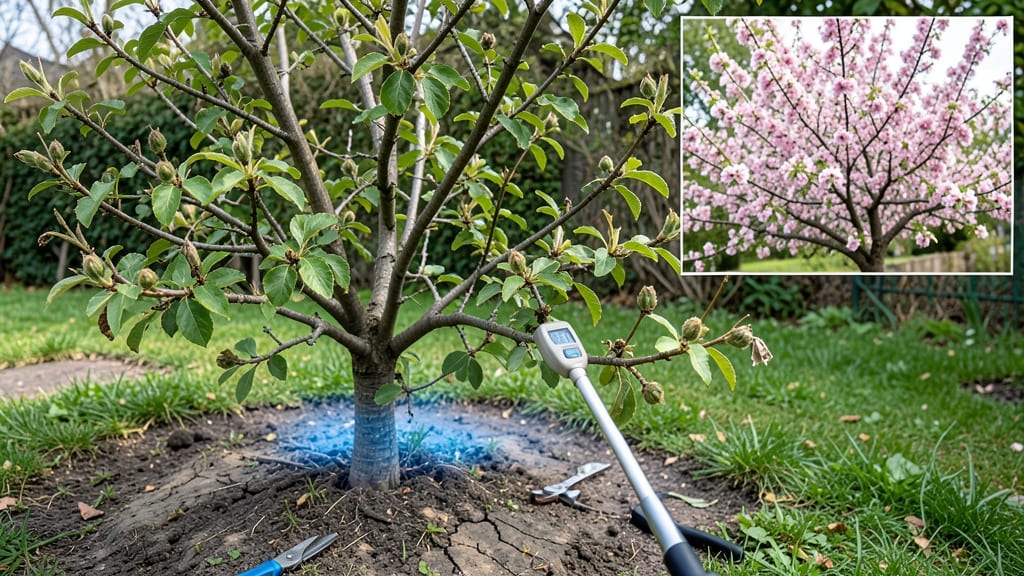
Your crabapple tree not blooming could be a simple fix—just 6 hours of sunlight and the right soil might be all it needs. 🌸 Last spring, my neighbor's tree looked just like yours until we realized it was planted too close to the fence, blocking morning light. The difference?
Now it's covered in blossoms by April. Age matters too—young trees (under 5 years) often wait to bloom while they build roots. But if yours is mature and still bare, check the soil: compacted or nutrient-poor ground starves flowers before they form.
A quick test is digging down 6 inches—if it's hard or smells sour, that's your clue. The good news? Most crabapples bounce back fast once you adjust light, water, or pruning habits.
I've seen trees go from "what's wrong with it?" to "neighborhood showstopper" in just one season with the right tweaks. Let's troubleshoot the basics first.
Start with sunlight—crabapples need full sun (6+ hours daily) to set buds. If yours is in shade, move it or prune nearby trees. Next, check the soil: too wet or too dry stresses roots, and stressed trees skip blooming. A 2-inch mulch layer helps regulate moisture without suffocating roots.
Pruning plays a role too—over-pruning removes next year's blossoms. Cut only dead wood or crossing branches in late winter, and never trim more than 25% of the canopy at once. I learned this the hard way when I accidentally pruned my tree back by 30%—it took two years to recover.
If your tree is young (<5 years), patience is key—focus on root health first. For older trees, test the soil pH (aim for 6.0-6.5) and add compost if needed. A balanced fertilizer in early spring gives blooms the energy they need. The payoff? A tree that wakes up every spring with pink or white blossoms that last weeks.
Underlying Reasons for Poor Blooms
When your crabapple tree refuses to put on a floral show, it’s often a sign that something fundamental is out of balance. Understanding these root causes—literally and figuratively—can help you diagnose the issue and take targeted action.
Below are the most common reasons your tree might be skipping its spring blooms, explained in clear, science-backed terms.
Crabapple trees (Malus spp.) are sun-worshippers—they thrive in full sun (6–8+ hours of direct light daily). When deprived of adequate sunlight, their energy shifts from blooming to mere survival, leading to sparse or absent flowers.
- Why it happens: - Photosynthesis slowdown: Less light = fewer carbohydrates (sugars) produced via photosynthesis. These sugars fuel flower bud formation.
In shade, the tree prioritizes leaf growth over reproductive structures. - Dormancy confusion: Partial shade can trick the tree into thinking winter isn’t over, delaying or preventing bloom signals (like vernalization, the cold-to-warm transition that triggers flowering). - Weak structure: Shady conditions often correlate with poor branch development, reducing the tree’s ability to support heavy blossoms.
- Actionable fix:
- Prune nearby obstructions: Trim overgrown branches, shrubs, or buildings casting shade.
- Choose the right spot: If relocating isn’t an option, opt for a sun-loving crabapple cultivar (e.g., ‘Royalty,’ ‘Adirondack’) that tolerates partial shade better.
- Reflective surfaces: Place mirrors or light-colored mulch near the base to bounce extra light onto the canopy.
Crabapples are finicky about soil—too rich, too poor, too compact, or too acidic can all sabotage blooms. Nutrient imbalances and root stress directly impact flower bud development.
- Why it happens: - Excess nitrogen (N): While nitrogen fuels leafy growth, too much (from over-fertilizing or manure) leads to vegetative overgrowth at the expense of flowers.
The tree prioritizes lush foliage over reproductive buds. - Compacted or waterlogged soil: Poor drainage or hardpan soil strangles roots, limiting nutrient and water uptake. Stressed roots can’t support energy-intensive blooming. - pH extremes: Crabapples prefer slightly acidic to neutral soil (pH 6.0–7.0).
Soil too acidic (<5.5) or alkaline (>7.5) locks out essential nutrients (like phosphorus and calcium), stunting flower bud formation. - Lack of micronutrients: Deficiencies in boron, zinc, or magnesium (critical for bud development) can cause buds to abort before opening.
- Actionable fix:
- Test your soil: Use a DIY kit or send a sample to a local extension office for a full analysis.
- Amend as needed:
- For clay/compacted soil: Mix in compost or coarse sand to improve drainage.
- For acidic soil: Apply lime (calcium carbonate) in early fall (follow package rates).
- For nutrient deficiencies: Use a balanced, slow-release fertilizer (e.g., 10-10-10) in early spring, avoiding high-nitrogen blends.
- Mulch properly: Apply 2–3 inches of organic mulch (wood chips, pine straw) to retain moisture and encourage beneficial soil microbes.
Crabapples are temperature-sensitive—they need a combination of cold dormancy and warm triggers to bloom. Disruptions in this cycle can leave your tree blooming late, not at all, or with weak flowers.
- Why it happens:
- Insufficient chilling hours: Most crabapples require 200–600 hours below 45°F (7°C) during winter to break dormancy. Mild winters (common in warm climates) can prevent bud set, leading to no flowers the next spring.
- Late frosts: A hard frost after buds swell can damage or kill emerging flowers, discouraging the tree from blooming again the following year.
- Unpredictable springs: Erratic temperature swings (e.g., warm spells followed by cold snaps) confuse the tree’s hormonal signals, delaying or preventing bloom initiation.
- Actionable fix:
- Choose cold-hardy cultivars: If you’re in a warm-winter zone, pick varieties like ‘Sargent’ or ‘Centennial’, which tolerate fewer chilling hours.
- Protect buds in spring: Cover young trees with frost cloth if late frosts are forecasted.
- Avoid winter pruning: Pruning in late winter can expose buds to cold damage and disrupt dormancy.
Hidden invaders—like fire blight bacteria, aphids, or scale insects—can sap the tree’s energy, leaving it too weak to produce flowers. Even past infections can cause bud deformation or death.
- Why it happens: - **Fire blight (Erwinia amylovora): This bacterial disease rotts blossoms and twigs, often starting with blackened, oozing cankers. Infected branches can’t support new growth or flowers. - Aphids/scale: These sap-sucking pests weaken the tree by reducing photosynthesis.
Heavy infestations lead to stunted growth and poor bloom production. - Fungal infections: Diseases like apple scab or powdery mildew can distort buds, preventing them from opening properly. - Root rot: Overwatering or poor drainage leads to Phytophthora or Pythium fungi, which strangle roots and starve the tree of nutrients needed for blooms.
- Actionable fix:
- Prune infected branches: Cut out fire blight cankers 6–12 inches below the damage and sterilize tools with rubbing alcohol.
- Apply preventative sprays:
- Neem oil or horticultural oil (spring) for aphids/scale.
- Copper fungicide (early spring) to prevent fire blight.
Young crabapple trees (under 3–5 years old) often focus on root and branch establishment rather than blooming. Conversely, over-mature trees may decline in vigor, producing fewer flowers.
- Why it happens:
- Overpruning or stress: Aggressive pruning (removing >25% of foliage) can reset the tree’s maturity clock, delaying blooms.
- Natural decline: Trees over 20–30 years old may slow metabolic rates, reducing flower production as they age.
Drought, pollution, or urban heat can physiologically stress a crabapple, causing it to conserve energy instead of flowering.
- Why it happens:
- Urban heat islands: Pavement and buildings can raise temperatures by 10–15°F, disrupting dormancy cues and reducing bloom quality.
- Air pollution: High levels of ozone or sulfur dioxide can damage stomata (leaf pores), impairing photosynthesis and nutrient uptake.
Revive Your Crabapple Tree’s Bloom
If your crabapple tree is skipping its usual spring spectacle, don’t despair—most issues have straightforward fixes. Below, we’ve mapped out practical solutions tailored to the most common causes, from light deprivation to nutrient deficiencies, plus tips to keep your tree thriving for years.
Let’s get your crabapple back on track! 🌸🌿
Problem: Too much shade or poor sunlight exposure stunts blooms. Solution:
- 🔥 Move or Prune Strategically If nearby trees, structures, or dense foliage are blocking sunlight, prune aggressively to open the canopy. Aim for 6–8 hours of direct sunlight daily—crabapples thrive in full sun.
- Pro Tip: Use sharp bypass pruners (not hedge clippers) to avoid tearing bark. Cut just outside the branch collar for clean wounds.
- 🌱 Relocate Young Trees (If Possible) If your tree is in a permanently shady spot, consider transplanting it to a sunnier area. Do this in early spring or fall, watering deeply for 2 weeks before and after.
Problem: Compacted soil, poor drainage, or nutrient deficiencies limit blooms. Solution:
- 🍳 Amend the Soil for Better Health Test your soil’s pH (ideal: 6.0–7.0 for crabapples). If it’s too alkaline or clay-heavy:
- Mix in compost or aged manure (2–3 inches) around the root zone.
- For drainage issues, add coarse sand or perlite to heavy soil.
- Pro Tip: A mulch ring (3–4 inches of wood chips) retains moisture and regulates temperature—just keep it 6 inches away from the trunk.
- 💪 Fertilize at the Right Time Apply a balanced, slow-release fertilizer (10-10-10 or 20-20-20) in early spring before buds swell. Avoid high-nitrogen fertilizers—they promote foliage over flowers!
- For micronutrient deficiencies: A chelated iron or magnesium supplement can help if leaves show yellowing between veins.
Problem: Older trees (15+ years) may bloom less due to energy shifts toward growth or fruit production. Solution:
- 👨🍳 Rejuvenate with Pruning Perform a rejuvenation pruning in late winter:
- Remove 1/3 of the oldest, thickest branches at ground level.
- Thin out crossing or dead branches to improve air circulation.
- Warning: Avoid over-pruning—never remove more than 25% of the canopy in one year.
- 🌡️ Stimulate New Growth - Root pruning: Use a spade to cut 12–18 inches of roots in a ring around the tree (but not all the way through).
This shocks the tree into producing new, vigorous shoots. - Hydration boost: Deep-water the tree once a week during dry spells (1–1.5 inches of water).
Problem: Insects (aphids, scale) or fungal diseases (fire blight, powdery mildew) divert energy from blooms. Solution:
- 🔪 Treat Infestations Early
- Aphids/Scale: Spray with neem oil or insecticidal soap in early spring before buds open.
- Fire Blight: Prune infected branches 6 inches below the lesion and sterilize tools with rubbing alcohol. Apply copper fungicide as a preventative.
- Prevention: Sanitize pruning tools between cuts to avoid spreading disease.
- 🌿 Boost Tree Resilience
- Beneficial microbes: Add mycorrhizal fungi to the soil to improve root health.
- Avoid overwatering: Wet foliage encourages fungal growth—water at the base, not overhead.
- 💡 Monitor Seasonal Care: - Winter: Protect young trees from winter burn with a light burlap wrap. - Summer: Mulch heavily to insulate roots during heatwaves. - 🎯 Choose the Right Variety: Some crabapple cultivars (like ‘Adams’ or ‘Royalty’) are more disease-resistant and bloom reliably.
If your tree is struggling, consider grafting a new variety onto its roots. - 🌱 Plant Companion Trees: Avoid planting crabapples near walnut trees (juglone toxicity) or maples (aggressive root competition).
With these targeted fixes, your crabapple should rebound with vibrant blooms next spring**. Consistency is key—stick to the care plan, and your tree will thank you with a dazzling display! 🌟
Frequently asked questions about crabapple trees not blooming
Why does my young crabapple tree (under 5 years old) refuse to bloom?
Young crabapple trees often prioritize root and branch growth over flowering during their first few years. This is normal—think of it as their "establishment phase." Focus on providing consistent watering and balanced fertilization (avoid high-nitrogen) to support gradual maturity. Most trees begin blooming reliably by age 5-7.
Can over-fertilizing actually prevent my crabapple from blooming?
Yes! Too much nitrogen (common in lawn fertilizers) encourages leafy growth at the expense of flowers. If you've been using high-nitrogen products, switch to a balanced, slow-release fertilizer (like 10-10-10) applied in early spring. The key is moderation—crabapples need nutrients, but too much sends mixed signals about energy priorities.
How do I know if my tree isn't getting enough sunlight?
Check for these signs: sparse foliage on lower branches, weak growth, and buds that don't swell properly. Crabapples need 6-8 hours of direct sunlight daily. If your tree is in shade, try pruning nearby obstructions or moving it to a sunnier spot during its dormant season (fall/winter). A simple test is observing the tree's shadow at midday—if it's shorter than the tree itself, it's not getting enough light.
Could my tree's age be the reason for poor blooming?
Trees over 20-30 years old often produce fewer blooms as they shift energy toward maintenance. For mature trees, try rejuvenation pruning in late winter (removing 1/3 of oldest branches) or consider root pruning to stimulate new growth. If the tree is very old, it may simply be entering its natural decline phase—though some varieties bloom well into their 40s with proper care.
What should I look for when checking for pests or diseases?
Inspect for these red flags: blackened buds (fire blight), sticky residue (aphids/scale), or white powdery coatings (mildew). Start with the tree's undersides and branch junctions. If you find pests, treat with neem oil or insecticidal soap in early spring. For diseases, prune infected branches 6 inches below damage and sterilize tools between cuts to prevent spread.