
Pruning
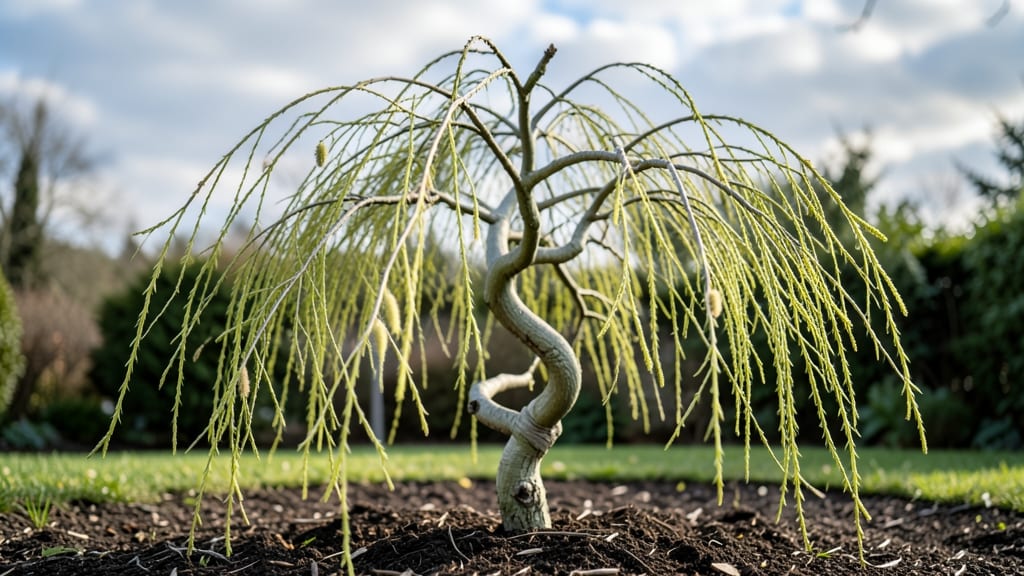
Those mesmerizing corkscrew willow tree pictures capture gardens that look like living art. 🌿 I’ve seen them transform ordinary landscapes into dramatic focal points—just by planting one near a water feature or along a winding path.
The twisted stems catch light in ways ordinary trees never could, making them the star of any outdoor space.
What makes them work so well? Their unique shape draws the eye, while their airy canopy lets sunlight filter through beautifully. Pair one with a bench for a conversation piece, or use it to frame a view—its sculptural branches never go out of style.
Best of all, they’re low-maintenance once established, thriving in moist soil and partial sun.
You’ll love how they anchor borders, soften hard edges, or even add drama to small courtyards. The contrast of their silvery bark against green foliage creates visual interest year-round. For maximum impact, plant them where their branches can spiral upward without obstruction—like near a patio or along a driveway.
Perfect for both formal and natural landscapes, these trees bring a touch of whimsy without needing constant pruning. Whether you’re designing a modern garden or a rustic retreat, the corkscrew willow’s twisted charm will elevate the space instantly.
📚 In This Guide
- What you need
- Instructions
- Tips and common mistakes
- Wrapping up and next steps
What you need
- ● Corkscrew Willow Tree (Salix matsudana 'Tortuosa') – A healthy sapling or established tree (check local nurseries for container-grown or bare-root options).
- ● Garden Gloves – A pair of durable, water-resistant gloves (e.g., nitrile-coated or leather) to protect your hands from thorns and sap.
- ● Pruning Shears – Bypass pruners (sharp, 6–8" blades) for clean cuts on smaller branches.
- ● Loppers – Long-handled (20–24") for thicker branches (1–2" diameter).
- ○ Pruning Saw – A folding handsaw for branches over 2" thick (optional but handy for mature trees).
- ● Disinfectant (70% Isopropyl Alcohol or Pruning Sealant) – To sterilize tools between cuts and prevent disease.
- ● Mulch – Organic mulch (wood chips, shredded bark) – 3–4 inches deep to retain moisture and suppress weeds.
- ● Watering Can or Hose – A gentle spray nozzle to avoid damaging delicate branches.
- ● Tree Stake & Ties – For young saplings to support growth (use soft fabric ties to avoid girdling).
- ● Fertilizer – Slow-release, balanced fertilizer (e.g., 10-10-10) for nutrient boosts in early spring.
- ● Tree Wrap or Protective Barrier – To shield the trunk from rodents or sun scorch (especially in winter).
- ● Camera or Smartphone – Because corkscrew willow pictures make the best Instagram captions! 📸
How to plant and care for a corkscrew willow tree
The corkscrew willow's dramatic, twisting branches make it a stunning focal point in any landscape. Here's how to plant and maintain one for years of visual impact.
🌱 Step 1: Choose the Perfect Planting Location
Corkscrew willows thrive in full sun to partial shade, with at least 6 hours of direct sunlight daily. I always look for spots near water features or ponds, since their roots love moist soil. Avoid low-lying areas where water pools after rain—this tree hates soggy roots.
Check your site's drainage by digging a 12-inch deep hole. If water pools after 24 hours, amend the soil with 2-3 inches of compost to improve drainage. The ideal planting spot offers both visual drama and proper growing conditions—don't rush this decision.
☀️ Step 2: Plant at the Right Time and Depth
Plant your corkscrew willow in early spring, when soil temperatures reach 50°F. Dig a hole twice as wide as the root ball but only as deep—planting too deep suffocates the roots. Gently remove the tree from its container and loosen any circling roots with your fingers.
Place the tree in the hole so the top of the root ball sits 1-2 inches above ground level. This prevents water from pooling around the trunk. Backfill with native soil, tamping lightly every 3 inches to eliminate air pockets. Water deeply immediately after planting to settle the soil.
💧 Step 3: Water Deeply and Mulch Properly
Water your new corkscrew willow every 2-3 days for the first 2 weeks, then reduce to once a week once established. You'll know it's getting enough water when the top 6 inches of soil feel moist but not soggy. Overwatering is the #1 killer of young willows.
Spread 2-3 inches of mulch around the base, keeping it 6 inches away from the trunk. I use shredded bark mulch because it breaks down slowly and improves soil structure over time. Replenish mulch annually to maintain moisture and suppress weeds—this tree will thank you with faster growth.
✂️ Step 4: Prune for Shape and Health
Prune your corkscrew willow in late winter before new growth begins. Remove any dead, diseased, or crossing branches first—these compete with the tree's signature twisting branches. I never cut more than 25% of the canopy in one season to avoid stressing the tree.
Shape the tree by selectively trimming branches to enhance the corkscrew pattern. Use clean, sharp pruners to make cuts just above a bud or branch collar. Avoid heavy pruning in summer—this encourages weak, leggy growth. A well-pruned corkscrew willow maintains its dramatic form while staying healthy.
🌿 Step 5: Fertilize and Monitor for Pests
Apply a balanced 10-10-10 fertilizer in early spring and again in mid-summer to encourage vigorous growth. Scatter granules evenly in the root zone and water deeply to activate them. Young trees need more frequent feeding—established willows benefit from organic compost instead.
Watch for aphids or scale insects, which sometimes attack stressed corkscrew willows. Spray affected branches with neem oil or insecticidal soap if you see sticky residue (honeydew) on leaves. Healthy trees rarely have pest problems, so proper watering and pruning prevent most issues.
Tips & tricks for perfect corkscrew willow planting
Transforming your yard into a stunning landscape with these twisting branches starts with a few key strategies.
The Sunlight Secret: While corkscrew willows thrive in full sun to partial shade, I've found the sweet spot is actually 6-8 hours of direct sunlight daily. The twisting branches develop their signature shape when they get enough light—too little shade and they'll grow leggy and lose that dramatic curl. If you're planting near a pond or water feature, position it where it gets morning sun and afternoon shade to prevent leaf scorch.
Drainage is Non-Negotiable: The 24-hour drainage test in Step 1 is crucial—don't skip it! I've seen too many willows fail because people assumed their soil was fine. If water pools after 24 hours, mix in 2-3 inches of coarse sand with the compost to create better drainage. This tree's roots need oxygen as much as water, and soggy conditions will kill it quickly.
Pruning Precision: When shaping your tree in Step 4, focus on maintaining the natural corkscrew pattern rather than creating perfect symmetry. Cut just above a bud that faces outward to encourage new growth in the right direction. I recommend using bypass pruners—they make cleaner cuts that heal faster, which is especially important for these delicate branches. Never remove more than 25% of the canopy in one season, or you'll stress the tree.
Fertilizer Timing: The early spring and mid-summer feeding schedule works perfectly, but here's my pro tip: water the soil thoroughly 24 hours before applying fertilizer. This helps prevent root burn from the granules. For young trees, I also mix in a handful of worm castings with the fertilizer—they provide slow-release nutrients that mimic natural soil conditions.
Pro Tips for Corkscrew Willow Tree Pictures
- Transforming your yard into a stunning landscape with these twisting branches starts with a few key strategies.
- The Sunlight Secret: While corkscrew willows thrive in full sun to partial shade, I've found the sweet spot is actually 6-8 hours of direct sunlight daily.
- Drainage is Non-Negotiable: The 24-hour drainage test in Step 1 is crucial—don't skip it!
Frequently asked questions
Got questions about the corkscrew willow’s unique charm? Here are answers to the most common ones—whether you’re dreaming of planting one or troubleshooting your existing tree.
How fast does a corkscrew willow grow?
A corkscrew willow (Salix matsudana ‘Tortuosa’) grows 3–5 feet per year under ideal conditions, reaching 20–30 feet tall at maturity. In cooler climates or poor soil, growth slows to 1–2 feet annually. Plant it in full sun and well-drained soil to maximize its twisty potential!
Can I prune a corkscrew willow to control its size?
Yes! Prune in late winter or early spring before new growth begins. Remove 1/3 of the oldest branches at the base to encourage bushier growth, but avoid heavy pruning—this tree thrives on its natural, dramatic shape. Never top it; this can kill the tree. Use clean, sharp tools to prevent disease.
What climate zones can a corkscrew willow survive in?
This willow is hardy in USDA zones 4–8, tolerating temperatures as low as -30°F. It loves full sun but can handle partial shade in hotter zones. Avoid waterlogged soil—it prefers moist but well-drained conditions. In drought-prone areas, water deeply 1–2 times per week during the first year.
Are there alternatives to a corkscrew willow for smaller spaces?
If space is limited, consider these compact, twisty trees:
- Dwarf Corkscrew Willow (Salix caprea ‘Pendula’) – Grows to 10–15 feet.
- Weeping Cherry (Prunus subhirtella ‘Pendula’) – Ornamental blooms + graceful branches.
- Japanese Zelkova (Zelkova serrata) – Smaller, with elegant, arching branches.
Why are my corkscrew willow branches turning brown?
Brown branches usually mean one of three issues:
- Winter damage: Frost can scorch tender new growth. Prune dead branches in spring.
- Overwatering: Root rot thrives in soggy soil. Ensure proper drainage.
- Pests/disease: Check for aphids or canker. Treat with neem oil or fungicide if needed.
Wrapping up and next steps
The corkscrew willow tree isn’t just a stunning addition to your garden—it’s a versatile and low-maintenance star that brings year-round drama with its twisting, sculptural branches.
Whether you’re pruning for health, shaping its growth, or simply admiring its unique beauty, this tree proves that nature’s artistry can be both functional and breathtaking. 🌿✨
Ready to transform your outdoor space? Grab your pruning tools, snap a few photos of your progress, and share your corkscrew willow’s journey! Every twist and turn is a testament to your green thumb—and the perfect conversation starter for any garden lover.