
Diseases
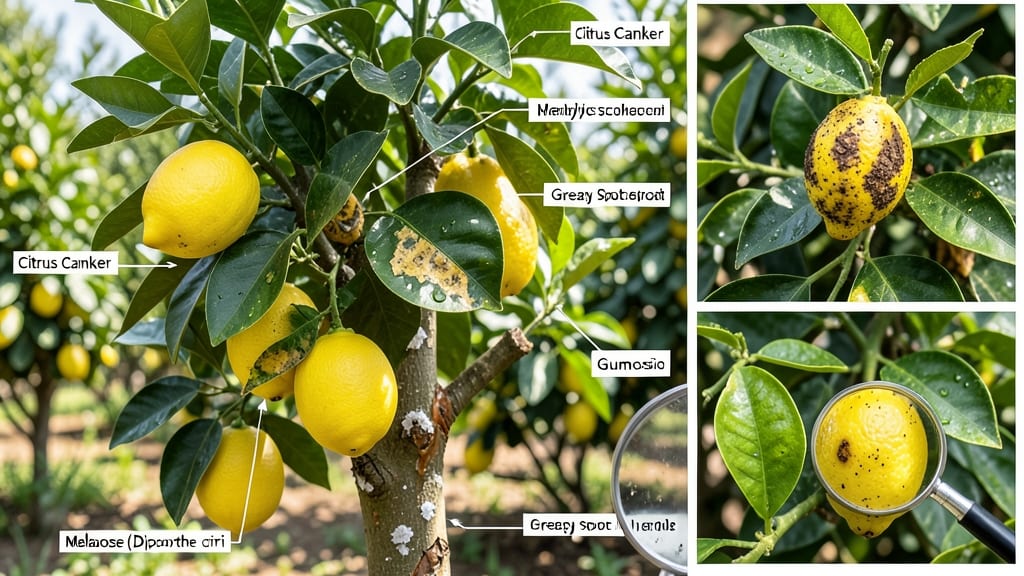
Spotting citrus tree diseases with these pictures can save your tree—and I’ve seen firsthand how quickly a single missed symptom turns into a full-blown crisis. 🌿 This guide pairs 15 common diseases with visual cues so you can diagnose issues before they spread, from greasy leaves to rotting fruit.
No horticulture degree needed—just a sharp eye and the right response.
Most problems start with environmental stress: too much water, poor drainage, or sudden temperature swings. I’ve treated everything from citrus canker (those ugly yellow spots) to root rot (mushy stems at the base) by catching them early.
The key? Comparing your tree’s symptoms to these pictures and acting fast—whether that’s pruning, spraying, or adjusting care.
You’ll learn to recognize leaf spots, scab, and even viral signs like stunted growth or twisted branches. Each disease gets a simple treatment plan—some require copper sprays, others just better airflow. With these tools, your tree’s health will bounce back faster than you’d expect.
Perfect for backyard growers, container citrus fans, or anyone tired of losing trees to mystery ailments. Let’s get your citrus thriving again—no guesswork, just solutions.
Root Causes Of Citrus Tree Woes
Citrus trees, with their vibrant blooms and juicy fruits, can quickly become a gardener’s nightmare when diseases strike. Understanding why these issues arise is the first step to prevention and treatment. Below, we break down the most common culprits—from microscopic invaders to environmental stressors—with clear, actionable science.
Fungi thrive in warm, humid conditions, making citrus trees prime targets. These organisms release spores that latch onto leaves, stems, or roots, disrupting nutrient flow and causing visible symptoms like:
- Leaf spots (e.g., Phyllosticta or Alternaria)
- Cankers (sunken, dead patches on bark)
- Root rot (mushy, discolored roots)
Why it happens:
- Overhead irrigation 💦: Water droplets splash spores onto leaves, creating ideal conditions for germination. Fungi like Citrus Canker (Xanthomonas) spread rapidly in wet foliage.
- Poor air circulation 🌬️: Dense plantings or thick canopies trap moisture, giving fungi a foothold. Melanose (a fungal leaf spot) flourishes in stagnant, humid microclimates.
- Stressed trees 🌡️: Drought, nutrient deficiencies (especially nitrogen or zinc), or physical damage weaken a tree’s defenses, making it vulnerable to opportunistic fungi.
- Contaminated tools or soil 🔪: Pruning shears, grafts, or even bird droppings can introduce fungal spores from infected plants or nearby debris.
Actionable fix: Space trees for airflow, water at the base (not overhead), and sterilize tools with 70% isopropyl alcohol or a bleach solution (1 part bleach to 9 parts water).
Many citrus diseases (like Greening or Tristeza) aren’t caused directly by pests—but the critters carry the pathogens. Insects like:
- Asian citrus psyllids (🐜 Diaphorina citri) spread Huanglongbing (HLB), a bacterial disease.
- Citrus leaf miners (🐛 Phyllocnistis citrella) create wounds where fungi or bacteria enter.
- Scale insects (🛡️ Diaspididae) excrete honeydew, fostering sooty mold—a secondary fungal infection.
Why it happens:
- Lack of natural predators 🦋: Overuse of broad-spectrum pesticides kills beneficial insects (like ladybugs or lacewings) that keep pest populations in check.
- Resistant citrus varieties 🌱: Some hybrids (e.g., Citrus × aurantium) are more attractive to pests due to their chemical profiles.
- Global trade ⚓: Non-native pests (like the psyllid) hitch rides on plants, bypassing local ecosystems’ natural controls.
Actionable fix: Introduce beneficial nematodes or parasitic wasps to target pests. Use horticultural oil or neem oil to smother eggs/larvae without harming pollinators.
Citrus trees are tropical by nature, but extreme conditions—hot or cold, wet or dry—can trigger diseases by compromising their immunity.
| Stressor | Disease Risk | Why It Happens |
|---|---|---|
| Frost damage | Cold injury (blackened leaves) | Freezing temps rupture cell walls, making trees susceptible to bacterial blight. |
| Heat stress | Sunburn (white/yellow patches) | High temps (>95°F) cause leaf scorch, weakening the tree’s ability to fight pathogens. |
| Poor drainage | Root rot (Phytophthora) | Waterlogged soil cuts off oxygen, inviting fungal root infections. |
| Nutrient imbalance | Deficiency symptoms (e.g., zinc deficiency = little leaf) | Lack of micronutrients (like iron or manganese) stunts growth, making trees more prone to fungal attacks. |
Actionable fix:
- Mulch with wood chips to regulate soil temp and moisture.
- Test soil pH—citrus thrives in 6.0–7.0. Adjust with lime (to raise) or sulfur (to lower).
- Use drip irrigation to avoid waterlogging.
Unlike fungi, bacteria and viruses multiply inside plant tissues, causing systemic damage. Examples:
- Citrus Canker (Xanthomonas): Creates oozing sores on leaves/fruit.
- Tristeza Virus: Clogs a tree’s vascular system, leading to dieback.
- Exocortis Viroid: Causes bark scaling and stunted growth.
Why it happens:
- Wound entry points 🔪: Pruning cuts, hail damage, or insect bites provide entry for bacteria.
- Contaminated propagation material 🌱: Grafted scions or nursery stock may carry latent viruses.
- Vector transmission 🐝: Aphids or whiteflies spread viruses from plant to plant.
- High humidity 🌧️: Bacteria like Xanthomonas thrive in 80%+ humidity, spreading via rain splash.
Actionable fix: Remove infected trees immediately (do not compost!). For bacterial issues, apply copper-based sprays (e.g., Bordeaux mixture) to create a protective barrier.
Some citrus varieties are bred for fruit quality or cold hardiness—but not disease resistance. For example:
- Navel oranges are prone to Tristeza Virus.
- Mandarins often succumb to Phytophthora root rot.
Why it happens:
- Lack of hybrid vigor 🌿: Older varieties (like Citrus sinensis) have narrow genetic diversity, making them susceptible to emerging pathogens.
- Clonal propagation 🔄: Many commercial citrus trees are clones, so if one plant gets sick, the whole grove is at risk.
- Evolutionary arms race 🛡️: Pathogens mutate faster than trees can adapt, leaving some varieties defenseless.
Actionable fix: Plant disease-resistant hybrids like ‘Swingle’ citrumelo (rootstock) or ‘Carrizo’ citrange. For home gardens, consider trifoliate orange rootstocks, which tolerate _HLB_ better.
Fixing Citrus Tree Diseases Step-by-Step
Now that you’ve identified the problem, it’s time to act! Early intervention is key to saving your citrus trees. Below are practical, step-by-step solutions for the most common citrus diseases, along with prevention tips to keep your grove healthy long-term. 🌿🛠️
How to Treat It:
- Prune Infected Branches 🔪
- Use sterilized pruners (wipe with rubbing alcohol between cuts).
- Remove all infected leaves, twigs, and branches—even if they’re just slightly discolored.
- Burn or trash the clippings (do not compost them).
- Apply Copper-Based Fungicide 🛡️
- Spray copper hydroxide or copper sulfate (e.g., Bordeaux mixture or Fixed Copper).
- Follow label instructions—typically every 7–14 days during wet seasons.
- Best time to spray: Early morning or late afternoon to avoid leaf burn.
- Improve Air Circulation 🌬️
- Thin out dense foliage to reduce humidity.
- Space trees 6–10 feet apart to prevent overcrowding.
💡 Prevention Tips:
- Sanitize tools after each use.
- Avoid overhead watering—use drip irrigation instead.
- Plant resistant varieties like Swingle citrumelo if canker is rampant in your area.
How to Treat It (No Cure, But You Can Slow It Down):
- Remove Infected Trees Immediately 🚮
- Do not compost—burn or bag infected plants to prevent spread.
- Check for psyllids (tiny yellow insects) and treat them aggressively.
- Control Asian Citrus Psyllids 🐛💥
- Spray insecticidal soap or neem oil weekly during outbreaks.
- Use systemic insecticides (e.g., dinotefuran) if infestations are severe.
- Yellow sticky traps help monitor psyllid populations.
- Boost Tree Health 💪
- Fertilize with zinc and manganese (HLB weakens nutrient uptake).
- Water deeply but infrequently to reduce stress.
- Prune for sunlight—weak trees are more susceptible.
💡 Prevention Tips:
- Inspect new trees before planting (buy from reputable nurseries).
- Avoid bringing citrus plants from infected areas.
- Monitor for psyllids year-round—early detection is critical.
How to Treat It:
- Prune and Destroy Infected Fruit 🍊❌
- Remove all mummified fruit (black, shriveled citrus).
- Dispose of them in sealed bags (not compost).
- Fungicide Sprays 🌧️
- Apply copper fungicide or myclobutanil (e.g., Immunox).
- First spray: Before flowering.
- Second spray: After fruit set.
- Improve Drainage 💧
- Melanose thrives in wet, poorly drained soil.
- Amend soil with compost and ensure proper drainage.
💡 Prevention Tips:
- Avoid overhead irrigation—use drip lines.
- Space trees for airflow to dry leaves faster.
- Plant in well-draining soil (avoid clay-heavy areas).
How to Treat It:
- Stop Overwatering Immediately 🚰🚫
- Let the soil dry out completely between waterings.
- Switch to drip irrigation if you’ve been watering at the base.
- Improve Soil Drainage 🏗️
- Dig a drainage trench around the tree base.
- Mix sand or perlite into the soil to loosen it.
- Fungicide Soil Drench 🌱
- Use phosphite-based fungicides (e.g., Aliette).
- Apply every 4–6 weeks during wet seasons.
💡 Prevention Tips:
- Plant citrus in raised beds if your soil is naturally soggy.
- Avoid planting in low-lying areas where water pools.
- Mulch with straw (not wood chips) to prevent soil compaction.
How to Treat It:
- Remove Infected Leaves & Fruit 🍃🗑️
- Pick off scabby (rough, corky) growth and destroy it.
- Rake up fallen leaves to reduce spores.
- Fungicide Sprays 🍄✅
- Copper fungicide or sulfur-based sprays work best.
- First application: Before buds swell in spring.
- Second application: After harvest.
💡 Prevention Tips:
- Prune for airflow—scab spreads faster in humid, shaded areas.
- Avoid wetting foliage when watering.
- Rotate fungicides to prevent resistance.
✅ Inspect trees weekly for early signs of disease. ✅ Buy disease-resistant varieties (e.g., Meyer lemon, Calamondin). ✅ Keep the area clean—remove fallen fruit and debris. ✅ Test soil pH (citrus prefers 6.0–7.0). ✅ Avoid stressing trees—proper water, nutrients, and sunlight go a long way!
🚨 Pro Tip: If a disease is severe, consult a local agricultural extension office—they can test soil/water and recommend tailored solutions. Early action saves trees! 🌳💚
Frequently asked questions
How can I tell if my citrus tree has a fungal disease just by looking at the leaves?
Look for dark, irregular spots with yellow halos (like Phyllosticta leaf spot) or greasy, raised lesions (citrus canker). Fungal issues often appear as powdery white coatings (mildew) or blackened, crinkled areas on the leaf surface. Compare these to the pictures in our guide—most fungal diseases show up as spots or discoloration within 2-4 weeks of infection.
What’s the fastest way to confirm if my tree has Huanglongbing (HLB) or just nutrient deficiency?
HLB causes yellowing between leaf veins (called chlorosis) and lopsided, small fruit, while deficiencies like iron or zinc create yellowing on young leaves only. The key difference? HLB won’t respond to fertilizer—it’s bacterial, spread by psyllids. Test leaves with a citrus leaf analysis kit or send samples to your local extension office for confirmation.
Can I use the same fungicide spray for all citrus diseases, or do I need different treatments?
No—fungicides vary by pathogen. For fungal diseases (like melanose or scab), use copper-based sprays or myclobutanil. Bacterial issues (Xanthomonas) require copper hydroxide, while viral diseases (like tristeza) have no cure—only removal of infected trees. Always check the label for the specific disease you’re treating.
Why do some pictures in your guide show citrus trees with white, cottony stuff on branches?
That’s sooty mold, a secondary fungal infection caused by honeydew (sugary waste) from pests like scale insects or aphids. It doesn’t harm the tree directly but blocks sunlight. Treat the underlying pest first with horticultural oil, then the mold will disappear on its own as the tree cleanses itself.
How often should I be checking my citrus trees for diseases if I don’t see obvious symptoms?
Inspect trees every 2 weeks during growing seasons (spring-fall) and monthly in winter. Focus on new growth, undersides of leaves, and fruit—these areas hide early signs. Use a 10x magnifying glass for tiny pests like psyllids. Early detection (before symptoms spread) is the best defense!