
Orchid Care
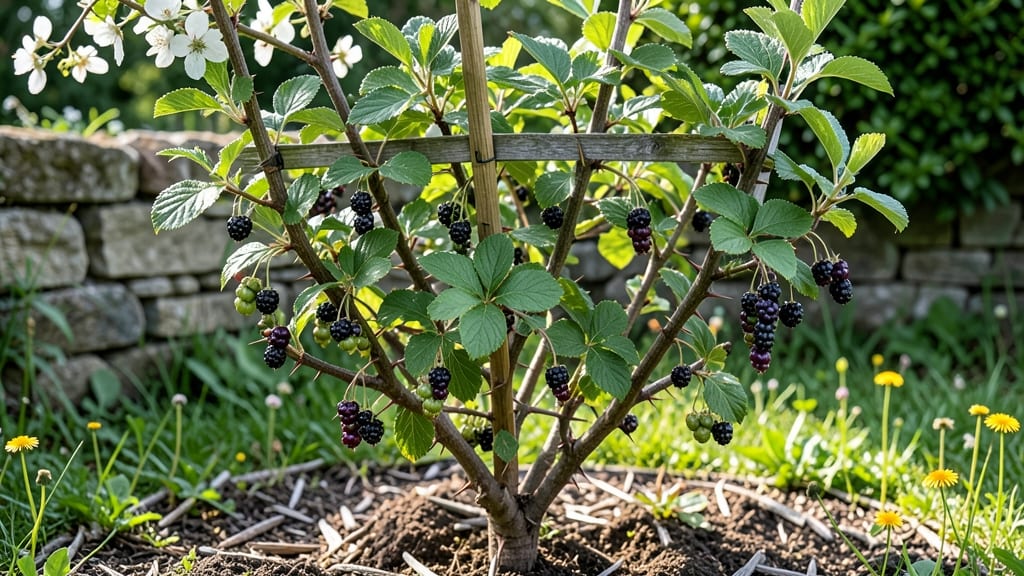
Boysenberries grow as vigorous bushes, not trees, forming sprawling canes 6–10 feet tall with thorny vines that spread 6–10 feet wide. They thrive as perennial shrubs in temperate climates with proper trellising and pruning for optimal fruit production.
Boysenberries are actually hybrid berries that grow on sprawling, woody canes—not true trees—meaning they form dense, thorny shrubs that need support to grow vertically. 🌿 Unlike fruit trees with single trunks, these canes grow from the ground up, creating a thicket that can reach 10 feet tall and spread just as wide if left unchecked.
Their perennial nature means they'll keep producing fruit year after year with the right care, making them a rewarding but space-hungry addition to any garden.
What sets boysenberry bushes apart is their biennial fruiting cycle: canes produce fruit in their second year, then die back, while new canes emerge each spring.
This means you'll always have a mix of young and mature growth, which is why pruning plays such a critical role in managing their size and ensuring a steady harvest.
Without proper training on a trellis, these bushes can become unruly, so investing in sturdy support from the start is key.
💡 In This Article
- Boysenberry Plant Anatomy: Why They Grow as Bushes
- Best Growing Conditions for Boysenberry Bushes
Boysenberry plant anatomy: why they grow as bushes
Boysenberries belong to the Rubus genus, which includes blackberries and raspberries, and share their characteristic woody cane structure. Unlike true fruit trees that develop a single trunk with branches, boysenberries grow from multiple canes that emerge directly from the root system.
These canes are actually modified stems that become woody over time, forming the thicket-like appearance we associate with these plants. The canes grow 6-10 feet tall and spread just as wide, creating a dense, thorny network that's perfectly adapted for climbing and supporting the weight of heavy fruit clusters.
The thorny vines serve a crucial ecological purpose—they protect the plant from herbivores while allowing the canes to climb trellises or other supports. Each cane has a biennial life cycle: first-year canes focus on establishing roots and leaves, while second-year canes produce fruit before dying back.
This two-year cycle explains why you'll see both leafy green canes and fruiting canes in the same plant simultaneously. The root system spreads horizontally, sending up new canes each spring from the crown, which is why these plants can become so vigorous if left unmanaged.
What truly sets boysenberries apart from fruit trees is their perennial shrub nature. Instead of developing a central trunk like apple or cherry trees, they form a multi-stemmed shrub that regenerates annually from the same root system.
This means each plant can live for 15-20 years with proper care, continuously producing new canes while the fruiting canes decline. The woody stems contain vascular bundles that transport water and nutrients efficiently, supporting the plant's rapid growth and fruit production.
Here's how this anatomy affects growth patterns: The first-year canes grow aggressively upward, while second-year canes bear fruit along their length. Without proper trellising, these canes would sprawl along the ground, competing with weeds and reducing fruit quality.
The thorns aren't just defensive—they help the canes grip trellis wires, allowing vertical growth that maximizes sunlight exposure for fruit development. This climbing adaptation is why boysenberries thrive in USDA zones 5-9, where they can take advantage of vertical space in home gardens.
Consider this comparison: While an apple tree develops a single trunk with annual growth rings, a boysenberry bush produces multiple canes that all originate from the same root crown.
Each cane acts as an independent growth unit, which is why pruning becomes so important—you're not just shaping a single tree but managing an entire colony of interconnected canes. The plant's ability to regenerate from the base explains why even heavily pruned bushes can recover so quickly in spring.
The root system deserves special attention—it spreads horizontally through underground runners called rhizomes. These rhizomes can extend 3-5 feet from the parent plant, which is why boysenberries need adequate spacing (6-8 feet apart) to prevent overcrowding.
The fibrous roots create a dense network that stabilizes the plant while efficiently absorbing water and nutrients from the soil.