
Trees
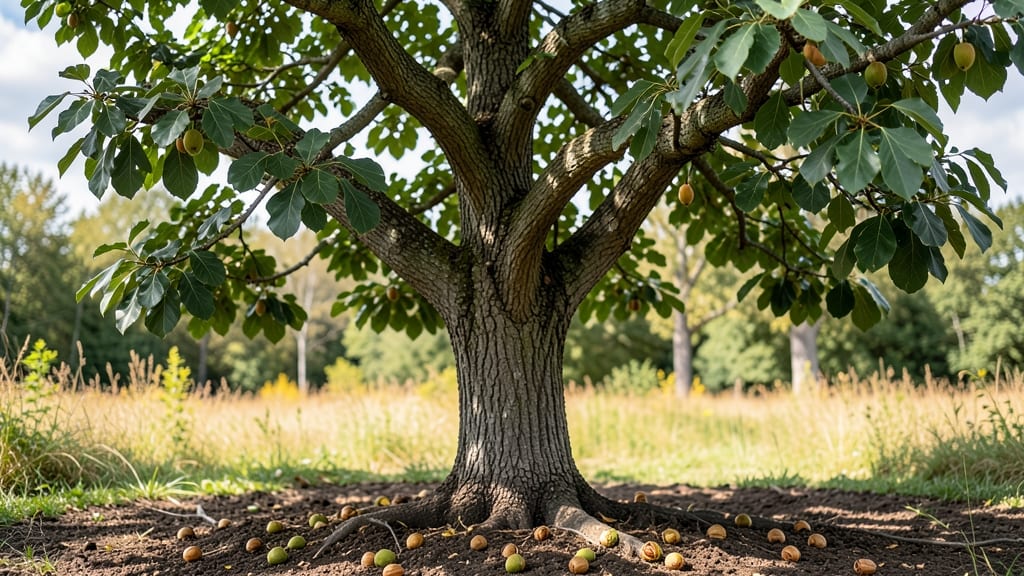
The big green tree nut you’re likely overlooking is the pignut hickory (Carya glabra), a hard-shelled nut from native North American hickory trees, prized for its rich, buttery flavor and dense wood—often confused with walnuts due to its size and green husk when fresh.
The pignut hickory stands out among its woodland relatives because of its distinctive green husk that matures in late fall, unlike the brown shells of black walnuts. 🌳 This native American nut thrives in well-drained soils across the eastern and central U.S., often growing alongside oaks and hickory species.
While its flavor rivals walnuts in richness, the pignut's shell is significantly harder to crack—making it a true challenge for foragers and chefs alike.
What sets pignut hickory apart isn't just its appearance but its versatility. The wood is prized for furniture-making and tool handles, while the nuts themselves can be roasted like walnuts or used in baking for a unique, slightly sweeter profile.
Many foragers specifically seek these trees because they produce nuts more reliably than other hickory varieties, though patience is required—they typically take 10-15 years to bear significant crops.
💡 In This Article
- How to Identify Pignut Hickory Nuts vs Walnuts
- Growing and Harvesting Pignut Hickory Trees
How to identify pignut hickory nuts vs walnuts
The pignut hickory (Carya glabra) earns its "big green tree nut" reputation through its distinctive four-lobed husk that stays green until fully mature in late fall, unlike black walnuts whose husks turn brown.
The nuts themselves are roughly 1-1.5 inches in diameter—similar to walnuts—but their shells are thicker and harder, often requiring a hammer or specialized nutcracker to access the edible seed inside. 🌿
One key visual difference lies in the leaves: pignut hickory leaves are 7-12 inches long with 7-9 leaflets, while walnut leaves have 5-9 leaflets that are typically shorter (5-12 inches).
The bark also provides clues—pignut hickory has deep, diamond-shaped ridges that become more pronounced with age, whereas walnut bark is smoother with shallower grooves. These physical traits help distinguish the trees even before the nuts appear.
The timing of harvest offers another critical distinction. Pignut hickory nuts typically fall between October and November when fully mature, while black walnuts drop earlier (September-October). The green husk of pignut hickory remains intact until the nuts hit the ground, whereas walnut husks often split open prematurely.
This delayed maturity gives foragers a narrower window to collect pignut hickories before squirrels or other wildlife claim them. 🐿️
For those attempting to identify nuts in the wild, the shell's texture is a game-changer. Pignut hickory shells have a rougher, more granular surface compared to the smoother walnut shells.
When cracked open, the pignut's kernel reveals a lighter tan color with a slightly sweeter, less bitter taste than black walnuts. This flavor profile makes it a prized ingredient in gourmet baking and cooking, though its harder shell demands more effort to prepare.
Consider these key identification factors when comparing:
- Husk color: Green (pignut hickory) vs brown (walnut)
- Shell hardness: Extremely hard (pignut) vs moderately hard (walnut)
- Leaf structure: 7-9 leaflets (pignut) vs 5-9 leaflets (walnut)
- Harvest season: Late fall (pignut) vs early fall (walnut)
Understanding these differences helps foragers avoid confusion between the two species, especially since both grow in similar habitats across the eastern U.S. The pignut's unique characteristics make it a sought-after find for those willing to put in the extra effort to identify and harvest it correctly. 🌳