
How To
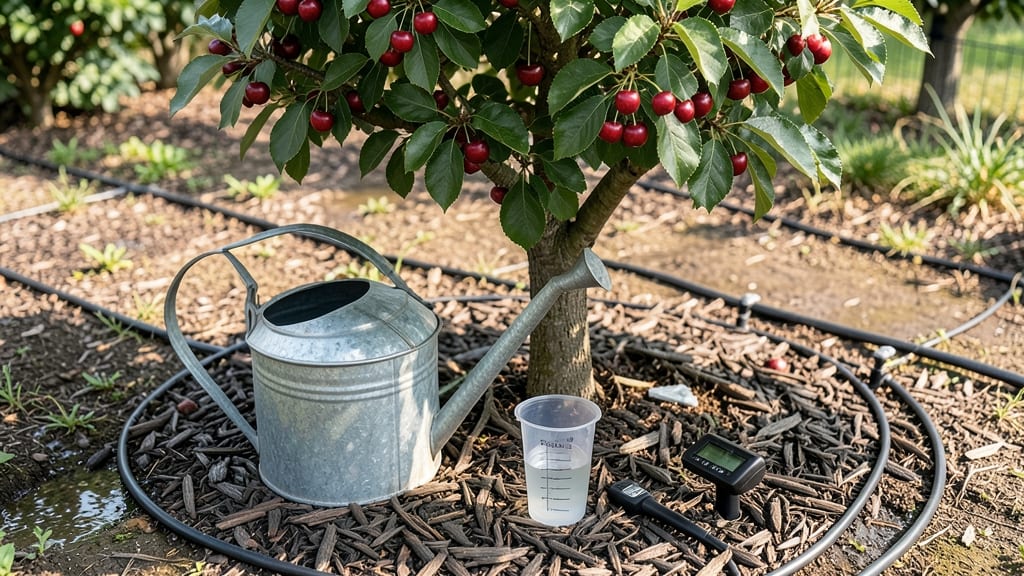
A cherry tree 🍒 needs deep, infrequent watering—about 10-15 gallons per tree every 7-14 days—to encourage strong root growth and fruit production.
Struggling to keep your cherry tree thriving? Overwatering or underwatering can spell disaster for fruit production and long-term health—discover the exact watering schedule your tree needs to flourish.
Young trees in their first few years need more frequent watering, while mature trees can handle longer dry spells once their roots are established. Soil type plays a huge role: clay holds moisture longer, while sandy soil drains quickly, demanding adjustments to your watering routine.
Below, I break down seasonal watering needs—from spring’s thirsty growth phase to winter’s dormancy—and share signs your tree is getting too much or too little water.
Cherry tree watering requirements by age: newly planted vs mature trees
Watering a cherry tree isn't a one-size-fits-all task—its needs change dramatically as it grows. Newly planted saplings require frequent deep watering to establish roots, while mature trees develop deeper root systems that need less frequent but thorough hydration.
Understanding these stages will help you avoid root rot or fruit drop from improper watering.
The first three years are critical for young cherry trees. Their shallow root systems can't reach deep moisture, so they need consistent watering to prevent stress. Established trees (4–10 years) adapt better to drought but still need seasonal adjustments.
Mature fruit-bearing trees (10+ years) thrive with deep, infrequent watering, especially during dry spells.
Here’s how to tailor your watering schedule based on your cherry tree’s age and root development stage:
For newly planted cherry trees, focus on soil moisture consistency. The top 12 inches of soil should stay damp but not soggy. Use a moisture meter or stick your finger 2 inches deep—if it’s dry, water immediately.
During the first year, young trees can’t handle drought stress, so skip the sprinkler and opt for deep, slow watering at the base.
As your tree reaches years 2–3, its roots extend deeper, reducing the need for frequent watering. Shift to a weekly deep-watering routine, delivering 15–20 gallons per session.
This encourages roots to grow downward, making the tree more drought-resistant. Mulch heavily (3–4 inches) with organic matter like straw or wood chips to lock in moisture and regulate soil temperature.
Established trees (4–10 years) enter a phase where they can store water in their trunk and roots. Watering becomes less frequent but more strategic. Aim for bi-weekly deep watering during dry spells, increasing to weekly if temperatures exceed 90°F.
Pay extra attention during fruit set (late spring) and summer heat waves, as these stages demand more hydration for optimal growth.
Mature cherry trees (10+ years) are the most resilient but still need careful watering. Their extensive root systems allow them to access deeper water, but surface-level moisture won’t suffice. Water monthly in average conditions, ramping up to bi-weekly in droughts.
A general rule: 1 inch of water per week during the growing season. Use a rain gauge or tuna can to measure—if rainfall is insufficient, supplement with drip irrigation.
One common mistake is overwatering mature trees, which can lead to root suffocation and fungal diseases. Always check soil moisture before watering: lift a clump of soil—if it crumbles easily, it’s dry enough.
If it sticks together, wait a few days. Avoid wetting the leaves to prevent diseases like brown rot, a common cherry tree ailment.
Seasonal adjustments are key. In spring, increase watering as new leaves emerge and flowers bloom. Summer demands the most attention, especially during fruit development. Reduce watering in fall to prepare the tree for dormancy, and minimize winter watering unless the ground is frozen.
Always water in the early morning to reduce evaporation and fungal risks.
Pro tip: Group watering sessions by age. New trees need daily checks, while mature trees can wait weeks. Use a watering schedule calendar to track sessions and adjust based on weather patterns and tree growth stages.
With the right approach, your cherry tree will thrive from sapling to fruit-bearing giant!
Soil type matters: adjusting watering frequency for clay, sandy, and loamy gardens
Your cherry tree's soil type determines how often you water—clay holds moisture while sandy drains quickly. Loamy soil offers the perfect balance, but even it needs adjustments during drought or heavy rain. Understanding these differences prevents root rot or dehydration, ensuring your tree thrives year-round.
Clay soil's dense composition traps water, creating waterlogged conditions that suffocate roots. Sandy soil, on the other hand, drains so fast that cherries struggle to access moisture. Meanwhile, loamy soil—rich in organic matter—provides ideal drainage and water retention. Let’s break down how to adjust your watering schedule for each type.
🌱 Comparison Table: Watering Guidelines by Soil Type
| Soil Type | Water Retention | Watering Frequency | Mulching Tip |
|---|---|---|---|
| Clay | High (waterlogged risk) | Every 10-14 days (deep soak) | Use gravel mulch to improve drainage |
| Sandy | Low (dries out fast) | Every 5-7 days (shallow but frequent) | Add compost to retain moisture |
| Loamy | Moderate (ideal balance) | Every 7-10 days (deep watering) | Use organic mulch (wood chips) |
For clay soil, water deeply but less often to avoid soggy roots. A 5-gallon soak every 10 days mimics natural rainfall, while gravel mulch prevents compaction. In sandy soil, frequent shallow watering keeps moisture near the surface, but adding compost helps retain water longer.
Loamy soil is the easiest to manage—just water deeply every 7-10 days and top with wood chips to lock in moisture. During summer, increase frequency to every 5-7 days across all soil types, as heat accelerates evaporation. Always water in the early morning to reduce fungal risks.
Test your soil’s moisture by sticking your finger 2 inches deep. If dry, it’s time to water. If damp, wait another day. Adjusting for soil type ensures your cherry tree gets just the right amount—no more, no less. Happy gardening! 🌿