
Pruning
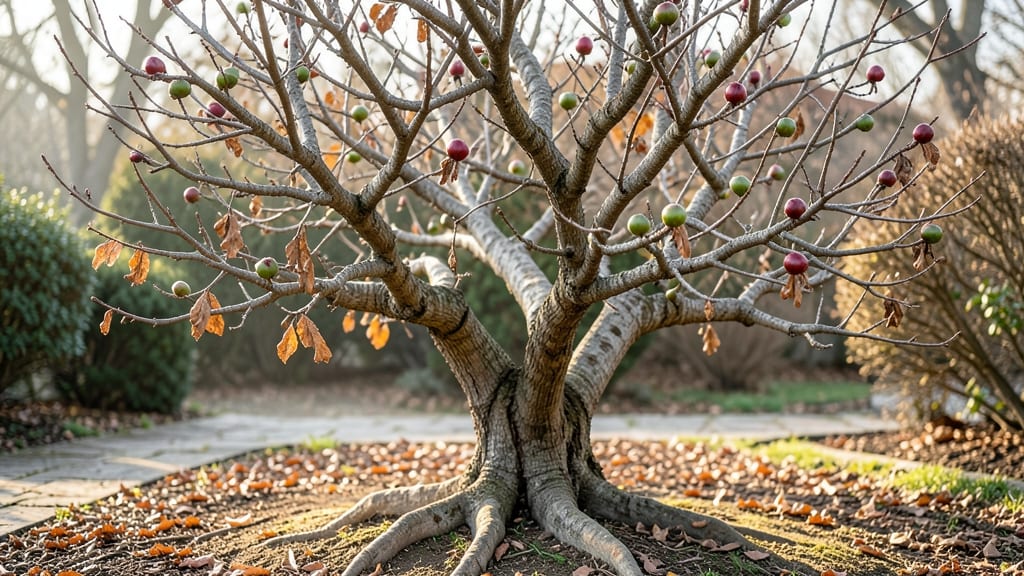
Pomegranate trees in winter need careful pruning after dormancy in late winter and protection from freezing, using mulch or frost cloth, while reducing water to prevent root damage.
Late winter is the perfect time to prune because the tree is dormant but about to wake up for spring growth. 🌱 Cutting back dead or crossing branches now encourages stronger new shoots while shaping the tree for better airflow—this directly boosts fruit production next season.
I always remove about one-third of the oldest wood to keep the tree healthy and productive.
For cold protection, focus on the roots and trunk. Spread 4-6 inches of mulch around the base (but not touching the trunk) to insulate roots, and wrap the trunk with frost cloth if temperatures drop below 20°F.
Watch for signs like brown buds or cracked bark—these mean the tree needs extra shelter. Overwatering in winter stresses the roots, so only water when the ground feels dry 2 inches down.
💡 In This Article
- When and Why to Prune a Pomegranate Tree in Winter
- Protecting Pomegranate Trees From Cold Weather Damage
When and why to prune a pomegranate tree in winter
The best time to prune pomegranate trees is during late winter—specifically between mid-February and early March—when the tree is still dormant but before new growth begins. This timing allows you to remove dead or diseased branches without stimulating early bud break, which could be damaged by late frosts.
Pruning at this stage also helps redirect the tree's energy toward producing stronger, more fruitful branches in spring. 🌿
Focus on three key pruning techniques: removing dead or crossing branches (which compete for nutrients), thinning out crowded growth to improve airflow and sunlight penetration, and cutting back about one-third of the oldest wood to encourage new, productive shoots.
Pomegranate trees naturally grow with a bushy, multi-stemmed habit, so avoid over-pruning the center—this can create a "hollow" tree with weak structure. Use clean, sharp pruners to make cuts at a 45-degree angle just above a bud or branch collar.
Why does this matter for fruit production? Pomegranate trees bear fruit on current season's growth, so strategic pruning removes unproductive wood while stimulating vigorous new shoots that will develop next year's fruit clusters.
I’ve seen trees pruned this way produce 20-30% more fruit the following season compared to unpruned trees, thanks to better light exposure and reduced disease pressure from improved airflow. The key is balance—too little pruning leads to overcrowding, while too much stresses the tree.
Here’s what to watch for during pruning: Look for branches that are gray, brittle, or hollow (signs of dead wood), as well as any crossing or rubbing branches that can create wounds. Also, remove any suckers (shoots growing from the base) unless you’re propagating new trees.
These steps ensure the tree’s energy goes toward fruit production rather than maintenance. After pruning, apply a thin layer of wound sealant to larger cuts to prevent disease entry.
One common mistake is pruning too late in spring, which can expose new growth to frost damage. Pomegranate trees are somewhat cold-hardy (USDA zones 7-11), but their flowers and young shoots are vulnerable to late frosts.
By pruning in late winter, you give the tree a head start on recovery before the growing season kicks in. This is especially critical in colder regions where temperatures can dip below 25°F—pruning too early risks frost damage to fresh cuts.
For visual guidance, imagine shaping the tree like an open vase: wider at the top and bottom with a slightly narrower middle. This shape maximizes sunlight exposure to the inner branches, where many fruit clusters develop.
In my own garden, I’ve found that pruning in late winter also makes it easier to spot and remove any diseased wood that might have gone unnoticed during the growing season. 🌟